
Blog
Style a Deep Seated Armchair in a Small Living Room

Oct
Last Updated: October 23, 2026
Quick Summary
A deep seated armchair small living room requires careful measurement and strategic placement to avoid consuming too much floor space. Position it in a corner or at a 45-degree angle to other furniture, choose light neutral fabrics with subtle texture, and keep accessories minimal to maintain visual flow and comfort.
- Deep seated armchairs have a seat depth of 90-110 cm, compared to standard armchairs at 75-85 cm.
- Position the armchair in a corner or at a 45-degree angle to the sofa to keep the room’s centre open.
- Choose a rug at least 150 cm × 200 cm with the armchair’s front legs sitting on it to anchor the space.
- Use light, neutral fabrics like grey or taupe to make the armchair recede visually and avoid overwhelming the room.
- Add a small side table 30-40 cm wide and a floor lamp beside the armchair without blocking circulation paths.
Table of Contents
- Assess Your Space and the Armchair’s Footprint
- How to Measure an Armchair for a Small Room
- Small Living Room Furniture Layout Strategies
- Choosing Colours and Fabrics to Avoid Visual Bulk
- Best Rug Size for an Armchair in Compact Spaces
- Armchair Cushion Styling for Depth and Comfort
- Lighting and Side Tables: Making the Most of Limited Space
- Common Mistakes When Styling Deep Seating in Small Rooms
- Frequently Asked Questions
Assess Your Space and the Armchair’s Footprint
Before you buy or position a deep seated armchair small living room, measure what you actually have. A deep seated armchair in a small living room needs careful planning. The seat depth alone can consume half your usable floor space if you’re not deliberate about placement.
Start by measuring your room dimensions. Note the length and width in centimetres. Walk through and identify your doorways, windows, and any fixed features like radiators or alcoves. These constraints dictate where your armchair can go.
Next, measure the armchair itself. You need three key dimensions:
- Seat depth: How far back someone sits from the front edge
- Overall width: Armrest to armrest
- Overall height: Floor to the top of the backrest
A typical deep seated armchair has a seat depth of 90-110 cm. Standard armchairs sit around 75-85 cm deep. That extra depth is what makes styling in small spaces tricky. It eats floor area but offers genuine comfort.
Measure twice, order once. Take photos of your room from multiple angles and note the measurements on them. This becomes your reference when you’re deciding on layout and fabric.
How to Measure an Armchair for a Small Room
The real challenge isn’t just fitting the armchair into your room. It’s making sure you can still move around it comfortably. Circulation paths are what separate a functional small living room from one that feels cramped.
Here’s how to measure properly:
-
Measure your room’s usable floor space. Subtract doorway swings, radiator clearance, and the space needed to walk past furniture. What’s left is your actual working area.
-
Measure the armchair’s footprint. Place it flat on the floor and measure from the front legs to the back legs, and from one armrest to the other. This is the space it will occupy.
-
Check seat height. A seat height of 40-45 cm is standard. Deeper seats sometimes sit slightly lower. If you have knee issues or mobility concerns, test the height before committing.
-
Verify arm height relative to your windows. If the armchair’s arms or back will block natural light, you’ve lost a key tool for making the space feel larger. Consider a lower-backed option or position it away from windows.
-
Test the sightlines. Stand in the armchair and look around the room. Can you see the TV? Can someone standing in the doorway see past it into the rest of the space? Small rooms need visual flow.
You can measure your living room accurately for furniture with a step-by-step guide that covers room dimensions, doorways, and spacing for sofas and chairs. This structured approach prevents costly mistakes.
Use these key measurements to ensure your deep seated armchair fits comfortably in your small living room.
| Measurement | Standard Range | Why It Matters |
|---|---|---|
| Seat depth | 90-110 cm | Deep seated; standard is 75-85 cm |
| Seat height | 40-45 cm | Affects comfort and mobility access |
| Armchair width | Armrest to armrest | Determines floor space consumed |
| Armchair height | Floor to backrest top | Affects sightlines and light blocking |
Small Living Room Furniture Layout Strategies
A deep seated armchair in a small living room works best when it’s part of a deliberate layout, not an afterthought. Learn how to measure, plan layouts, choose multifunctional pieces, and maximise storage in small apartments with comprehensive guidance on furniture arrangement and space optimization. The room’s shape and your focal point determine where it should go.
Positioning the armchair as a focal point
If your room has a natural focal point, a fireplace, a large window, or a feature wall, angle the armchair toward it. This creates intention and draws the eye to something interesting rather than making the chair itself the visual anchor.
Avoid placing the armchair directly opposite the sofa if you have one. This creates a formal conversation setup that wastes floor space in a small room.
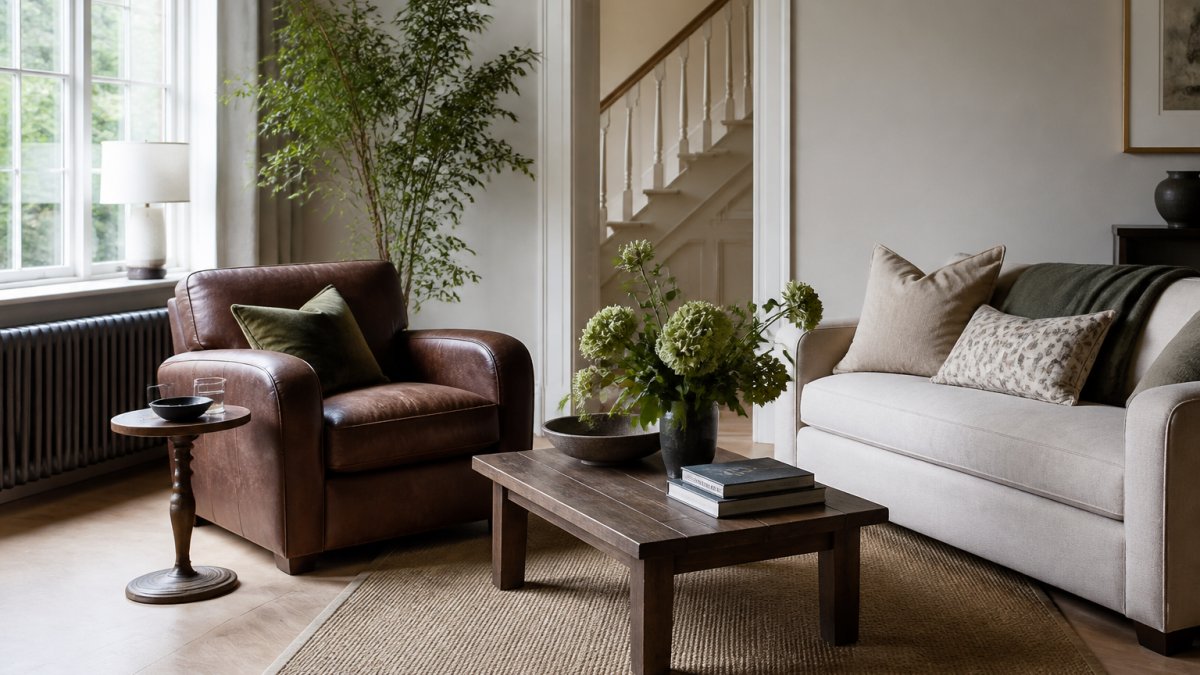
Corner placement works particularly well for deep seated armchairs because it anchors the chair, uses otherwise dead space, and keeps the centre of the room open. The armchair becomes a destination rather than an obstacle.
Creating a conversation area without clutter
If you want seating for multiple people, resist the temptation to cram in a second chair or ottoman. Instead, use the armchair as the anchor and position a single side table next to it. This creates a functional conversation zone without consuming floor space.
Keep the area around the armchair clear. A deep seated armchair already has visual weight. Add a small lamp, a side table, and perhaps a footstool, but stop there. Every additional piece makes the room feel smaller.
Consider whether you actually need a coffee table in front of the armchair. In small spaces, a single side table is often enough. It gives you a surface for a drink or book without blocking sightlines across the room.
The key to small-room furniture layout is negative space. Empty floor visible around your armchair makes the room feel larger, even if the chair itself is substantial.
Choosing Colours and Fabrics to Avoid Visual Bulk
A deep seated armchair has physical presence. Colour and fabric choice determine whether it feels cosy or overwhelming.
Light, neutral fabrics make the armchair recede visually. Greys, soft taupes, and warm beiges work well in small rooms because they don’t demand attention.
Avoid bold patterns unless the armchair is your room’s statement piece and everything else is minimal. A patterned deep seated armchair in a small room with patterned rugs, artwork, and accessories creates visual noise.
Texture matters more than colour. A linen weave, a subtle herringbone, or a soft chenille adds interest without the visual weight of a large-scale print.
You can learn how to choose upholstery fabric online with confidence from Martindale rub tests to fabric samples. You can also master choosing Tetrad fabric patterns with our step-by-step guide covering pattern scale, durability, and matching.
Consider the room’s existing colour palette. If your walls are a soft neutral, a slightly warmer or cooler tone in the armchair fabric creates subtle contrast without clashing.
Dark fabrics in small rooms can feel heavy and cave-like, especially on a deep seated armchair. If you love dark colours, use them on accent pieces like cushions rather than the main upholstery.
Best Rug Size for an Armchair in Compact Spaces
A rug anchors furniture and defines a space. In a small room with a deep seated armchair, rug size is critical. Too small and the armchair floats unmoored.
For a deep seated armchair small living room, choose a rug that’s at least 150 cm × 200 cm. The front legs of the armchair should sit on the rug.
Avoid rugs larger than 200 cm × 280 cm in a small room. They consume too much visual real estate and make the space feel smaller, not larger.
Light-coloured rugs make small spaces feel larger. A pale grey or soft neutral rug under a deep seated armchair creates visual continuity and makes the floor feel more open.
Rug texture matters too. A low-pile or flat-weave rug doesn’t add bulk the way a shag or thick pile does.
Armchair Cushion Styling for Depth and Comfort
Cushions transform a deep seated armchair from functional to inviting. They also add visual depth without taking up floor space.
Use cushions in varying sizes. A large cushion at the back, two medium cushions on either side, and a smaller lumbar cushion creates layering.
Coordinate cushion fabrics with the armchair upholstery but vary the texture.
Avoid cushions that match the armchair exactly. Identical fabric makes the chair feel flat and one-dimensional.
You can learn how to style statement furniture pieces with expert design rules for balance, lighting, and mixed textures. This step-by-step guide covers techniques for styling deep-seated armchairs in compact spaces.
Keep cushions proportional to the armchair. Oversized cushions on a deep seated chair can make it look cluttered. Undersized cushions look sparse.
Cushion placement is as important as selection. Lean them against the back rather than spreading them across the seat. This maintains comfort and keeps sightlines clear through the armchair.
Lighting and Side Tables: Making the Most of Limited Space
A deep seated armchair becomes a reading nook or a relaxation spot with the right lighting. In a small room, lighting and side tables must be functional and compact.
A floor lamp next to the armchair provides task lighting without taking up table space. Choose a slim-profile lamp with a narrow base.
A small side table, ideally 30-40 cm wide, fits beside the armchair without blocking circulation. This gives you a surface for a drink, book, or lamp without the footprint of a full coffee table.
Wall-mounted shelving above or beside the armchair adds storage without floor clutter. A single narrow shelf holds books, a small plant, or decorative objects. This draws the eye upward and makes the room feel taller.
Consider the armchair’s relationship to windows. If it sits near natural light, you need less artificial lighting.
Common Mistakes When Styling Deep Seating in Small Rooms
The most common mistake is underestimating how much floor space a deep seated armchair actually takes. Measure before you commit.
A second mistake is positioning the armchair where it blocks sightlines.
Many people add too many accessories around the armchair. A lamp, a side table, a footstool, cushions, a throw blanket, and a plant all at once creates visual clutter.
Choosing the wrong colour or fabric is another common error. A dark, heavily patterned armchair in a small room with dark walls feels suffocating.
Ignoring comfort for style is a mistake that costs you later. A deep seated armchair should be genuinely comfortable to sit in. Test it before buying if possible.
Frequently Asked Questions
Can a deep-seated armchair work in a small living room?
Yes, a deep seated armchair can work beautifully in a small living room when you plan carefully. The key is choosing the right scale, positioning it strategically to avoid blocking sightlines, and using light colours or low-profile designs to minimise visual weight. Deep seating offers exceptional comfort without requiring the footprint of a full sofa, making it an excellent choice for compact spaces when styled thoughtfully.
How do you measure an armchair for a small room?
Measure the armchair’s overall width, depth (from front to back), and height. Check the seat depth separately, this is critical for comfort in deep seating. Measure your available floor space, accounting for at least 60 centimetres of clear circulation on all sides. Compare the armchair’s dimensions against your room’s layout to ensure it doesn’t block doorways, windows, or natural flow. Take photos of your space and note the measurements.
What size rug works best with a deep-seated armchair?
For a small room, choose a rug that anchors the armchair without overwhelming the space. A rug measuring 120 by 180 centimetres typically works well, positioning the armchair’s front legs on the rug while leaving 30-45 centimetres of floor visible around the edges. This creates definition without making the room feel cramped. Avoid oversized rugs that extend wall-to-wall, as they can make a small space feel cluttered and reduce the sense of openness.
How do you style a deep-seated armchair with cushions and throws?
Layer cushions strategically to enhance comfort without adding bulk. Use two to three cushions in complementary colours or textures, positioning them against the back rather than filling the entire seat. A lightweight throw draped over the arm or back adds warmth and visual interest. Choose fabrics in lighter shades or subtle patterns to avoid overwhelming the space. This approach creates an inviting, lived-in look while maintaining the room’s sense of proportion and airiness.

