
Blog
7 Sustainable Upholstery Fabrics for Luxury Furniture
Oct
Last Updated: October 22, 2026
Quick Summary
Sustainable upholstery fabrics are materials designed to minimise environmental harm across their lifecycle, using renewable or recycled sources, fewer chemicals, and durable construction. The seven best options include organic cotton, linen, wool, recycled polyester, recycled wool blends, cactus leather, and mushroom leather, each offering luxury feel with environmental benefits.
- A well-made sofa lasting 20 years or more is inherently sustainable through durability alone.
- Heavy-use sofas need 40,000+ Martindale cycles and a colorfastness rating of 4 or higher for true durability.
- A single recycled polyester sofa uses the equivalent of 30-50 plastic bottles diverted from landfill.
- Look for certifications like GOTS, Cradle to Cradle, OEKO-TEX, EU Ecolabel, or FSC to verify genuine environmental claims.
- Weekly vacuuming, immediate spill response, and professional cleaning every 2-3 years significantly extend sofa lifespan.
Table of Contents
- What Makes Upholstery Fabric Sustainable
- Eco-Friendly Upholstery Fabrics: Natural Fibres
- Sustainable Sofa Fabric: Recycled and Reclaimed Fibres
- Plant-Based Leather Alternatives
- Durable Upholstery Fabric for Sofas: Performance and Longevity
- How to Choose Upholstery Fabric: Certifications and Standards
- Lifecycle Impact and End-of-Life Considerations
- Care Requirements and Whole-Life Maintenance
- Frequently Asked Questions
What Makes Upholstery Fabric Sustainable
Sustainable upholstery fabrics are materials designed to minimise environmental harm across their lifecycle. They reduce waste, use fewer chemicals, and come from renewable or recycled sources, and how your sofa is made directly impacts the planet and your home.
A well-made sofa should last 20 years or more, and that durability alone makes it sustainable.
True sustainable upholstery fabrics share key traits: natural or recycled content, fewer harmful chemicals, long-lasting design, and independent certification.
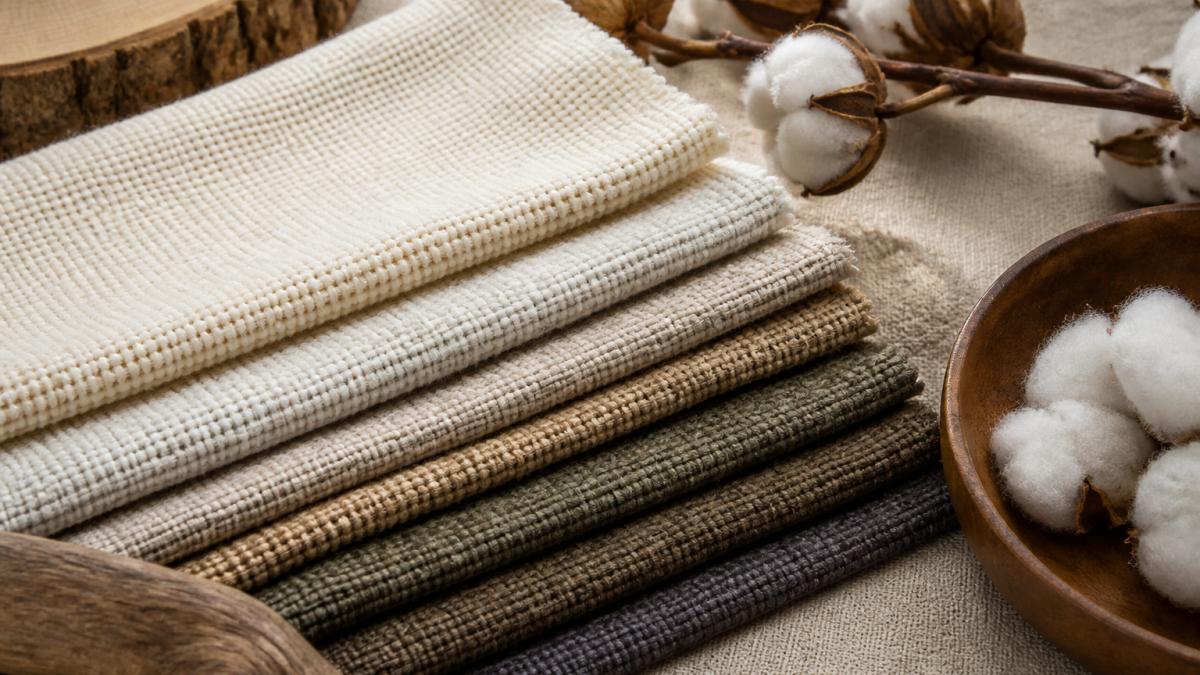
The best sustainable fabrics balance environmental impact, durability, and luxury feel. Cheap fabrics look good for two years, then pill, fade, and wear thin. A sustainable luxury fabric gets softer with age and lasts decades.
The most sustainable sofa is the one you keep. Buy quality, choose timeless design, and invest in proper care. A £3,000 sofa you use for 25 years beats five £600 sofas you replace every five years.
Eco-Friendly Upholstery Fabrics: Natural Fibres
Natural fibres come from plants or animals, break down naturally at end of life, and require fewer synthetic chemicals. The best for furniture are organic cotton, linen, and wool. They breathe, regulate temperature and moisture, and age beautifully.
Organic Cotton
Organic cotton is grown without synthetic pesticides or fertilisers. It’s soft, breathable, and hypoallergenic, but pure cotton isn’t durable enough for heavy use. The best blends are 50-70% cotton mixed with linen or wool, ideal for accent chairs or low-traffic seating. It costs more, but conventional cotton uses roughly 16% of the world’s insecticides despite occupying only 2.5% of cultivated land. Vacuum regularly and blot spills immediately with mild soap and water.
Linen
Linen comes from the flax plant, requires minimal pesticides, and is stronger and more breathable than cotton. A quality linen sofa can be very durable. It creases and wrinkles, that’s character, not a flaw, and softens after a few months of use. Its neutral creams, greys, and warm whites suit most interiors, and it resists pilling better than cotton. Vacuum weekly, brush gently, and use cool water on spills.
Wool
Wool is naturally flame-resistant, durable, and biodegradable, and sheep farming requires minimal chemical inputs. Quality wool upholstery is dense and resilient, resisting crushing and repelling moisture and dust. Fine merino feels soft; coarser blends feel sturdy. Look for a tight weave and 100% wool or a blend with 80%+ wool content.
Not all wool is created equal. Low-grade wool can pill heavily in the first year. Always ask for the fibre count and weave density.
Wool resists staining because spills bead up on its protective outer layer. Vacuum regularly, treat stains quickly with cool water, and clean professionally every 2-3 years.
Sustainable Sofa Fabric: Recycled and Reclaimed Fibres
Recycled fibres turn old textiles and plastic bottles into luxury upholstery, reducing demand for virgin materials. Recycled polyester and recycled wool can be just as durable as new fibres when produced to high standards.
Recycled Polyester
Recycled polyester is made from post-consumer plastic bottles and textile waste. It’s durable, stain-resistant, and resists fading and pilling better than natural fibres, ideal for pets and children. A single sofa can use the equivalent of 30-50 plastic bottles. The trade-off is feel: it doesn’t breathe like natural fibres and can feel slightly plastic-like initially. Vacuum regularly and wipe spills with a damp cloth; removable covers are often machine-washable.
Recycled Wool Blends
Recycled wool comes from textile scraps, old clothing, and carpet offcuts, offering virgin wool’s durability, flame resistance, and luxury feel at a lower environmental cost. Blends (typically 50-80% recycled wool) are durable, soft, and often cheaper than 100% virgin wool. Quality varies, some processes degrade fibres, so look for Global Recycle Standard (GRS) or Cradle to Cradle certification. Care is identical to virgin wool.
Plant-Based Leather Alternatives
Plant-based leather mimics leather’s durability and luxury feel using agricultural waste or fast-growing plants. Most options combine plant materials with a binding agent or backing, and for luxury furniture they’re increasingly sophisticated.
Cactus-Based Leather
Cactus leather comes from prickly pear leaves, which grow in arid climates with minimal water or fertiliser. It’s soft, flexible, biodegradable, and resists staining better than fabric, developing a natural patina over time. It costs more than synthetic leather but is comparable to premium genuine leather. Wipe spills with a damp cloth, condition every 6 months, and avoid direct sunlight.
Mushroom Leather
Mushroom leather is grown from mycelium cultivated on agricultural waste like corn stalks or sawdust, then tanned and finished. It’s completely biodegradable, vegan, and hypoallergenic. Current versions are softer than genuine leather and better suited to accent chairs, headboards, or low-traffic sofas. Colours are typically neutral creams, greys, and soft browns. Wipe spills immediately, avoid harsh cleaners, and condition regularly, it’s more delicate than cactus leather.
Plant-based leathers are the future of sustainable luxury upholstery. Cactus and mushroom leather offer genuine alternatives to animal and synthetic leather, with environmental benefits that matter.
::: Extending these eco-conscious material choices beyond furniture frames allows for a cohesive design aesthetic that incorporates sustainable window coverings throughout the home.
Durable Upholstery Fabric for Sofas: Performance and Longevity
A sofa that lasts 25 years is more sustainable than one that lasts five, regardless of material. Durability is measured by the Martindale test (heavy-use sofas need 40,000+ cycles, guest chairs 15,000+), colorfastness (a rating of 4 or higher means minimal fading), and pilling resistance. The best durable upholstery fabrics combine tight, dense weaves, high fibre strength, natural stain resistance or quality finishes, 40,000+ abrasion cycles, and a colorfastness rating of 4 or higher. Always ask for these specifications, appearance alone is misleading.
High-traffic living rooms with families and pets need recycled polyester or wool blends rated for 50,000+ Martindale cycles. Formal sitting rooms can use delicate natural fibres like linen or organic cotton.
How to Choose Upholstery Fabric: Certifications and Standards
Certifications verify that sustainable upholstery fabrics meet their environmental claims, without independent verification, “sustainable” is just marketing. Key certifications include:
Global Organic Textile Standard (GOTS), Verifies organic fibres are genuinely organic and produced without harmful chemicals, tracked from farm to finished product.
Cradle to Cradle Certified, Assesses material health, recyclability, and renewable energy use, and designs products to be recycled or composted at end of life.
OEKO-TEX Standard 100, Tests fabrics for harmful substances, confirming they’re safe for human contact.
EU Ecolabel, Assesses environmental impact across the entire lifecycle against strict criteria for water use, emissions, and waste.
Forest Stewardship Council (FSC), Verifies plant-based materials come from responsibly managed forests.
Look for at least one certification, multiple is better. Be wary of vague claims like “eco-friendly” or “green” without certification; these terms are unregulated marketing language.
Lifecycle Impact and End-of-Life Considerations
True sustainability means considering end of life. Natural fibres like cotton, linen, and wool are fully biodegradable, breaking down within months to a few years. Recycled polyester is recyclable but not biodegradable, and limited infrastructure means most such sofas end up in landfill. Plant-based leathers are biodegradable and release no toxins. The best approach is buying a sofa you’ll keep for decades, a 25-year sofa has a lower impact than three 8-year sofas. If replacing, donate or resell, and look for manufacturers offering take-back programmes.
Care Requirements and Whole-Life Maintenance
How you care for your upholstery fabric directly impacts its lifespan. Proper maintenance can add years to a sofa’s life, making it more sustainable in the long run.
Weekly care is the foundation. Vacuum your sofa weekly using an upholstery brush attachment. This removes dust, crumbs, and debris before they settle deep into fibres. Regular vacuuming prevents dirt from becoming embedded and causing wear.
Immediate spill response matters enormously. Blot spills immediately with a clean, dry cloth. Don’t rub, blotting lifts the liquid without pushing it deeper into fibres. For liquid spills, use cool water and a soft cloth. Hot water can set stains. For sticky spills, let them dry slightly, then gently brush away the dried residue before blotting.
Seasonal deep cleaning keeps your sofa looking fresh. Every 3-6 months, use a soft brush to gently brush the fabric in the direction of the weave. This removes surface dust and restores texture. For stubborn stains, use a fabric cleaner designed for your specific fibre type. Always test on a hidden area first.
Professional cleaning extends sofa life significantly. Most manufacturers recommend professional cleaning every 2-3 years for high-traffic sofas.
Sunlight protection prevents fading. Position your sofa away from direct sunlight, or use curtains and blinds to filter harsh light. Even naturally dyed fabrics will fade with prolonged sun exposure. Fading doesn’t affect durability, but it does affect appearance.
Rotation and fluffing distribute wear evenly. If your sofa has removable cushions, rotate them every few weeks. Flip cushions that can be flipped. This prevents one area from becoming compressed and worn while others remain fresh.
The care requirements vary by fabric type:
| Fabric Type | Vacuum Frequency | Spot Clean | Professional Clean | Special Care |
|---|---|---|---|---|
| Organic Cotton | Weekly | Cool water + cloth | Every 2-3 years | Avoid hot water |
| Linen | Weekly | Cool water + cloth | Every 2-3 years | Embrace wrinkles |
| Wool | Weekly | Cool water + cloth | Every 2-3 years | Condition every 6 months |
| Recycled Polyester | Weekly | Damp cloth | Every 3-4 years | Machine washable covers |
| Cactus Leather | Weekly | Damp cloth | Every 3-4 years | Condition every 6 months |
| Mushroom Leather | Weekly | Damp cloth | Every 3-4 years | Gentle handling |
Keep your receipt and care instructions. Manufacturers often provide specific guidance for their fabrics.
The best sustainable upholstery fabric is one you’ll love for decades. At Tetrad sofas and chairs, we combine premium materials with expert craftsmanship to create pieces that last. Our selection includes organic cotton, linen, wool, recycled fibres, and plant-based leathers. Learn more about sustainable furniture certifications and how they verify genuine environmental claims. The Cradle to Cradle certification programme sets rigorous standards for product lifecycle sustainability. OEKO-TEX testing standards for textile safety ensure your upholstery is free from harmful chemical residues.
EXPLORE COLLECTION
Frequently Asked Questions
What is the best sustainable upholstery fabric for a high-traffic living room sofa?
Recycled polyester and wool blends offer the best balance of durability and sustainability for busy households. Both resist pilling, maintain colour over time, and can withstand daily use without showing wear quickly. Look for fabrics with abrasion resistance ratings above 15,000 Martindale cycles. Recycled polyester also resists staining better than natural fibres alone, making it practical for families whilst maintaining environmental responsibility.
How do I verify that an upholstery fabric is genuinely eco-friendly?
Check for recognised certifications such as Global Organic Textile Standard (GOTS) for organic fibres, Cradle to Cradle for recycled content, or OEKO-TEX for chemical safety. These labels verify responsible sourcing, minimal chemical finishes, and transparent manufacturing. Ask your furniture supplier for certification documentation. Avoid vague claims like ‘eco-friendly’ without third-party verification. Reputable makers of luxury upholstery will provide detailed information about fibre sourcing and environmental standards.
Are plant-based leather alternatives like cactus leather durable enough for luxury furniture?
Yes, when properly finished. Cactus-based leather and mushroom leather offer comparable durability to traditional animal leather when treated with quality protective coatings. They resist creasing, staining, and wear in similar ways. However, performance varies by manufacturer. Luxury upholstery makers use premium plant-based leathers with reinforced backing. Check the supplier’s durability claims and warranty terms before committing to ensure the specific product meets your expectations.
What’s the difference between organic cotton and recycled polyester for sofa upholstery?
Organic cotton is a renewable natural fibre free from synthetic pesticides, offering breathability and comfort, but requires more maintenance and shows wear faster in high-traffic areas. Recycled polyester is derived from post-consumer waste, performs better under heavy use, resists staining, and lasts longer, but is synthetic. For luxury furniture, the choice depends on your priorities: choose organic cotton for natural feel and breathability, or recycled polyester for durability and low maintenance. Many premium sofas blend both for optimal balance.

