
Blog
How to Style Statement Furniture Pieces
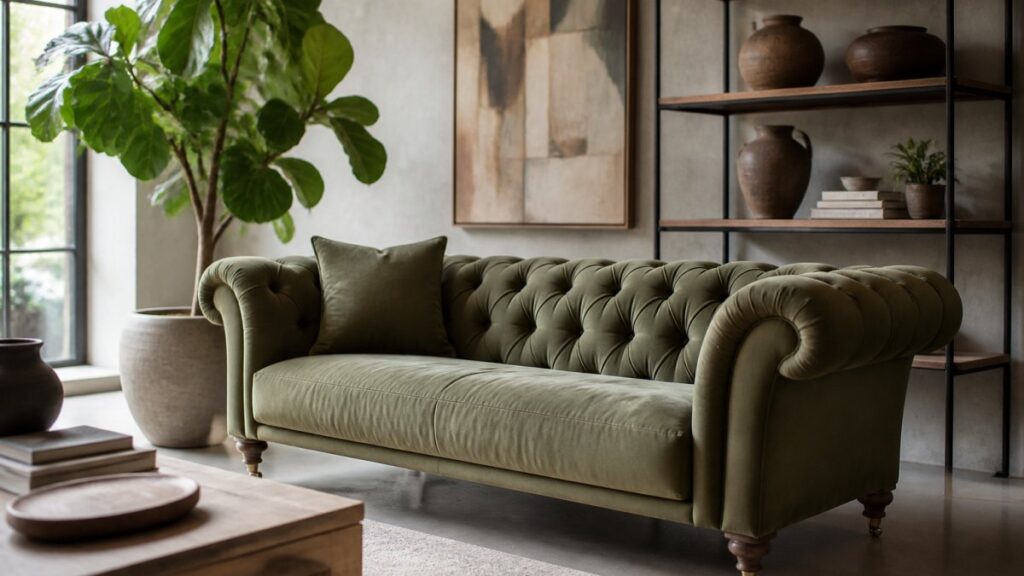
Oct
Table of Contents
- Understanding Scale and Proportion in Statement Styling
- How to Balance a Room with Large Furniture
- Creating a Neutral Base for Your Statement Piece
- Best Lighting for Statement Furniture
- How to Mix Patterns and Textures Around Statement Pieces
- Using Colour and Accessories to Complement Your Statement Furniture
- Maintaining Your Statement Furniture for Long-Term Beauty
- Frequently Asked Questions
Last Updated: September 30, 2026
Understanding Scale and Proportion in Statement Styling
Scale and proportion form the foundation of how to style statement furniture pieces effectively. A statement piece demands visual weight, so everything around it must be proportional to avoid looking cramped or unbalanced.
The most common mistake is placing a large statement sofa without considering surrounding elements. If your statement piece takes up 40% of visual space, other furniture and accessories should occupy the remaining 60% thoughtfully to create spatial harmony.
Measure your statement piece and room. A 3-metre sectional needs 1 metre walking space on sides and 1.5 metres in front. Coffee tables should be roughly two-thirds the sofa’s length; side tables should match the armrest height.
In rooms with lower ceilings (under 2.4 metres), keep wall art, shelving, and accessories lower and spaced out. High ceilings allow more vertical layering without overwhelming the space.
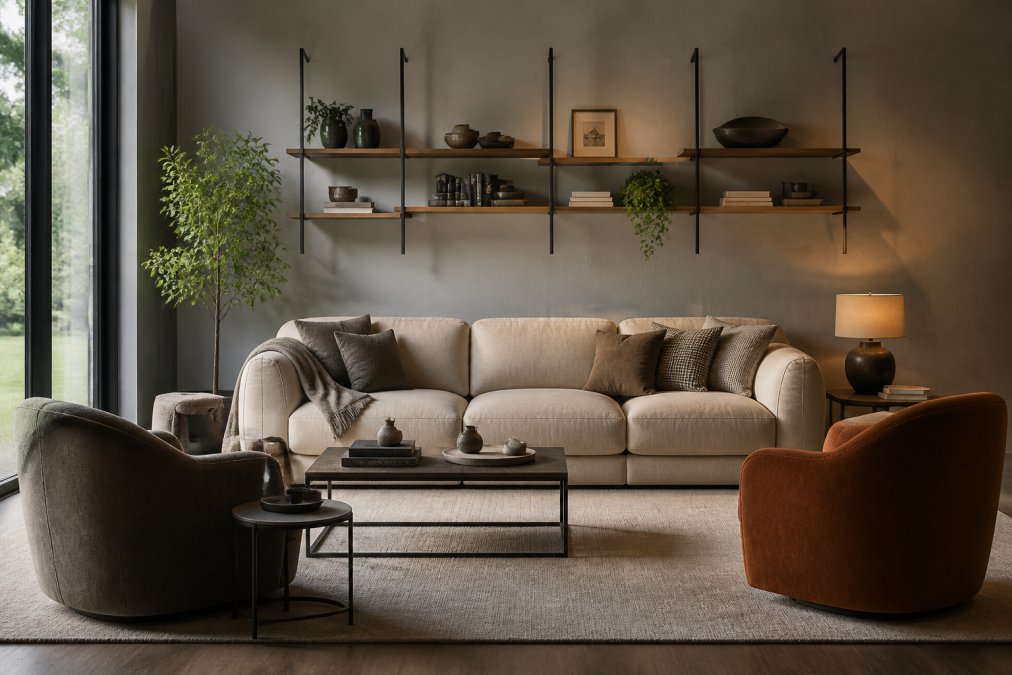
How to Balance a Room with Large Furniture
Balancing a room with large furniture requires understanding visual weight distribution and spatial hierarchy. Position other elements using deliberate spatial rules to prevent the room from feeling lopsided.
The Rule of Thirds and Visual Weight
Divide your room into a 3×3 grid. Place your statement piece‘s visual centre on one of the four intersection points, not dead centre. A sofa at the left-third line feels more intentional than one centred on the wall.
Visual weight combines colour, texture, and height. A dark velvet sofa weighs more visually than light linen. A tall, dark bookcase can balance a low, wide sectional. Dark colours and matte finishes carry higher visual weight; vertical forms weigh more than horizontal ones.
Spatial Ratios for Secondary Furniture
Secondary furniture should occupy no more than 40% of remaining floor space. Distribute accent chairs, side tables, and other pieces across the opposite side or perpendicular walls.
Position accent chairs at 45-degree angles to your sofa rather than directly opposite. Space them 1.2 to 1.5 metres away, close enough for conversation, far enough to feel like separate zones.
Height Layering and Vertical Balance
If your statement sofa is low-profile (under 75 centimetres), balance it with taller pieces: a floor lamp at 150 centimetres, a bookcase at 180 centimetres, or a tall plant at 120 centimetres.
If your statement piece is tall (over 90 centimetres), use lower secondary furniture: a console table at 80 centimetres, a low coffee table at 45 centimetres, and wall-mounted shelving below 120 centimetres from the floor.
Anchoring with Rugs and Flooring
A rug anchors furniture groupings. For a statement sofa, extend it at least 30 centimetres beyond the front edge. Minimum size is 2.4 by 3 metres; larger rooms need 3 by 4 metres. Choose a rug colour lighter than your sofa so it recedes and the furniture advances.
Lighting Distribution
Place floor lamps on either side of your sofa at 1 to 1.5 metres distance. Use matching lamps to maintain symmetry. If your statement piece is off-centre, add a tall lamp on the opposite side to counterbalance it.
Mount wall sconces at 150 to 160 centimetres from the floor, spaced 1.2 to 1.5 metres apart. This creates rhythm and prevents dark corners.
Testing Your Layout
Use painter’s tape to outline furniture footprints. Photograph the layout from multiple angles to reveal imbalances. Adjust positions in 30-centimetre increments until the room feels visually stable.
Creating a Neutral Base for Your Statement Piece
Choose soft neutrals, warm whites, soft greys, or gentle beiges for walls. These reflect light and let your statement piece shine. Avoid stark white or pure black.
For flooring, stick with neutral tones: natural wood, light grey concrete, or soft-toned tiles. Your rug can introduce subtle texture, but keep it in the neutral family, cream, soft grey, or natural linen tones work best.
Introduce texture through woven wall hangings, linen curtains, textured throw blankets, and natural materials like jute, rattan, or light wood.
When walls, floors, and major soft furnishings are neutral, your statement sofa becomes the visual anchor. This approach works especially well with Tetrad sofas, which feature rich upholstery and distinctive designs that deserve a calm backdrop.
Paint an accent wall only if your statement piece is positioned against it. Choose a colour that complements rather than competes, soft sage, warm taupe, or muted charcoal, and test samples first.
Best Lighting for Statement Furniture
Layer lighting three ways: ambient (warm, dimmable, 2700K), task (table and reading lamps), and accent (highlighting the statement piece).
Position spotlights or picture lights above your sofa to draw the eye upward. Alternatively, place tall floor lamps at 45-degree angles to create shadows that emphasize shape and texture.
Light from the sides and behind to create depth. Avoid bright lights directly in front, which flatten the piece visually.
Use sheer curtains to diffuse harsh sunlight and protect upholstery from fading. Position furniture so light grazes rather than directly hits the piece.
Warm-toned upholstery looks richer under warm lighting (2700K); cool-toned furniture handles slightly cooler light (3000K). Test bulb types before committing.
How to Mix Patterns and Textures Around Statement Pieces
Patterns and textures add depth without overwhelming your statement furniture. The key is the 60-30-10 rule: 60% neutral, 30% secondary colour or pattern, 10% accent colour or bold pattern.
Your statement piece occupies the 60% category. Use 30% for patterned cushions, rugs, or curtains. The 10% goes to bold accents like geometric pillows or artwork.
When mixing patterns and textures around style statement furniture, layer different tactile surfaces: smooth upholstery, woven rugs, linen cushions, chunky knit throws, and smooth ceramics.
These textures create visual interest without noise and make spaces feel more inviting.
Limit patterns to two: one large-scale and one small-scale. A geometric rug pairs with small-scale cushions; striped curtains work with floral pillows. Keep both within your colour palette.
Avoid repeating the same pattern. Vary pattern types, geometric, floral, abstract, so they complement rather than echo each other.
Using Colour and Accessories to Complement Your Statement Furniture
A systematic colour approach ensures accessories amplify your statement piece instead of competing with it.
Understanding Undertones and Colour Temperature
Identify your statement furniture’s undertone: warm grey pairs with terracotta, warm gold, rust, or warm sage; cool grey pairs with navy, cool teal, silver, or cool lavender.
A burgundy sofa with warm undertones clashes with cool accessories; the same burgundy with cool undertones works beautifully with cool accents.
Place furniture next to white paper in natural daylight to identify undertone, warmer (creamy, peachy) or cooler (bluer, greyish).
The 60-30-10 Rule with Undertone Matching
The 60-30-10 rule works only if all colours share the same undertone family. The 30% secondary colour should match your statement piece’s undertones, if your sofa is warm grey, choose warm beige or warm taupe. The 10% accent must align with your undertone family. Maintaining this tonal consistency extends beyond upholstery and paint, as you must also choose statement lighting that reflects the same warmth or coolness to unify the entire room.
Choosing Accent Colours Using Complementary and Analogous Schemes
Complementary colours create maximum contrast. A burgundy sofa pairs with sage green; navy pairs with warm gold or burnt orange. Use sparingly, they’re visually intense and work best in 10% quantities.
Analogous colours create harmony. An emerald sofa pairs with teal, blue-green, or yellow-green accents. These schemes feel restful and work well for larger accessory quantities (30%).
Neutral statement pieces offer flexibility. A warm beige sofa works with complementary teal accents or analogous warm gold accents.
Systematic Accessory Selection
Select accessories in this order: (1) Wall colour and large soft furnishings in your secondary colour; (2) Throw pillows mixing textures and patterns while keeping colours coordinated; (3) Wall art echoing your accent colour; (4) Plants with foliage colours complementing your palette; (5) Lighting fixtures and metals matching your undertone family; (6) Books, ceramics, and objects reinforcing your colour story.
Avoiding Colour Mistakes
The most common error is mixing undertone families. A warm grey sofa with cool blue accents feels jarring because the undertones conflict. If you’ve already purchased accessories in the wrong undertone, replace them gradually. Swap one cool-toned pillow for a warm-toned one each month until your palette is consistent.
Another mistake is using too many accent colours.
Testing Colour Combinations Before Committing
Maintaining Your Statement Furniture for Long-Term Beauty
Statement furniture represents a significant investment, so proper maintenance ensures it stays beautiful for decades.
British Institute of Interior Design guidance on spatial planning
Which? guide to furniture care and maintenance
EXPLORE COLLECTION
Frequently Asked Questions
What is the 3-5-7 rule in decorating statement furniture?
The 3-5-7 rule is a design principle that helps create visual balance. Select 3 primary colours in your palette, incorporate 5 key textures (upholstery, wood, metal, ceramics, textiles), and use 7 distinct accessories or focal points. This prevents rooms from feeling either sparse or overwhelming when you’re styling statement furniture pieces. Applied correctly, it creates a curated rather than cluttered aesthetic.
How do you prevent a room with statement furniture from looking cluttered?
Balance bold pieces with breathing room. Use a neutral base on walls and larger surfaces, then layer in your statement furniture. Limit accent colours to 2-3 shades, and ensure 40-50% of your visible wall space remains undecorated. Group accessories intentionally rather than scattering them, and choose pieces with purpose rather than filling every surface. Quality over quantity is essential when styling statement pieces.
Can you mix modern and classic styles with statement furniture?
Yes, mixing classic and modern styles works when you establish a visual anchor. Use your statement furniture piece as the anchor, whether it’s a contemporary sofa or a vintage chair, then select supporting pieces that share either its era or its colour palette. For example, pair a modern statement sofa with classic wooden side tables and contemporary lighting. The key is ensuring at least one design element (colour, material, or era) connects each piece in the room.
What maintenance matters most for preserving statement furniture long-term?
Regular maintenance extends the life of bespoke furniture significantly. Rotate cushions weekly to prevent uneven wear, vacuum upholstery monthly using appropriate attachments, and address spills immediately with appropriate cleaning methods for your specific fabric or leather. Professional cleaning annually helps preserve colour and texture. Protect leather with conditioning treatments every 6-12 months, and keep statement pieces away from direct sunlight to prevent fading. Proper care ensures your investment remains beautiful for decades.
