
Blog
Sofas and Stuff vs Arlo and Jacob: Quality Comparison
Oct
Table of Contents
- Sofas and Stuff vs Arlo and Jacob: What Sets Them Apart
- Upholstery, Frame Construction, and Material Quality
- Customisation and Bespoke Design Options
- Best British Sofa Brands: Where Tetrad Fits
- Sofa Fabric Durability Guide: What to Look For
- Repairing vs Replacing an Old Sofa: Making the Right Choice
- Delivery, Warranty, and After-Sales Support
- Which Retailer Should You Choose?
- Frequently Asked Questions
Last Updated: October 11, 2026
Sofas and Stuff vs Arlo and Jacob: What Sets Them Apart
The choice between retailers matters as much as the sofa itself. We’ve analysed how sofas and stuff vs arlo and jacob compare, and the differences go far deeper than price or showroom location. We’ve spent over 50 years understanding what separates a furniture purchase that delights you for two decades from one that disappoints within five years.
Frame quality, upholstery durability, customisation options, and after-sales support determine whether your investment ages gracefully or deteriorates. This guide breaks down how sofas and stuff vs arlo and jacob stack up against each other, and where bespoke British craftsmanship fits into the decision.
Upholstery, Frame Construction, and Material Quality
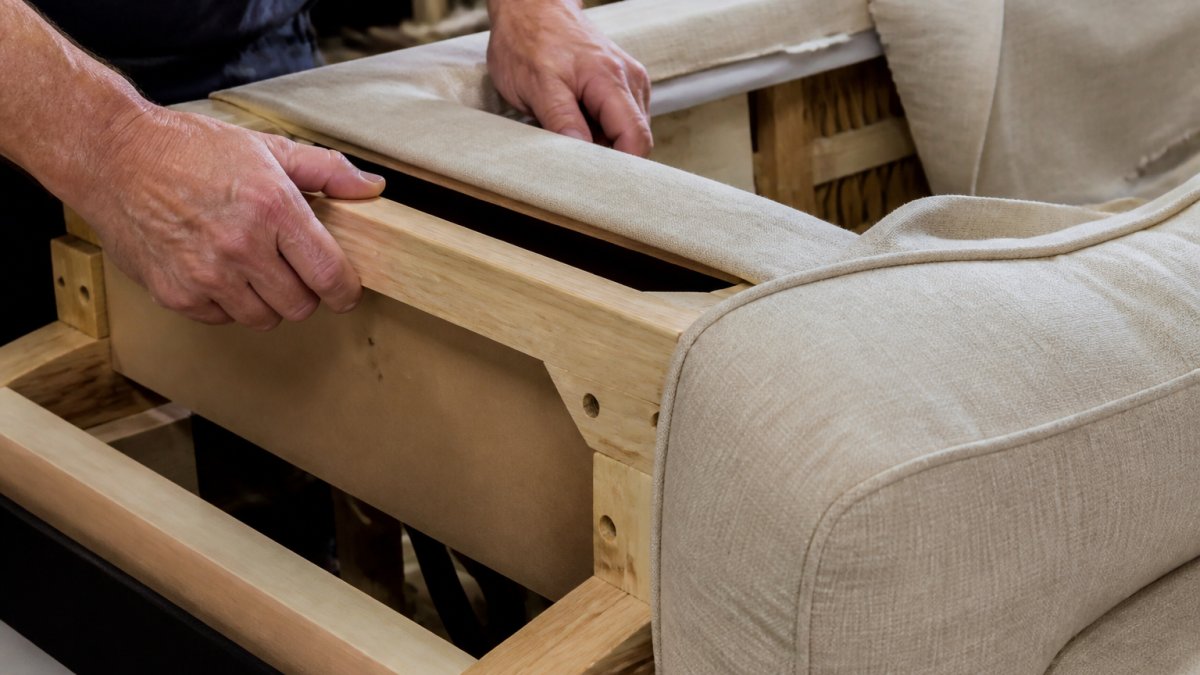
Most mass-produced sofas use softwood or plywood frames that flex and weaken over time. A proper hardwood frame, kiln-dried to prevent warping, will support your sofa for 15-30 years if the rest of the construction matches.
Frame Construction: The Long-Term Test
Hardwood frames with mortise-and-tenon joinery are the industry standard for furniture lasting beyond a decade. Beech and ash frames, common in British-made sofas, resist warping better than imported softwoods. Corner blocks alone suggest a frame designed for 5-8 years; proper joinery suggests 15+ years.
Eight-way hand-tied springs distribute weight evenly and resist sagging far better than single-coil systems. Sofas with eight-way hand-tied springs maintain their original seat height after 5+ years of daily use, whilst single-coil systems often sag within 3-4 years.
Foam Density and Cushion Longevity
Higher-density foam resists compression and maintains shape. A quality sofa should have at least 35kg/m³ density in seating areas; premium makers use 40-50kg/m³. After 2 years, sofas with 35kg/m³ foam show minimal compression, whilst lower-density foam (25-30kg/m³) develops noticeable body impressions.
Feather-filled cushions offer superior longevity but require occasional plumping. A 50/50 feather-to-foam blend is common in mid-range sofas; premium makers use 70% feather for luxury feel. Solid foam requires no plumping but compresses faster.
Fabric Performance: Beyond the Martindale Test
Natural fibres like linen and wool breathe better but stain more easily. Synthetic blends offer stain resistance; look for fabrics rated above 15,000 Martindale cycles for everyday use. The Martindale test doesn’t capture how fabric ages visually.
A high-quality wool blend maintains appearance longer, resisting pilling and fading better than pure linen. Performance textiles offer best stain resistance but may feel less natural. Request fabric samples to test at home for 1-2 weeks in your own lighting.
Comparative Durability: What to Expect
A sofa with hardwood frame, eight-way hand-tied springs, 40kg/m³ foam, and quality wool-blend fabric maintains appearance for 8-12 years. Lower-density foam (30kg/m³) shows wear within 5-7 years. Mass-produced sofas with plywood frames develop sagging within 3-5 years. These structural differences highlight the fundamental divide in artisan versus mass-produced construction methods that ultimately dictate the longevity of your investment.
When evaluating sofas and stuff vs arlo and jacob, ask about frame wood species, spring type, foam density, and fabric composition. Request a written specification sheet. Transparent makers are confident in their longevity.
Customisation and Bespoke Design Options
Standard retailers typically offer fixed configurations: three-seater, corner unit, chaise end. You choose from pre-defined fabric swatches.
Bespoke design lets you control seat depth, arm height, leg style, cushion fill, and scatter cushion options. A bespoke maker adjusts the frame to fit your space rather than asking you to adjust your room.
You receive actual fabric samples to test against your existing décor in your own lighting. Lead times for bespoke pieces typically run 8-12 weeks, reflecting made-to-order construction.
| Customisation Factor | Standard Retail | Bespoke Options |
|---|---|---|
| Frame dimensions | Fixed sizes | Tailored to your space |
| Fabric selection | Limited swatches | Extensive sample access |
| Cushion configuration | Preset options | Fully adjustable |
| Leg styles | 2-3 choices | Multiple finishes available |
| Lead time | 4-8 weeks | 8-12 weeks |
Best British Sofa Brands: Where Tetrad Fits
Heritage makers like Tetrad and Duresta have built reputation through consistency and quality rather than marketing spend.
Every frame is hardwood, every joint properly constructed, and every sofa made to order. The brand competes on longevity and design integrity.
The best British sofa brands offer transparency: you understand exactly what you’re buying, frame wood species, spring system, foam density, fabric composition. This allows informed investment decisions.
British production means shorter supply chains and easier repairs. You’re buying a relationship with the people who built it.
Sofa Fabric Durability Guide: What to Look For
Understanding how fabrics age, pilling, fading, developing sheen, helps you choose a material that looks intentional, not worn out.
Fabrics rated 15,000+ Martindale cycles suit everyday family living. Rub the fabric firmly with your palm 20 times; if it pills or frays, the rating is likely lower than advertised.
Natural fabrics develop character over time and soften. Synthetics resist staining but can feel plasticky. Blended fabrics balance these qualities.
A high-quality, tightly woven fabric naturally resists staining better than a loosely woven one treated with chemicals. Performance textiles offer genuine protection without synthetic feel.
Mid-tone colours age better than very light or very dark shades. Patterns and textures hide wear better than solid neutrals.
Repairing vs Replacing an Old Sofa: Making the Right Choice
This decision hinges on frame integrity, spring condition, and whether repairs cost less than 40-50% of replacement value.
If the frame is sound with no cracking or sagging, repair is often worthwhile. Reupholstering costs less than a new sofa and preserves a piece you know fits your space.
If the frame is damaged, springs have lost tension, or structural joints are failing, replacement makes more sense. A compromised frame cannot be reliably repaired.
If you love the design but the sofa is worn, reupholstering preserves what you value. If you’re tired of the style, replacement lets you choose something new.
For bespoke pieces, repair is often the preferred option. Because the sofa was built to your specifications, finding a replacement with the same dimensions and design is difficult. A skilled upholsterer can refresh the piece while maintaining its original character and fit within your space.
Delivery, Warranty, and After-Sales Support
Delivery, warranty, and after-sales support are where sofas and stuff vs arlo and jacob differ most noticeably, and these differences often matter more than the sofa itself.
Delivery: Speed vs. Care
Standard retailers offer delivery within 2-4 weeks with basic logistics. Lead times are predictable because sofas are pre-made and held in stock. Basic delivery often means minimal floor/wall protection and no guidance on fabric care.
Bespoke makers require 8-12 weeks for delivery, reflecting made-to-order construction. Some offer white-glove delivery as standard; others charge extra (typically £150-£300).
Ask: Who bears damage costs? Can you inspect before acceptance? Will they position as specified? These questions determine whether delivery is smooth or frustrating.
Warranty Coverage: What’s Actually Protected
Many mass-produced sofas carry 1-2 year guarantees covering manufacturing defects only. These warranties typically exclude wear and tear, accidental damage, and cosmetic issues like fading or pilling.
Bespoke makers typically offer 5-10 year warranties. Some cover frame and springs for the full period but limit upholstery coverage to 2-3 years. Others offer full coverage for 5 years and frame-only coverage for years 6-10.
Manufacturing defects (poor stitching, broken springs) are covered by warranty. Design defects (fabric that pills, foam too low density) are typically excluded.
| Warranty Factor | Standard Retail (1-2 years) | Mid-Range Bespoke (5 years) | Premium Bespoke (10 years) |
|---|---|---|---|
| Frame defects | Covered | Covered | Covered |
| Spring defects | Covered year 1 only | Covered | Covered |
| Seam failures | Covered | Covered | Covered |
| Cushion compression | Not covered | Covered years 1-3 | Covered years 1-5 |
| Fabric pilling/fading | Not covered | Not covered | Not covered |
| Accidental damage | Not covered | Not covered | Not covered |
| Stain damage | Not covered | Not covered | Not covered |
After-Sales Support: Repair, Replacement, and Accessibility
What matters more than warranty length is what happens when something does go wrong and the warranty period has expired. Can you reach someone by phone, or only via email? Do they offer repair services, or do you need to arrange your own? Will they source replacement parts (cushion covers, legs, arm caps), or do you source them yourself?
Standard retailers often have limited after-sales support. Once the warranty expires, you’re typically directed to third-party upholsterers or furniture repair services. Finding a skilled upholsterer who can match your sofa’s original construction is difficult.
Bespoke makers, by contrast, maintain relationships with customers long after purchase. They often keep records of your sofa’s specifications (frame dimensions, fabric batch, cushion fill), which makes repairs and replacements straightforward. If a seam fails after 8 years, they can source matching fabric and arrange repair.
When choosing between retailers, ask: Will you still be able to contact the maker in 10 years? Do they keep customer records and sofa specifications? Can they source replacement parts, or will you need to find them yourself? Do they offer repair services, or referrals to trusted upholsterers?
Which Retailer Should You Choose?
The choice between sofas and stuff vs arlo and jacob ultimately depends on what you value most. If you want immediate availability, many pre-designed options, and straightforward purchasing, standard retailers serve that need. If you prioritise customisation, longevity, and a direct relationship with the maker, bespoke options offer something different.
Consider these practical questions before deciding:
- How soon do you need the sofa? Standard retail offers faster delivery; bespoke requires patience for proper construction.
- Do you have specific dimension requirements? Bespoke makers can accommodate unusual spaces; standard retailers work within fixed sizes.
- How important is fabric choice? If your colour palette is specific, bespoke access to full sample ranges matters. If you’re flexible, standard swatches may suffice.
- What’s your budget for longevity? A sofa built to last 20+ years costs more upfront but spreads across decades of use.
- Do you want ongoing support? Bespoke makers maintain relationships; retail purchases are often transactional.
We believe the decision should rest on what serves your actual needs, not on brand loyalty or marketing claims. We’re here to help you understand what you’re buying, answer questions honestly, and support you long after delivery. If that approach resonates with you, we’d welcome the conversation. If a standard retailer’s offering suits your situation better, that’s a legitimate choice too, the key is making it consciously rather than by default.
Choosing the right sofa is one of the most significant furniture decisions you’ll make. The difference between a piece that delights you for two decades and one that disappoints within five years comes down to frame quality, upholstery durability, customisation to your actual needs, and genuine after-sales support. When you’re ready to explore what bespoke British craftsmanship can offer, learn more about Tetrad’s handmade sofa collections and customisation options. Our team can walk you through fabric selections, discuss frame specifications, and help you understand the investment you’re making. EXPLORE COLLECTION.
Frequently Asked Questions
What is the main difference between Sofas and Stuff and Arlo and Jacob?
Both retailers stock quality sofas, but they differ in customisation depth, delivery experience, and after-sales support. Independent specialists like Tetrad retailers provide white glove delivery and hands-on fabric guidance that mass-market retailers often cannot match. Your choice depends on whether you prioritise convenience, design flexibility, or personal service.
How do I know if a sofa will actually last 20 years?
Look for hardwood frames (typically beech or oak), high-density foam (minimum 40kg/m³), and eight-way hand-tied springs or pocket spring systems. Check the warranty period, reputable makers offer 5-10 years. Request fabric swatch samples and ask about martindale rub test ratings (aim for 20,000+ for family homes). Bespoke retailers can show you construction details before ordering. Ultimately, longevity depends on frame quality, cushion filling density, and how well the upholstery resists staining and wear.
Is it worth ordering an expensive sofa online without sitting on it first?
Specialist retailers reduce this risk by providing fabric swatches, detailed measurements, and expert guidance before purchase. Many offer virtual consultations to discuss your space and style needs. Professional white glove delivery services position the sofa correctly and check for damage on arrival. If you’re nervous, ask the retailer about their returns policy and warranty coverage. Handcrafted sofas from established makers typically come with robust guarantees, so you have recourse if something arrives damaged or doesn’t meet expectations.
What should I look for in a sofa fabric durability guide?
Check the martindale rub test rating (higher is more durable), fibre content (natural blends often wear better), and stain resistance treatment. Scatter cushions and seat depth affect how evenly wear distributes across the upholstery. Ask about textile durability standards and whether the fabric has been tested for colour fastness. Leather requires different care than fabric, enquire about protection treatments. A good durability guide will specify which fabrics suit high-traffic family homes versus formal living rooms with lighter use.
