
Blog
How to Choose Tetrad Fabric Patterns

Sep
Table of Contents
- Understanding Fabric Textures and Pattern Character
- Assess Pattern Scale Against Your Room and Sofa Silhouette
- Order Tetrad Fabric Sample Swatches Before Committing
- Evaluate Durability and Maintenance of Patterned Textiles
- Select Durable Sofa Fabrics for Families and Active Homes
- Care for Harris Tweed Sofa Patterns Long-Term
- Calculate Fabric Requirements and Pattern Matching
- Common Mistakes When Choosing Patterned Fabrics
- Frequently Asked Questions
Last Updated: September 20, 2026
Understanding Fabric Textures and Pattern Character
When you choose tetrad fabric patterns, understanding the tactile and visual qualities of the textile itself is your foundation. Pattern sits on top of texture, and the two interact in ways that dramatically affect how your sofa looks and feels in your home.
Fabric character comes from weave density, fibre content, and surface finish. A dense tweed weave feels substantial and structured. A loose linen blend feels softer and more relaxed. The pattern printed or woven into that base changes how light reflects off the surface and how the eye perceives the overall design.
This is where most people start wrong. They fall in love with a pattern in a photograph and ignore the textile beneath it. A bold geometric pattern on a lightweight cotton feels fragile. The same pattern on a heavy-duty wool blend feels confident and permanent.
Run your hand across fabric samples in natural daylight. Pattern and texture work together, what looks good under showroom lighting may feel completely different at home. The weave density determines how the pattern reads from across the room.
The character of the fabric also affects how patterns age. Natural fibres like Harris Tweed develop patina over time. Synthetic blends hold their appearance longer but may feel plastic-like initially. Your choice here determines whether your sofa looks richer after five years or tired.
Assess Pattern Scale Against Your Room and Sofa Silhouette
The scale of your pattern must match two things: the physical size of your sofa and the visual space around it.
A small, intricate pattern on a large sectional disappears from across the room. It becomes visual noise rather than design. A large-scale pattern on a small accent chair overwhelms the piece and makes the room feel cramped.
Start by measuring your seating. A standard three-seater sofa benefits from medium-scale patterns (where the design motif repeats approximately every 10-25 cm). Wing-backed chairs work beautifully with smaller, tighter patterns that emphasise their architectural silhouette. Larger sectionals can carry bold, expansive patterns where individual motifs are 10-15 cm or larger.
The room itself matters equally. A small living room with busy walls needs a calmer pattern. Open, minimal spaces can absorb bold, dramatic tetrad fabric patterns without feeling chaotic. Test this by standing in your actual room and imagining the pattern at scale.
Pattern scale should relate proportionally to furniture size and room dimensions. A pattern that works beautifully in a showroom may feel wrong in your specific space. This is why samples matter more than photographs.
Sofa silhouette also influences pattern choice. A low, modern profile suits geometric or abstract patterns. A traditional wing-backed or rolled-arm design pairs better with classic, structured patterns like tartans or small geometrics. The pattern should enhance the furniture’s lines, not fight them.
Order Tetrad Fabric Sample Swatches Before Committing
This step separates confident buyers from those who regret their choice. Ordering physical samples is not optional. Photographs, even high-quality ones, cannot show you how a pattern behaves in your actual light.
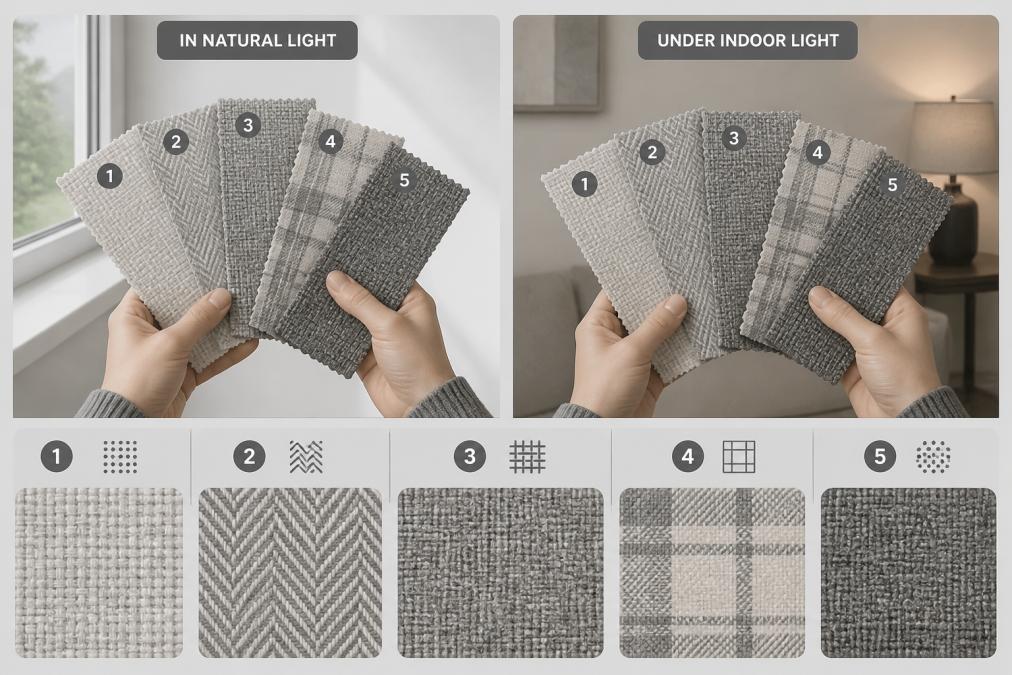
Request samples of your top three choices. Sample swatches let you see the actual weave, texture, and how the pattern repeats. Hold them against your existing furniture, your wall colour, and your flooring. View them in morning light, afternoon light, and evening lamplight. The pattern will look different in each.
Pay attention to the pattern repeat. This is the distance across which the design repeats itself. A small repeat (under 5 cm) creates a tighter, busier feel. A large repeat (10-15 cm or more) feels more open and modern. When you see the actual repeat in your hand, you understand how the pattern will read on your sofa.
Ordering samples online and choosing based on a single viewing is the most common mistake. Patterns shift dramatically under different lighting. What looks sophisticated at noon may feel cold under evening lights. See your samples in your actual home before committing to a full sofa.
Use samples to test visual weight. A dark pattern on a light ground feels heavier and more formal. A light pattern on dark ground feels sophisticated and contemporary. Hold swatches at the distance you’ll view your sofa from, typically 2-2.5 metres away. Does the pattern read clearly or dissolve into texture?
Evaluate Durability and Maintenance of Patterned Textiles
Pattern durability depends on fibre type, dye method, and weave construction. Not all fabrics wear equally, and patterned textiles have specific vulnerability points.
Printed patterns fade faster than woven patterns. A design printed onto the fabric surface will show wear along high-contact areas, the arms, seat, and back. Woven patterns, where colour is integral to the fibre, resist fading much longer. Harris Tweed, for example, has colour woven throughout the structure, so wear shows the same colour underneath.
Weave density determines how well a pattern resists pilling and snagging. A dense weave (measured in threads per inch) protects the pattern from surface damage. Loose weaves catch more easily and develop fuzzing that obscures the pattern detail.
Ask about the Martindale test rating for any fabric you’re considering (bsigroup.com). This standard measure shows how many rubs a fabric can withstand before visible wear appears. Higher numbers mean longer-lasting patterns, especially for high-use seating. According to BSI Group, a Martindale rating of 20,000 cycles is generally considered suitable for domestic upholstery, with higher ratings (40,000+) recommended for heavy-use areas.
Natural fibres like wool and linen develop character over time. A Harris Tweed pattern may soften slightly as the fabric relaxes, but the design remains legible. Synthetic blends hold their appearance more rigidly but can feel less authentic as they age.
Colour fastness, the fabric’s resistance to fading, varies dramatically. Ask whether the pattern uses lightfast dyes. Budget fabrics often use dyes that fade noticeably within 2-3 years of sunlight exposure. Quality textiles retain their colour for a decade or more.
Select Durable Sofa Fabrics for Families and Active Homes
If your household includes children, pets, or heavy use, pattern choice becomes a practical decision, not just aesthetic.
Darker patterns hide wear better than light ones. A charcoal geometric hides dust, pet hair, and minor stains. A cream or pale pattern shows every mark immediately. This is not about quality, it’s about realistic maintenance.
Tightly woven fabrics resist pet claws and rough play. Loose weaves snag and pill more easily. If you have dogs or cats, ask for rub-count data. Fabrics rated above 50,000 Martindale cycles handle active households. Below 30,000 cycles, expect visible wear within 2-3 years of heavy use.
Pattern complexity affects perceived cleanliness. A busy, multi-colour pattern camouflages minor stains and dust. A simple, single-colour pattern shows everything. If stain resistance matters to you, choose patterns with multiple tones rather than solid or near-solid designs.
For families with young children or pets, select darker, complex patterns in tightly woven fabrics rated above 40,000 Martindale cycles. Lighter, simpler patterns require more frequent cleaning to maintain appearance.
Synthetic fibres like polyester resist staining better than natural fibres. A polyester-blend tetrad fabric pattern resists wine spills and pet accidents more effectively than pure wool or linen. However, synthetics can feel less luxurious and age less gracefully.
Consider your lifestyle honestly. A cream linen sofa in a household with three dogs is a setup for disappointment. A charcoal wool-blend pattern in the same home remains beautiful for years.
Care for Harris Tweed Sofa Patterns Long-Term
Harris Tweed represents the premium end of patterned upholstery. These handwoven fabrics from the Outer Hebrides carry specific care requirements that preserve their character.
Harris Tweed patterns are woven, not printed. This means the design is integral to the fibre structure. Proper care maintains the pattern’s clarity and the fabric’s distinctive texture for decades.
Vacuum regularly with a soft brush attachment. Do not use a high-suction upright vacuum, which can pull at the weave. Weekly light vacuuming removes dust and prevents dirt from embedding in the pattern.
Spot-clean spills immediately with a damp cloth and mild soap.
Never dry-clean Harris Tweed without checking with Tetrad sofas. Tetrad chairs. first. Harsh chemicals can strip the natural oils that give the fabric its character. Many dry-cleaners damage these fabrics. Professional upholstery cleaning is safer when needed.
Rotate cushions every few months if your sofa has removable ones. This distributes wear evenly across the pattern and extends the visible life of the design.
Calculate Fabric Requirements and Pattern Matching
Pattern matching is where many buyers stumble. If your pattern has a large repeat, calculating fabric requirements becomes complex.
| Pattern Repeat Size | Typical Extra Fabric Needed | Best For |
|---|---|---|
| Under 5 cm | None to 5% | Small-scale geometrics, tight patterns |
| 10-25 cm | 5-10% | Medium patterns, most residential use |
| 10-15 cm | 10-15% | Large-scale designs, feature sofas |
| Over 15 cm | 15-20% | Bold statements, sectionals |
Common Mistakes When Choosing Patterned Fabrics
Most people make predictable errors when they choose tetrad fabric patterns. Understanding these mistakes helps you avoid them.
Frequently Asked Questions
How do I order free fabric samples for Tetrad furniture?
Contact our team directly to request Tetrad fabric sample swatches. We’ll send physical samples of your chosen patterns so you can assess colour, texture, and weave density in your own home lighting. This tactile experience is essential before investing in a bespoke sofa, as photographs cannot convey the true character of upholstery or how patterns interact with your existing décor.
Are Harris Tweed fabrics durable for everyday sofa use?
Harris Tweed is exceptionally durable for family homes. The dense weave and natural fibres provide excellent resistance to wear, with most Harris Tweed sofas maintaining their appearance for 15-20 years with proper care. Regular vacuuming and occasional professional cleaning preserve the pattern and texture. For households with children or pets, Harris Tweed’s durability makes it a wise long-term investment.
What’s the difference between pattern repeat and pattern matching when reupholstering?
Pattern repeat refers to how often a design motif recurs across the fabric, larger repeats use more material and may require precise alignment on cushions. Pattern matching means aligning repeats across sofa sections and cushions for visual continuity. Both affect fabric estimates; a 60cm repeat requires more yardage than a 15cm repeat. Our team calculates these requirements precisely to avoid waste and ensure your sofa’s patterns align seamlessly.
How do I choose a patterned fabric that won’t look dated in five years?
Timeless patterns, geometric designs, traditional tweeds, and classic florals, age better than trend-driven styles. Consider the pattern’s visual weight: busy, high-contrast patterns can feel overwhelming in smaller rooms, whilst subtle textures remain elegant longer. Neutral colour palettes with pattern accents tend to endure better than bold colour combinations. Our experts can guide you toward patterns that balance contemporary appeal with lasting style.
