
Blog
Eco Friendly Sofa Fabric Options: A Home Buyer’s Guide

Nov
Last Updated: November 22, 2026
Quick Summary
Eco friendly sofa fabric options for homes include linen, organic cotton, wool, recycled wool and recycled polyester, each with different durability, care needs and environmental trade-offs. Match the fabric to your household, then verify organic or recycled claims with certifications such as GOTS, OEKO-TEX Standard 100 and GRS.
- Linen is a low-irrigation flax crop that is strong, breathable and softens with use, though it creases.
- Organic cotton is grown without the synthetic pesticides used in conventional cotton farming.
- Recycled polyester diverts plastic from landfill but still sheds microplastics.
- GOTS certifies organic fibre content, while OEKO-TEX Standard 100 tests finished textiles for harmful substances.
- Vacuum natural covers regularly with a soft brush and blot spills instead of rubbing them.
Table of Contents
- Why Eco Friendly Sofa Fabric Matters for Your Home
- Natural Upholstery Fabrics: Linen, Cotton and Wool
- Recycled Fabric Sofas: What Recycled Content Really Means
- Comparing Eco Friendly Sofa Fabrics Side by Side
- Eco-Friendly Upholstery Certifications and How to Verify Claims
- How to Care for Sofa Fabric on a Tetrad Piece
- Choosing the Right Eco Fabric for Your Tetrad Sofa
- Frequently Asked Questions
Why Eco Friendly Sofa Fabric Matters for Your Home
Choosing eco friendly sofa fabric options for homes is no longer a niche concern. It has become a practical decision about comfort, durability and indoor air quality. At Tetrad sofas, we help buyers understand what sits beneath them every evening.
Sofa fabric is not just a colour choice. It affects how a piece wears, how it feels against skin, and what happens to it at the end of its life. A fabric that sheds microplastics or carries heavy chemical finishes has an environmental cost long after the sofa arrives.
The good news is that natural upholstery fabrics now rival synthetics on performance. Linen, wool and organic cotton blends offer wear resistance and breathability without the trade-offs buyers once accepted. If you want a wider view of the sustainable picture, our guide to 7 sustainable upholstery fabrics for luxury furniture is a useful starting point, and so is our case for handcrafted furniture as a sustainable choice.
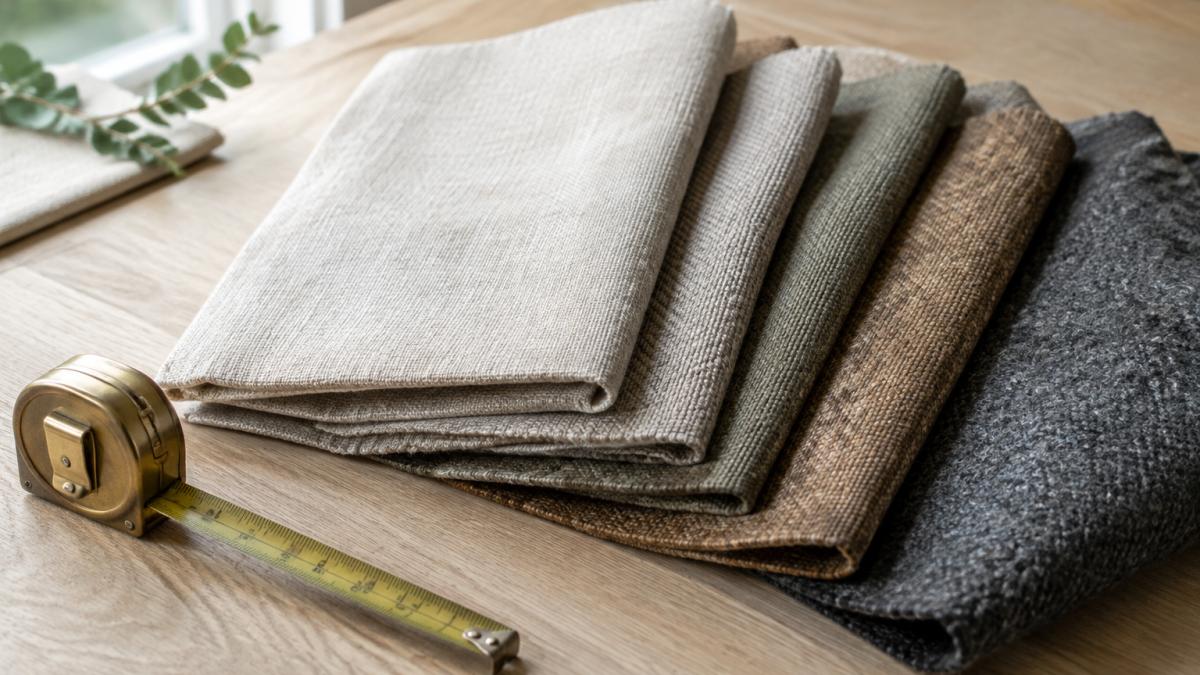
Natural Upholstery Fabrics: Linen, Cotton and Wool
Natural fibres form the backbone of most eco friendly sofa ranges. Each has a distinct character, and none suits every household equally.
Linen and Flax: Breathable and Hard-Wearing
Linen comes from the flax plant, a crop that grows with relatively little irrigation. It is naturally strong, breathable and softens with use. The one drawback is creasing, which some buyers love and others do not.
Organic and Conventional Cotton
Organic cotton is grown without the synthetic pesticides used in conventional farming (Organic cotton: what makes it different). The difference matters for soil health and water quality. Conventional cotton blends remain popular because they resist fading well and feel smooth, though they carry a heavier environmental footprint.
Wool and Recycled Wool
Wool is naturally stain-resistant, flame-retardant and resilient. Recycled wool gives offcuts and old garments a second life without losing those qualities. If you want the full argument, our piece on why natural wool upholstery outperforms synthetics covers durability and care in detail.
Recycled Fabric Sofas: What Recycled Content Really Means
Recycled fabric sofas use yarns made from post-consumer or post-industrial waste, most commonly recycled polyester from plastic bottles. The appeal is obvious: waste is diverted from landfill and new raw material is avoided.
The caveat is that “recycled” says nothing about longevity. Ask what percentage of the fabric is recycled, and whether the recycled content sits in the cover, the cushion filling or the frame. Responsible sourcing means knowing where each component comes from.
Comparing Eco Friendly Sofa Fabrics Side by Side
No single fabric wins on every measure. The right choice depends on your household, your tolerance for care, and how the piece will be used. The table below compares the main options on the factors that matter most, followed by practical guidance for specific household needs that most sustainability guides overlook.
| Fabric | Durability | Comfort and Texture | Care Level | Best For | Environmental Trade-offs |
|---|---|---|---|---|---|
| Linen | High, softens with age | Cool, textured, creases | Moderate | Relaxed living rooms, warm rooms | Low irrigation crop, but processing and transport add impact |
| Organic cotton | Good, resists fading | Smooth, breathable | Easy | Family homes, everyday use | Lower pesticide load than conventional cotton, but water-intensive |
| Wool | Excellent, resilient | Warm, dense | Low | High-traffic rooms, cooler spaces | Renewable and long-lasting, but methane from sheep farming |
| Recycled wool | Very good | Slightly coarser | Low | Buyers wanting circular materials | Diverts waste, but recycling process uses energy |
| Recycled polyester | Moderate | Smooth, uniform | Very easy | Rental homes, low-maintenance needs | Diverts plastic from landfill, but still sheds microplastics |
| Bouclé blends | Varies by fibre content | Soft, looped texture | Higher | Statement pieces, low-traffic corners | Depends entirely on fibre composition |
Matching fabric to household needs
Pets and children.
Allergies.
High-traffic rooms.
Spills and stains.
Cost and value over time
The relevant measure is cost per year of use, since a durable cover can cost less per year than a cheaper one that needs replacing sooner. Repairability matters too: covers that can be reupholstered or cushions that can be refilled extend the useful life of the whole piece.
Eco-Friendly Upholstery Certifications and How to Verify Claims
Eco-friendly upholstery certifications give you a way to check a claim rather than trust it. Several recognised schemes exist, and each covers a different part of the supply chain. Knowing which label applies to which claim is the difference between genuine verification and greenwash.
What the main certifications actually cover
GOTS (Global Organic Textile Standard) certifies organic fibre content from harvesting through to finished fabric, including social and environmental criteria at processing stages. If a cover is described as organic cotton, GOTS is the label to look for. It does not certify the sofa frame or fillings. Because GOTS applies to the fabric rather than the frame or fillings, comparing natural and synthetic upholstery fibres can clarify what the cover itself is made from, a distinction also reflected in the work of New Creations Fabric & Foam Inc.
OEKO-TEX Standard 100 tests finished textiles for harmful substances, including formaldehyde, heavy metals and certain dyes. It is a chemical-safety label, not an organic or recycled-content label. A fabric can carry OEKO-TEX Standard 100 without containing any recycled or organic fibre.
GRS (Global Recycled Standard) verifies recycled content percentage and tracks it through the supply chain. It also includes social and environmental criteria at processing. If a retailer claims a cover is 60% recycled, GRS certification is the evidence to request.
FSC (Forest Stewardship Council) applies to the wooden frame, not the fabric. It confirms that timber comes from responsibly managed forests. Ask for the FSC claim on the frame separately from any fabric certification.
How to verify a claim before you buy
Verification starts with specific questions. Ask the retailer for the fibre content of the exact cover, not the range average. Request the certification number and the certifying body for any organic, recycled or chemical-safety claim.
Watch out: a “natural” label on a fabric sample means little without documentation. Retailers can describe a blend as natural while it contains a significant synthetic proportion. If you are ordering remotely, our guide on how to choose upholstery fabric online explains how to request samples and read specifications before committing.
What certifications do not tell you
No single label covers durability, care requirements or end-of-life recyclability. A GOTS-certified organic cotton cover may still pill faster than a conventional wool blend. An OEKO-TEX-certified fabric may still be a synthetic that sheds microplastics. Use certifications to verify specific claims, then assess durability and care separately using the comparison and care guidance in this article.
How to Care for Sofa Fabric on a Tetrad Piece
Caring for sofa fabric well is what keeps an eco-friendly choice genuinely sustainable. A cover that lasts fifteen years avoids the waste of three replacements.
Start with the care label and follow it exactly. Most natural covers respond well to regular vacuuming with a soft brush attachment, which lifts grit before it abrades the fibres. Blot spills immediately rather than rubbing, and use a mild, pH-neutral cleaner on wool and linen.
Rotate and plump cushions weekly so wear stays even. Keep pieces out of direct sunlight to protect colourfastness. For deeper cleaning, professional upholstery cleaning is safer than home remedies on natural fibres.
Choosing the Right Eco Fabric for Your Tetrad Sofa
Matching fabric to the piece matters as much as matching it to the room. A Tetrad frame is built to last, so the cover should be chosen with the same horizon in mind.
Consider who uses the sofa. A wool or recycled wool cover handles daily family use with minimal fuss. Linen suits a quieter room where creasing reads as character. A bouclé blend belongs on a statement piece that is admired more than sat on.
At Artisan sofas, we have sold Tetrad sofas since 1994 and know the collections closely. Call us to talk through every aspect before you decide, and use our guide to choosing Tetrad fabric patterns to narrow the options.
The challenge with eco friendly sofa fabric is that the greenest-sounding label is not always the most durable choice. Getting both requires knowing the fibre, the certification and the frame behind it. Tetrad sofas can help you weigh those factors with personal guidance across every fabric and collection, backed by experience with handcrafted Tetrad furniture and white glove delivery. Get started with Tetrad sofas and choose a sofa you will keep for years.
Frequently Asked Questions
What is the most eco-friendly fabric for a sofa?
There is no single winner, because the best eco friendly sofa fabric depends on how the room is used. Linen and wool are strong natural choices: both are durable and, where sourced responsibly, renewable. Recycled polyester keeps existing plastic in use but is still plastic. Look at fibre content, how the fabric wears, and whether the supplier can explain where it came from. A fabric that lasts 15 years usually beats a greener-sounding one that wears out in three.
Are natural upholstery fabrics more sustainable than recycled sofa fabrics?
Not automatically. Natural upholstery fabrics such as linen, cotton and wool come from renewable sources, but growing and processing them uses land, water and energy. Recycled fabrics divert waste from landfill, yet many are still synthetics that shed fibres. The honest comparison is lifecycle: how the fibre is sourced, how long the fabric lasts, and what happens at end of life. Ask for fibre content and sourcing detail before deciding.
Are recycled polyester sofa fabrics durable?
Recycled polyester behaves much like virgin polyester: it resists stretching, holds colour well and stands up to daily use. The trade-off is that it is still plastic, so it can shed microfibres and is not biodegradable. For a busy family sofa it can be a practical pick, particularly with a tight weave. Check the abrasion rating and ask how the fabric should be cleaned, since some recycled blends are less forgiving with harsh cleaners.
Can I choose a sustainable fabric for a Tetrad sofa?
Yes. At Artisan sofas we have sold Tetrad sofas since 1994 and can talk you through each upholstery option, including natural and recycled-content choices, before you commit. Call us to discuss fibre content, how a fabric wears in your room, and how to care for it so the piece stays in use for years.

