
Blog
Is It Worth Reupholstering a Sofa or Time to Replace?

Nov
Last Updated: November 21, 2026
Quick Summary
Knowing when to reupholster versus replace furniture comes down to one question: is the frame worth saving? If the frame is solid hardwood with sound joints, reupholstering a sofa restores comfort and appearance for less than a new piece of comparable quality. If the frame is softwood, chipboard or creaking at the joints, replacement usually wins on value.
- Fabric wears out while frames rarely do, so inspect the frame before requesting any quote.
- A transparent reupholstery quote itemises fabric, labour, fillings, repairs, collection, delivery and VAT separately.
- Two or more structural faults, such as loose joints or broken springs, usually point to replacement.
- Reupholstery stops making sense when the quote approaches the price of a new sofa of equal quality.
- TETRAD sofas have handcrafted British frames and a choice of fabric or leather, making them worth reupholstering later.
Table of Contents
- Reupholster or Replace: The Decision in Brief
- Signs a Sofa Needs Reupholstering
- Is It Worth Reupholstering a Sofa? Weighing Cost Against Value
- How Long Do Sofas Last, and What Does That Mean for Cost Per Year?
- Sofa Frame Repair: When the Frame Decides the Answer
- When Reupholstery Is Not Enough
- Talk Through Your Sofa With Artisan Sofas Before You Decide
- Frequently Asked Questions
Reupholster or Replace: The Decision in Brief
Knowing when to reupholster versus replace furniture comes down to one question: is the frame worth saving? If the frame is solid hardwood with sound joints, reupholstering a sofa restores comfort and appearance for less than a new piece of comparable quality. If the frame is softwood, chipboard or creaking at the joints, replacement usually wins on value.
At Artisan sofas, we have sold TETRAD sofas for many years. That experience shapes how we advise customers weighing up reupholstering a sofa against buying new. The short version: fabric wears out, frames rarely do.
Below, we break down the signs that matter, the costs to weigh, and the point at which repair stops making sense.
| Factor | Favours Reupholstery | Favours Replacement |
|---|---|---|
| Frame | Solid hardwood, tight joints | Softwood, chipboard, movement |
| Springs | Intact, even support | Broken or collapsed |
| Fabric | Worn but frame sound | Wear plus structural faults |
| Value | Well-built piece worth keeping | Low-cost build nearing end of life |
| Sentiment | Strong attachment | No particular attachment |
Signs a Sofa Needs Reupholstering
The clearest sign a sofa needs reupholstering is fabric that has worn through while the frame and suspension remain firm. If fabric wear is what has brought you here, our guide on how to choose the right sofa fabric sets out what to look for in a replacement that will last. Fading, staining and thinning at the arms and seat edges are cosmetic problems, and cosmetic problems are exactly what new upholstery solves.
Fabric Wear, Fading, Stains and Visible Damage
Sun fading, ground-in stains and split seams are common triggers. A good test is to press firmly on the seat and listen. If the fabric is tired but the frame stays silent and rigid, reupholstery is a strong candidate. If the fabric is fine but the seat sags, the problem is deeper than the cover.
Cushions, Foam and Padding That Have Lost Support
Flat, lumpy cushions are often the first complaint. Upholstery fillings can often be rebuilt or upgraded, which is worth understanding before you write off a comfortable old sofa. Our guide to traditional upholstery versus modern foam filling explains what can be restored and what gets replaced.
Is It Worth Reupholstering a Sofa? Weighing Cost Against Value
Reupholstering a sofa is worth considering when the piece is well built and the quote compares favourably with the cost of a new sofa of the same quality. That like-for-like comparison is the whole calculation. Comparing a reupholstery quote with the cheapest new sofa on the high street is not a fair test.
To make that comparison properly, break the reupholstery quote into its component parts. A transparent quote will itemise fabric (by metre and grade), labour (by hours or by piece), replacement fillings, any frame or spring repairs, collection and delivery, and VAT. Ask for each line separately. A single lump sum hides where the money is going and makes it impossible to judge value.
As a working framework, most reupholstery projects divide roughly into fabric, labour and repairs. Fabric cost depends on grade and the number of metres required, and the exact amount varies with the pattern repeat and the sofa’s construction. Labour reflects the complexity of the piece. Repairs are the unknown, which is why the frame inspection matters before you commit.
Ask three things of any quote: what is being replaced, what is being kept, and what happens to the frame. A quote that covers fabric and labour but ignores worn suspension is not a complete job. Equally, a quote that proposes to reuse tired foam to keep the price down is not comparing like with like against a new sofa. Once the scope of the work is clear, choosing durable sofa fabric helps ensure the new upholstery is as sound a choice as the repairs beneath it.
Ask specifically what work is being done to the interior of the sofa, including whether the frame is being repaired and whether the fillings are being renewed.
If you want a wider framework for judging whether money spent on a sofa is money well spent, our guide on whether expensive sofas are worth it sets out how to weigh durability, materials and long-term value.
How Long Do Sofas Last, and What Does That Mean for Cost Per Year?
A well-made sofa with a hardwood frame and quality upholstery can serve a household for many years, while a lower-quality build may need replacing sooner. Spread over that life, the cost per year often favours the better-made piece.
The calculation is straightforward: take the purchase price, add any reupholstery or repair costs over the piece’s life, and divide by the number of years of service. Spread over many years of use, a well-made piece can work out cheaper per year than replacing lower-quality sofas more often.
Fabric on a quality sofa may need renewing during its life, typically when it wears through at the arms and seat edges. Budget that reupholstery into the cost-per-year calculation rather than treating it as a surprise.
There is also a residual-value point. A well-built sofa can retain some value even when tired, because the frame is worth saving. That difference matters when you compare the two on a like-for-like basis.
Our article on why handcrafted furniture lasts longer than factory pieces explains the construction differences behind that gap.
Sofa Frame Repair: When the Frame Decides the Answer
Sofa frame repair is viable when the frame is solid timber and the damage is limited to loose joints, a split rail or worn corner blocks. Those are repairable faults. A frame made of softwood, chipboard or stapled joints that has started to move is a different matter.
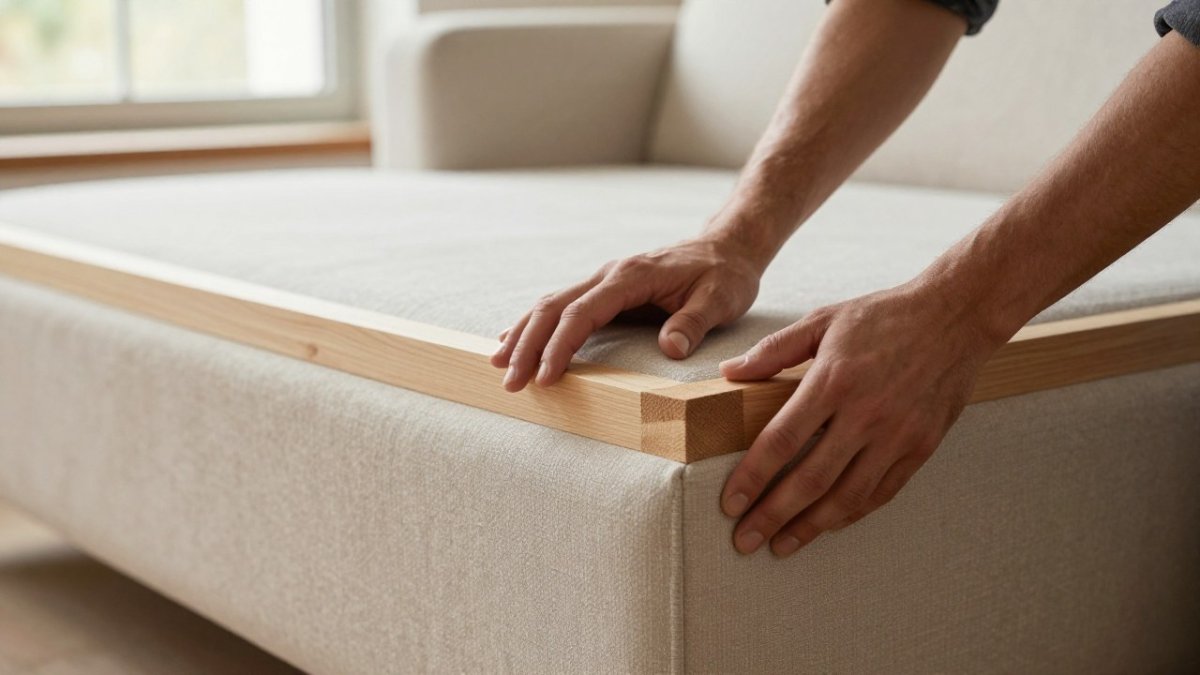
The construction method tells you almost everything. If you are unsure how your sofa is built, our comparison of traditional and modern sofa frames covers construction methods, durability, cost and repairability.
A Practical Inspection Checklist for Frames, Joints, Springs and Cushions
Run through this before you request any quote:
- Rock the sofa gently by one arm; movement means loose joints
- Lift one corner and listen for creaking or cracking
- Press each seat area to feel for broken springs or a collapsed base
- Check the frame rails under the dust cover for splits or staples
- Turn each cushion and feel for flat spots or crumbling foam
- Look for fabric wear that has reached the frame or webbing
Two or more structural faults usually point to replacement.
When Reupholstery Is Not Enough
Reupholstery stops being the right answer when the frame itself has failed. Cracked softwood, joints that will not hold a repair, a warped rail or a base that has rotted are all signs the piece is beyond economic repair. The same applies when the quote approaches the price of a new sofa of equal quality.
There is also the question of what you are keeping. A sofa with a failing frame will not improve with a new cover, and you will have paid for fabric on a piece that still needs replacing.
This is where buying well matters. A TETRAD sofa, with its handcrafted British frame and choice of fabric or leather, is the sort of piece worth reupholstering in the future.
Talk Through Your Sofa With Artisan Sofas Before You Decide
The decision is easier with someone who knows the construction. At Artisan sofas, we have sold TETRAD sofas for over thirty years, we know the people at TETRAD personally, and we have visited the factory on numerous occasions. That knowledge is exactly what a repair-or-replace call needs.
Call us to talk through a TETRAD sofa before you buy, or before you decide whether an existing piece is worth saving.
If you are leaning towards a new piece, browse our TETRAD collection and see the fabrics and leathers for yourself.
The hardest part is not the cost, it is knowing whether your frame is worth saving. Artisan sofas can help you judge that with the detail it deserves, from handcrafted British frames to fabric and leather choices and white glove delivery. Get started with Artisan sofas and make the call with confidence.
Frequently Asked Questions
How do I know if my sofa is worth reupholstering?
Start with the frame. A solid hardwood frame with sound joints and working springs is usually worth recovering, because the expensive part of the sofa is still doing its job. If the frame wobbles, creaks under load or has split joints, reupholstery will only hide the problem. Check the cushions too: sagging foam is easy to replace during a recover, but a frame that has failed is a different question.
Is it cheaper to reupholster a sofa or buy a new one?
It depends on what you are comparing. Reupholstery avoids paying twice for a frame you already own, so on a well-built sofa it can work out better value than buying a like-for-like replacement of similar quality. Against a cheap mass-produced sofa, new may look cheaper up front, but that comparison only holds if the new piece lasts as long. Ask for an itemised reupholstery quote covering fabric, labour and any frame or cushion work, then compare it with the cost of a new sofa of equivalent build quality, not the cheapest one on the shop floor.
How long should a good-quality sofa last?
A well-made sofa with a solid frame and good suspension can serve a household for many years with care. The practical measure is cost per year: divide what you paid by the years of comfortable use you get. Regular cushion rotation and professional cleaning help you get the full life out of the upholstery.
Can you reupholster a Tetrad sofa?
Yes. When the fabric has worn but the structure is sound, reupholstery can be worthwhile. Before committing, have the frame, joints, springs and cushions assessed so you know whether it is a recover-only job or whether frame repair is needed too. At Artisan Sofas we have sold Tetrad sofas for many years, so we can talk you through whether recovering your piece makes sense or whether a new Tetrad sofa is the better route.

