
Blog
Why Handcrafted Furniture Lasts Longer Than Factory Pieces
Oct
Table of Contents
- Handcrafted Furniture vs Factory-Made: The Core Difference
- Material Selection: Solid Wood vs Engineered Wood Furniture
- Durable Sofa Frame Construction and Joinery
- How to Tell if Furniture is Well Made
- Durability Under Daily Wear and Tear
- Furniture Repair and Restoration: A Handcrafted Advantage
- Upfront Cost vs Long-Term Value
- Frequently Asked Questions
Last Updated: October 20, 2026
Handcrafted Furniture vs Factory-Made: The Core Difference
The distinction between handcrafted furniture and factory-made pieces runs deeper than aesthetics. At Tetrad sofas and chairs, we’ve spent over 50 years observing how these two approaches produce fundamentally different results in durability, longevity, and real-world performance. Handcrafted furniture lasts longer than factory pieces because of how it’s built, not just what it’s built from.
Factory production prioritises speed and cost efficiency. Pieces move through assembly lines where each worker performs one repetitive task. The focus is on volume, not individual quality control. Handcrafted furniture, by contrast, involves skilled craftspeople who take ownership of an entire piece or major section of it. They inspect joints, test stability, and make adjustments as they work.
This difference compounds over years. A sofa that wobbles slightly after three years of use may have started with compromised joinery. A handcrafted frame built with precision joinery techniques typically feels as solid at year ten as it did on delivery day. The real-world wear and tear that degrades factory furniture, the slight movements that loosen connections, the stress points that weren’t properly reinforced, simply doesn’t occur at the same rate in well-constructed handmade pieces.
Material Selection: Solid Wood vs Engineered Wood Furniture
The materials chosen during production determine how furniture responds to daily use. Handcrafted furniture typically uses solid wood for structural elements, while factory-made pieces often rely on engineered wood materials to reduce costs.
Solid wood, whether hardwood like oak and beech or softwood like pine, maintains structural integrity over decades. It can be sanded, refinished, and repaired. When a solid wood frame develops a minor crack, it’s often repairable rather than a death sentence for the piece.
Engineered wood materials include MDF (medium-density fibreboard), particleboard, and plywood with wood veneer. These materials are created by binding wood particles or thin layers together with adhesive. They’re cheaper to produce and lighter to handle in factories. However, they degrade differently than solid wood. When moisture penetrates the veneer or adhesive fails, the engineered material swells, warps, or delaminates. Peeling veneer and bubbling surfaces are common failures in factory furniture after five to seven years of use.
A handcrafted sofa frame made from solid hardwood can last 20 years or more with normal use. The same piece made with engineered wood components typically shows visible wear, wobbling, cracking, or structural failure, within 10 to 15 years. The material choice isn’t incidental; it’s the foundation of whether furniture actually lasts.
Durable Sofa Frame Construction and Joinery
How a sofa frame is assembled determines whether it will feel solid after a decade of daily sitting or develop movement and squeaks within a few years. This is where handcrafted furniture and factory pieces diverge most noticeably.
Joinery Methods That Stand the Test of Time
Joinery refers to how wooden frame components connect. The method chosen, or skipped, determines structural durability.
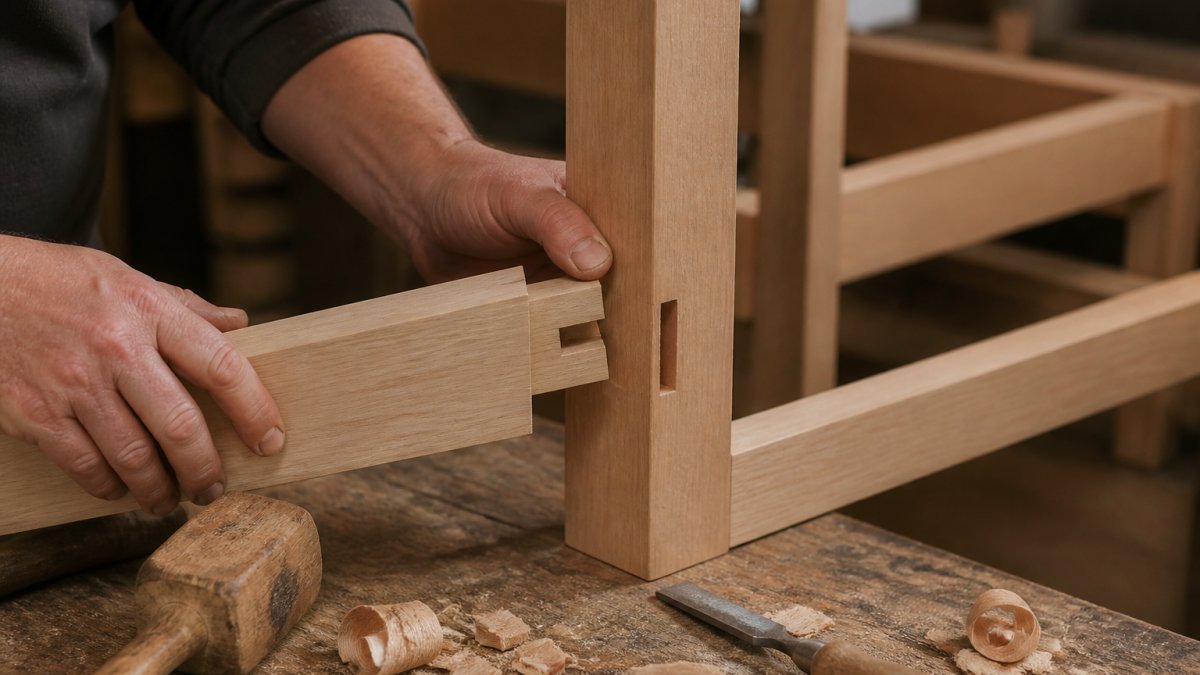
Mortise-and-tenon joints involve cutting a rectangular slot (mortise) into one piece of wood and a matching projection (tenon) on another, then fitting them together. This joint is stronger than the wood itself. When glued properly, it creates a connection that can handle decades of stress without loosening.
Dovetail joints interlock like fingers. They resist pulling forces and are extremely difficult to separate. You’ll find them in quality drawer construction and premium frame work. They’re labour-intensive, which is why factories rarely use them.
Dowel joints use wooden pegs to connect frame pieces. They’re faster than mortise-and-tenon joints but less strong. Many mid-range handcrafted pieces use dowels combined with quality glue.
Butt joints with screws or staples are what you typically find in factory furniture. Two pieces of wood are pushed together and fastened with hardware. This is fast and cheap. However, screws and staples work loose over time as wood moves slightly with humidity changes and stress from use.
The difference isn’t theoretical. A sofa with mortise-and-tenon joinery feels solid after 15 years. The same design with butt joints and staples feels unstable after five.
Frame Reinforcement and Hardware
Beyond the joints themselves, how the frame is reinforced determines real-world durability. Handcrafted sofas typically use corner blocks, solid wood blocks glued and screwed at frame joints where stress concentrates. These blocks distribute force and prevent the frame from racking (twisting out of square).
Factory frames often skip corner blocks to save cost and production time. The frame relies entirely on the joints themselves to resist stress. Over years, this leads to the frame gradually losing its square shape, creating uneven wear on cushions and visible gaps at seams.
Hardware quality matters too. Premium handcrafted pieces use hardened steel brackets and bolts. Budget factory pieces use mild steel fasteners that corrode and weaken, especially in humid environments. When you buy handcrafted furniture, the hardware is often invisible, it’s built to last without needing replacement. Factory hardware frequently needs tightening or replacement within five to ten years.
How to Tell if Furniture is Well Made
Before investing in a sofa, knowing what to look for separates pieces that will last from those that won’t.
Examine the frame. Ask to see the underside or ask the retailer directly about frame construction. Solid hardwood is ideal. If the frame is made from engineered wood, ask how it’s reinforced. Quality pieces will have corner blocks and proper joinery visible or clearly described.
Check the joints. Run your hand along where frame pieces meet. You should feel tight connections with no give. If you can move parts relative to each other, the joint is either loose or poorly constructed.
Assess the legs. Legs should be solid wood, not veneered particleboard. They should be securely attached, ideally with corner blocks underneath the frame. Legs that feel loose or are attached with just a few staples won’t survive years of movement.
Feel the cushion support. Sit on the sofa and move around. Quality pieces have consistent support. Soft spots or areas where you feel the frame indicate inadequate cushioning or a frame that’s already beginning to fail.
Ask about joinery specifically. Reputable makers will tell you whether they use mortise-and-tenon joints, dowels, or other methods. They’ll explain why their approach ensures durability. If a retailer can’t or won’t answer this question, that’s a warning sign.
Durability Under Daily Wear and Tear
How furniture responds to normal use separates pieces that age gracefully from those that deteriorate visibly.
Factory furniture often shows its age quickly. Cushions compress unevenly because the frame beneath them is already slightly unstable. Fabric or leather shows wear patterns that suggest the frame is moving. Seams separate because the frame is racking. After five years, a factory sofa often looks tired.
Handcrafted furniture responds differently to daily wear. Quality cushioning materials hold their shape longer, but more importantly, the frame beneath remains stable. After five years, a well-made sofa still feels as solid as it did on delivery. After ten years, it may show cosmetic wear, fabric fading, leather patina, but the structural integrity remains intact.
The reason is straightforward: a stable frame doesn’t create stress points that accelerate wear. A wobbly frame concentrates stress on certain areas, causing premature failure in those spots. Handcrafted furniture lasts longer than factory pieces because the frame stays stable, distributing stress evenly across the entire structure.
This stability also means fewer creaks and squeaks. Factory sofas often develop noises as joints loosen and hardware works free. Handcrafted pieces, built with proper joinery and reinforcement, remain quiet even after years of use.
Furniture Repair and Restoration: A Handcrafted Advantage
When problems do occur, and after years of use, something usually does, handcrafted furniture has a significant advantage: it can be repaired.
A solid wood frame with traditional joinery can be disassembled and rebuilt if needed. Joints can be re-glued, corner blocks replaced, and hardware upgraded. The piece can be refinished, reupholstered, or modified. A sofa that’s 15 years old can often look and function like new after professional restoration. Such enduring structural integrity relies on the precision of traditional woodworking techniques, which also extend to the specialized hardware and components that secure these heirloom pieces.
Factory furniture, by contrast, is often unrepairable. If the engineered wood frame is damaged, replacing the component is usually impossible because the piece was never designed for disassembly. If veneered surfaces peel or bubble, patching is temporary at best. Once the frame becomes unstable, the sofa is typically discarded.
This repairability adds real value over time. A handcrafted sofa might cost more upfront, but knowing it can be restored, reupholstered, or modified extends its useful life indefinitely. Many families pass handcrafted pieces through generations, with each generation refreshing the upholstery or making minor repairs as needed.
Upfront Cost vs Long-Term Value
The initial purchase price of handcrafted furniture is higher than factory alternatives. This is often where the comparison stops. However, looking at cost over time tells a different story.
A factory sofa might cost significantly less initially. However, if it requires replacement after 8 to 10 years, the total cost over 20 years involves two or more purchases.
Beyond pure replacement cost, there’s the cost of disruption. Replacing a sofa means choosing new pieces, managing delivery, disposing of the old one, and adapting to new furniture. A handcrafted piece that lasts 20 years eliminates this disruption for two decades.
Quality also compounds in ways that aren’t obvious upfront. A stable frame means cushions wear evenly and last longer. Proper joinery means no expensive repairs or reinforcement work. Solid wood means the piece can be refinished if desired, updating its appearance without replacement.
When you buy from specialists like Tetrad sofas and chairs, you’re investing in pieces designed to last. The craftsmanship, material selection, and construction methods reflect a commitment to durability that factory production simply cannot match.
Investing in furniture is a significant decision. The difference between a piece that feels worn after five years and one that remains solid after fifteen isn’t luck, it’s the result of deliberate choices in materials, construction, and craftsmanship.
| Factor | Handcrafted Furniture | Factory-Made Furniture |
|---|---|---|
| Frame Material | Solid hardwood | MDF, particleboard, veneer |
| Joinery Method | Mortise-and-tenon, dovetail | Butt joints with staples |
| Frame Reinforcement | Corner blocks, quality hardware | Minimal reinforcement |
| Typical Lifespan | 20+ years | 8-12 years |
| Repairability | Fully repairable and restorable | Often unrepairable |
| Long-Term Cost | Higher upfront, lower per-year cost | Lower upfront, higher replacement cost |
Handcrafted furniture lasts longer than factory pieces because solid wood, proper joinery, and careful construction create stable frames that resist wear. Factory furniture prioritises speed and cost, resulting in materials and methods that degrade predictably within a decade.
When evaluating a sofa, ask the retailer about frame construction and joinery methods specifically. If they can’t explain how the frame is built and why it will last, that’s a signal the piece wasn’t designed for longevity.
Frequently Asked Questions
Why does handcrafted furniture often last longer than factory-made furniture?
Handcrafted furniture typically lasts longer because artisans select premium solid wood, use time-tested joinery techniques like mortise-and-tenon joints, and invest hours in structural integrity. Factory-made pieces often rely on engineered materials such as MDF or particleboard, which deteriorate faster under daily wear. Additionally, handcrafted pieces can be repaired and refinished, extending their lifespan decades beyond mass-produced alternatives that are often designed for replacement rather than longevity.
What’s the difference between solid wood and engineered wood furniture?
Solid wood furniture uses full timber throughout the frame and structure, offering natural strength and the ability to be sanded, stained, and refinished multiple times. Engineered wood, including MDF, particleboard, and plywood, is made from compressed wood fibres or veneered surfaces. Solid wood resists warping and cracking better over time, while engineered wood can develop bubbling veneer, chipping, and structural weakness within 5-10 years of daily use, making solid wood the superior choice for durable, long-lasting furniture.
How can you tell if a sofa frame is well made?
Check for solid hardwood construction (ask whether the frame is solid wood or engineered materials), examine visible joints for precision and tight fit, and look for reinforcement methods like corner blocks or metal brackets. A well-made frame should feel stable with no wobble when you apply pressure. Ask about joinery methods, dovetail and mortise-and-tenon joints indicate superior craftsmanship.
Can handcrafted furniture be repaired and refinished?
Yes, handcrafted furniture built from solid wood can be repaired, refinished, and restored throughout its lifespan. Skilled craftspeople can replace worn upholstery, repair cracked frames, refinish worn finishes, and replace hardware. This repairability is one of the key advantages of handcrafted pieces, they’re designed to be maintained and improved rather than discarded. Factory-made furniture with engineered materials, veneer, and glued construction often cannot be economically repaired, making handcrafted pieces a more sustainable long-term investment.
