
Blog
How to Choose the Right Sofa Fabric: A Practical Guide
Oct
Table of Contents
- Assess Your Household Needs Before Choosing Sofa Fabric
- Pet-Friendly Sofa Fabrics: What Actually Works
- Natural vs Synthetic Fibres: Durability and Performance
- Understanding Fabric Quality: Rub Count and the Martindale Rub Test Explained
- Texture, Weave, and Comfort: How Construction Affects Your Choice
- Sofa Fabric Maintenance Tips for Long-Term Care
- Colour, Decor Coordination, and Testing at Home
- Frequently Asked Questions
Last Updated: October 4, 2026
Assess Your Household Needs Before Choosing Sofa Fabric
When you choose sofa fabric, start with an honest assessment of how your home actually lives. The most beautiful fabric becomes a regret within months if it doesn’t match your reality.
The question isn’t “what looks good?” but “what will still look good in two years?”
High-traffic homes and family living
High-traffic areas demand fabrics built for constant use. You need a weave that resists pilling and a fibre that bounces back.
Natural fibres like linen and cotton are vulnerable in high-traffic settings; they pill easily and absorb liquids. Synthetic blends and performance fabrics are engineered for this: they shed dirt and dry faster when accidents happen.
Pets and stain resistance
Pet ownership demands fabrics that withstand claws, shed fur, and accidents.
Tight weaves matter more than fibre type. Look for fabrics with a high Martindale rub count (how many times a fabric can be rubbed before showing wear). Performance fabrics typically score 15,000+; for pets, aim for 20,000 or higher.
Colour strategy matters too. Medium tones hide both pet hair and minor stains far better than light neutrals or very dark shades. Patterned fabrics offer similar camouflage benefits.
Pet-Friendly Sofa Fabrics: What Actually Works
Pet-friendly fabrics combine durability with practical maintenance.
Synthetic performance fabrics repel rather than absorb. Polyester-based blends with solution-dyed fibres (colour built into the fibre) resist staining, fading, and odour.
Wool blends offer natural stain resistance and resilience, though they cost more and require careful cleaning. According to the Woolmark Company, wool has a natural protective layer that helps repel spills.
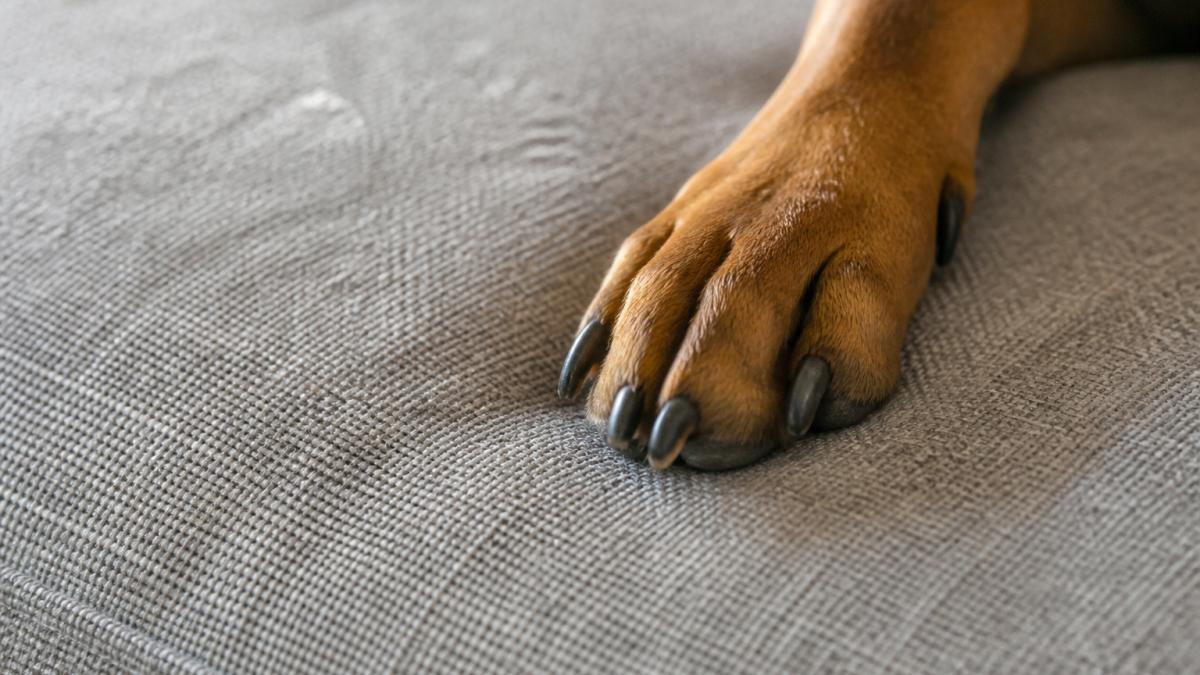
Avoid loosely woven fabrics regardless of fibre content. Tight weaves prevent claws from snagging and dirt from embedding. Velvet and similar pile fabrics catch everything; textured weaves with visible structure work better.
Natural vs Synthetic Fibres: Durability and Performance
The fibre choice determines how your sofa ages, its environmental impact, and trade-offs between comfort, durability, and sustainability.
Natural fibres: linen, wool, and cotton
Natural fibres breathe, age beautifully, and feel luxurious, genuine advantages despite trade-offs.
Durability downsides are real: linen wrinkles, cotton absorbs stains, wool requires specialist cleaning. None perform well in high-traffic homes with pets.
Natural fibres have complex sustainability profiles. Organic cotton and linen reduce chemical exposure; conventional cotton is pesticide-intensive. Wool is renewable but carries farming costs. Look for GOTS (Global Organic Textile Standard) for cotton/linen or RWS (Responsible Wool Standard) certifications if environmental impact matters.
Natural fibres work best in formal, low-traffic spaces without animals. Choose them when feel and environmental values matter more than durability.
Synthetic fibres: polyester and performance blends
Synthetic fibres are engineered for performance. Polyester dominates because it’s affordable, durable, and easy to care for.
Modern performance fabrics feel nearly identical to natural alternatives with superior durability. Solution-dyed polyesters resist fading, dry quickly, and shed dirt.
Synthetics derive from petroleum and shed microplastics, but a 20-year synthetic sofa has lower total environmental cost than replacing a natural fibre sofa every 10 years. For a more sustainable option, look for fabrics made from recycled polyester.
To reduce environmental impact, look for recycled polyester content. Ask suppliers about percentages; 30-50% is increasingly common. For peace of mind regarding harmful chemicals, seek out Oeko-Tex Standard 100 or GREENGUARD certifications, especially if anyone in the household has chemical sensitivities or respiratory conditions.
Blended fabrics: balancing performance and values
Blended fabrics capture benefits of both. A 70% polyester, 30% linen blend offers durability with improved breathability and natural feel.
Check fibre composition on the specification sheet. Fibres listed first are the largest percentage. A 70%+ synthetic blend performs like synthetic; 60%+ natural feels like natural fibre.
Understanding Fabric Quality: Rub Count and the Martindale Rub Test Explained
The Martindale rub test measures how many times a fabric can be rubbed before visible wear appears. It’s the most objective durability measure, but only one metric.
How the Martindale test works and what the numbers mean
The test rubs a fabric sample under consistent pressure until wear appears. A count of 10,000 means 10,000 rubs before visible damage. Results are standardised under ISO 12947.
Light-use spaces need a 10,000-12,000 rub count. High-traffic family areas need 15,000+. With pets or children, aim for 20,000 or higher. For commercial use, standards often exceed 30,000 rubs.
Rub count predicts relative durability, not absolute lifespan.
Beyond rub count: other quality metrics that matter
Rub count alone doesn’t tell the whole story. Weave structure, fibre quality, and finishing treatments all affect real-world performance.
Pilling resistance is tested separately. Ask your supplier for pilling ratings (1-5 scale, 5 best). Aim for 4 or higher in high-traffic areas.
Colorfastness measures fade resistance (1-8 scale, 8 best). Aim for 6+ in normal light, 7-8 in direct sunlight. Solution-dyed synthetics resist fading better.
Seam slippage resistance measures how easily threads slide past each other under stress. This matters for seams on cushions and arms; poor seam slippage resistance leads to visible gaps and unravelling. Look for fabrics rated 4 or higher on a 5-point scale.
Weight (measured in grams per square metre, or gsm) correlates with durability. A 300+ gsm fabric will outperform a 200 gsm alternative in high-traffic areas. Heavier fabrics feel more substantial and typically last longer, though they may be hotter to sit on in summer.
How to request and test fabric swatches at home
Specification sheets tell you what a fabric should do. Testing swatches in your actual home tells you how it will feel and perform in your specific environment.
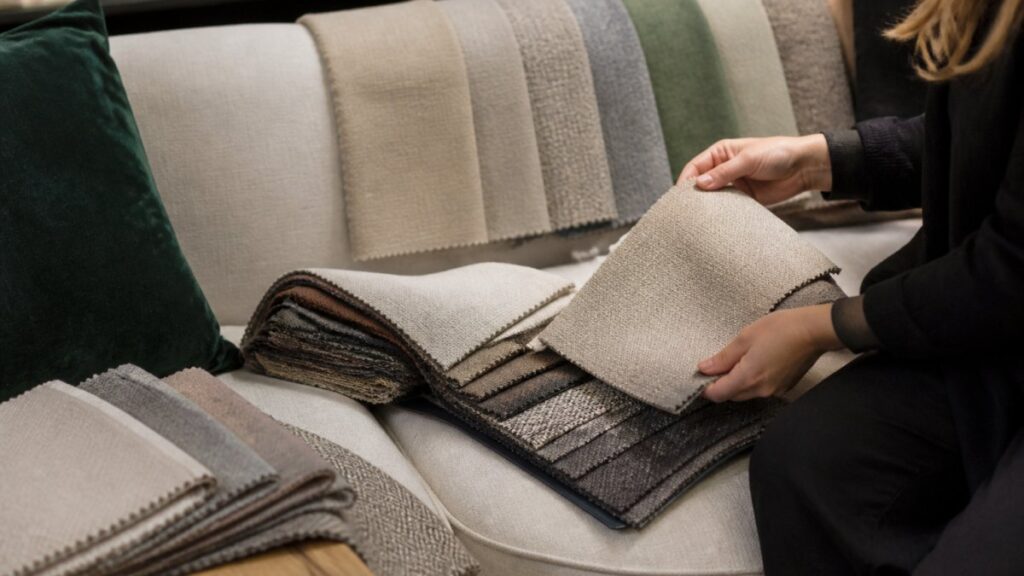
When requesting swatches from a supplier, ask for samples at least 15 cm × 15 cm (larger is better). Request multiple swatches if you’re comparing options; seeing them side-by-side in your space is far more reliable than comparing them separately.
Light-fastness testing at home: Pin swatches to your wall near your sofa location and observe them over 2-4 weeks. Leave half of each swatch covered (use tape or paper) and expose the other half to normal room light.
Texture and feel assessment: Sit on the swatch, run your hand across it multiple times, and assess how it feels. Does it feel slippery or secure? Does it pill when you rub it firmly? Does it feel hot or breathable?
Stain resistance testing: If the fabric is marketed as stain-resistant, test it. Spill a small amount of water on the swatch and observe how quickly it absorbs or beads up.
Colour matching in your space: Observe swatches in morning light, afternoon light, and evening artificial light. Lighting dramatically shifts colour perception. A neutral grey swatch might look warm in incandescent light and cool in daylight.
Most reputable suppliers offer swatch services at no cost or for a small deposit (often refundable if you purchase).
Texture, Weave, and Comfort: How Construction Affects Your Choice
How a fabric is constructed determines both how it feels and how it performs. Two fabrics with identical fibres can behave completely differently based on their weave.
Tight weaves resist pilling, hide dirt, and feel smoother underhand. Loose weaves feel softer initially but trap dirt and are vulnerable to snagging. Pile fabrics, velvet, microsuede, feel luxurious but show footprints and pet paw marks instantly. Textured weaves with visible structure hide marks whilst maintaining tactile interest.
Breathability matters more than many people realise. Tightly woven synthetic fabrics can feel hot in summer. Adding natural fibres to the blend, even 20% linen or cotton in a polyester-dominant blend, improves airflow without sacrificing durability. This is where performance blends earn their reputation; they balance multiple competing demands.
Weight affects both comfort and longevity. Heavier fabrics (measured in grams per square metre) typically last longer and feel more substantial. A 300+ gsm fabric will outperform a 200 gsm alternative in high-traffic areas. For formal sofas that see occasional use, lighter weights work fine.
Sofa Fabric Maintenance Tips for Long-Term Care
How you maintain your sofa determines whether it looks new in five years or tired in two. Maintenance starts the day your sofa arrives.
Regular cleaning and spot treatment
Vacuum weekly with an upholstery attachment. Dirt and dust embed in weaves over time, accelerating wear. Weekly vacuuming prevents this accumulation and costs nothing.
Spot-treat spills immediately. Blot rather than rub, rubbing pushes liquid deeper into the weave. For most modern fabrics, plain water and a microfibre cloth handle fresh spills. Let it dry completely before using the sofa again.
Professional cleaning every 12-18 months extends life significantly. This removes deep dirt that vacuuming misses. Check your fabric’s cleaning code (usually found on a tag beneath the sofa) before booking; different codes require different approaches. Matching the correct solution to your specific fabric type ensures that routine maintenance remains effective, so consult these upholstery cleaning tips to refine your approach to stain removal and long-term care.
Protection from direct sunlight and fading
Direct sunlight fades all fabrics, though some resist better than others. Solution-dyed synthetics fade more slowly than natural fibres or conventionally dyed fabrics. But even the best fabrics fade if exposed to hours of direct sun daily.
Close curtains or blinds during peak sun hours. Rotate cushions monthly to even out sun exposure. Consider UV-protective window film if your sofa sits in a south-facing window. These simple steps add years to your fabric’s appearance.
Colorfastness, a fabric’s ability to resist fading, is worth checking before purchase. Ask your supplier about testing standards. Better fabrics come with documented colorfastness ratings.
Colour, Decor Coordination, and Testing at Home
When you choose sofa fabric by colour, the choice feels personal but has practical consequences. Light colours show stains and dirt; dark colours show dust and pet hair; medium tones hide both.
Beyond practical concerns, colour must coordinate with your existing decor. This is where many online purchases fail. A swatch looks right in artificial light, then arrives in your living room and clashes with your walls, curtains, and artwork.
Request fabric swatches from your supplier and live with them for several days. Pin them to your wall, observe them in morning light and evening light, sit with them near your existing furniture. Lighting changes colour perception dramatically. A neutral grey swatch might look warm in artificial light and cool in natural daylight.
Many reputable suppliers offer swatch services to help with this. Seeing a small sample isn’t enough; you need to test it in your actual space before committing to a full sofa.
Pattern and texture add visual interest whilst hiding marks. Solid colours demand perfection; patterned fabrics are forgiving. If you’re uncertain, pattern is the safer choice for a high-use sofa.
Choosing sofa fabric well means matching your fabric to your life, not forcing your life to match your fabric. Start with honest assessment, traffic patterns, pets, sunlight, maintenance tolerance, then evaluate options against those realities. Artisan Sofas offers many fabrics to suit every lifestyle. Learn more about Artisan Sofas’ bespoke approach.
Frequently Asked Questions
What is the Martindale rub test and why does it matter when choosing sofa fabric?
The Martindale rub test measures how many times a fabric can be rubbed with a wool-wrapped cylinder before visible wear appears. Fabrics rated 15,000+ rubs suit family homes; 30,000+ rubs indicate commercial-grade durability. Higher rub counts mean your sofa fabric will resist pilling, fading, and wear in high-traffic areas. When choosing sofa fabric, this specification directly predicts how long your investment will last under daily use.
Which sofa fabrics are most pet-friendly?
Pet-friendly sofa fabrics combine stain resistance with durability. Synthetic fibres like polyester blends and performance fabrics outperform natural fibres for pet homes because they resist moisture absorption and are easier to clean. Look for fabrics with high rub counts (25,000+), tight weaves that prevent snagging from claws, and cleaning codes that allow water-based spot treatment. Darker colours and textured weaves hide pet hair and minor marks better than light, smooth fabrics.
What is the difference between natural and synthetic sofa fabrics?
Natural fibres like linen, wool, and cotton offer breathability and aesthetic warmth but require more careful maintenance and are prone to pilling and fading in sunlight. Synthetic fibres like polyester provide superior stain resistance, durability, and easier cleaning, though some people find them less breathable. Many modern sofas blend both for balance: natural fibres for comfort and appearance, synthetics for practical durability. Your choice depends on your lifestyle, household traffic, and maintenance commitment.
How often should I clean my sofa fabric and what’s the best method?
Vacuum your sofa weekly to remove dust and debris, and address spills immediately with blotting rather than rubbing. Check your fabric’s cleaning code: ‘W’ means water-based cleaner, ‘S’ requires solvent-only, and ‘WS’ allows both. Monthly spot cleaning with appropriate products keeps stains from setting. Avoid direct sunlight exposure, which causes colorfastness issues and fading. Professional cleaning annually extends the life of your upholstery and maintains its appearance, particularly important for investment pieces.
