
Blog
7 Reasons Handcrafted Furniture Is a Sustainable Choice
Nov
Last Updated: November 14, 2026
Quick Summary
Handcrafted furniture is a sustainable choice because it is made to order rather than stockpiled, uses materials chosen for lifespan, and is constructed so it can be repaired. At Tetrad, we build sofas and chairs this way, with joinery and upholstery designed to be serviced decades later.
- Made-to-order production avoids the unsold stock that becomes clearance and then landfill.
- Ask for the timber species, country of harvest and an FSC or PEFC certificate number you can check.
- A hardwood frame with proper joints can be reupholstered repeatedly; a stapled softwood frame cannot.
- Re-covering a sound frame is almost always the lower-impact option compared with buying new.
- Handmade does not automatically mean sustainable: uncertified timber and short-life foam remain a poor choice.
Table of Contents
- Why Handcrafted Furniture Is a Sustainable Choice
- What Makes Sustainable Sofas Different from Mass-Produced Pieces
- Sustainable Furniture Materials: What to Look For
- Sofa Durability and Longevity: The Case for Built to Last
- Repairing and Reupholstering Sofas Instead of Replacing Them
- The Trade-Offs: Where Handcrafted Furniture Falls Short
- A Practical Buyer Checklist for Sustainable Furniture
- Choosing a Tetrad Piece as a Long-Term Investment
- Frequently Asked Questions
Why Handcrafted Furniture Is a Sustainable Choice
Handcrafted furniture is a sustainable choice because it is built to order, from materials selected with care, by makers who expect the piece to be repaired rather than replaced. At Tetrad, we make sofas and chairs this way, and the environmental case for doing so is a strong one.
The logic is straightforward once you strip away the marketing. A mass-produced sofa is manufactured in bulk, shipped long distances, and often discarded when the frame weakens or the fabric wears. A handcrafted piece is made for a specific customer, in small batches, with joinery and upholstery designed to be serviced decades later.
Below, we break down the seven reasons that matter most, from waste reduction to repairability, and we are honest about where handcrafted furniture falls short.
What Makes Sustainable Sofas Different from Mass-Produced Pieces
Sustainable sofas differ from mass-produced pieces in three ways: they are made to order rather than stockpiled, they use materials chosen for lifespan rather than lowest cost, and they are constructed so they can be repaired. Everything else follows from those three decisions.
Made-to-Order Production and Minimal Waste
Made-to-order production is the single biggest waste advantage. A factory churning out identical sofas builds ahead of demand, and unsold stock becomes clearance, then landfill.
A common mistake buyers make is assuming “made to order” simply means a longer wait. In practice, it means the sofa was never built on spec in the first place.
Sustainable Furniture Materials: What to Look For
Sustainable furniture materials are those with a verifiable origin, a long service life, and an end-of-life plan. The word that matters most is verifiable. Almost every sofa retailer now uses the language of sustainability, so the useful skill is not recognising green words but testing the paperwork behind them.
How to Verify Timber and Fabric Claims
Start with the timber in the frame. Ask for the species, the country of harvest and the certification chain. Forest certification schemes such as FSC and PEFC are the recognised route for demonstrating that timber comes from responsibly managed sources, and a credible supplier can produce a certificate number you can check against the scheme’s public database. A claim of “responsibly sourced wood” with no certificate reference is a marketing line, not evidence.
For fabrics, ask for the composition by percentage and the name of the mill. Natural fibres such as wool and cotton age well and can be re-covered, but their environmental profile depends on how they were grown and finished. Recycled-content fabrics should come with documentation stating the recycled proportion; without that figure, “recycled” is unquantified.
UK government guidance on timber sourcing and deforestation
Reclaimed Wood, Recycled Metals and Organic Fabrics
Bamboo and other fast-growing renewable materials have their place, but durability should always come first. A material that needs replacing in five years is not sustainable, however green it looks on the label.
Watch out: a low-impact material assembled with adhesives or finishes that off-gas in the home can undercut the benefit. Ask what finishes and adhesives are used, not just what the frame and cover are made from.
For a closer look at the options, our guide to sustainable upholstery fabrics sets out seven choices that balance luxury, durability and environmental responsibility. When you choose a Tetrad piece, our team can talk you through the composition and origin of each fabric and leather in the range so the decision rests on facts rather than labels.
Sofa Durability and Longevity: The Case for Built to Last
Sofa durability and longevity come down to the frame, the joinery and the suspension, not the fabric on top. A hardwood frame with proper joints can be reupholstered repeatedly; a stapled softwood frame cannot.
This is where handcrafted construction separates itself. Mass-produced sofas are frequently assembled in ways that make repair impractical, which is why so many end up at the kerbside long before their materials have worn out.
Long-lasting design is not about being heavy for its own sake. It is about every component being serviceable. Our piece on why handcrafted furniture lasts longer than factory pieces goes deeper into the construction differences.
Repairing and Reupholstering Sofas Instead of Replacing Them
Repairing and reupholstering sofas extends their working life by years and keeps both frame and filling out of the waste stream. Re-covering a sound frame is almost always the lower-impact option compared with buying new.
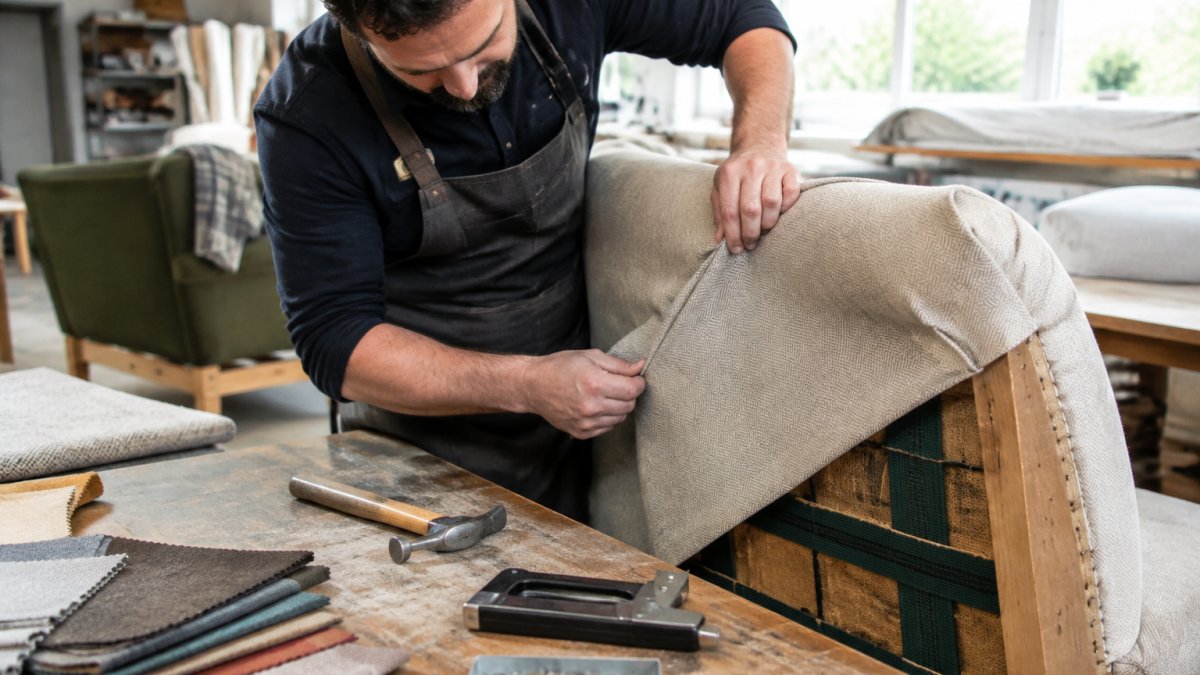
The practical route is simpler than most people expect. If the frame is sound and the suspension still supports you, the sofa usually needs new covers, not replacement.
Circular design starts at the point of purchase: a sofa you can re-cover is a sofa you keep. If you already own a loose-cover Tetrad sofa, replacement covers offer a straightforward way to refresh it rather than replace it.
The Trade-Offs: Where Handcrafted Furniture Falls Short
Handcrafted furniture is not the right answer for every buyer, and pretending otherwise does not help anyone. The honest trade-offs are upfront cost, lead time, material availability and a smaller choice of ready-to-take-home stock. Handmade also does not automatically mean sustainable: a hand-built sofa made from uncertified timber and short-life foam is still a poor environmental choice.
Comparing Lifespan and Total Cost of Ownership
Upfront cost is the one that stops most people. A handcrafted sofa asks for more money on day one, and the environmental benefit only pays back over a long ownership period. The fair comparison is not sticker price against sticker price but cost per year of use.
The same logic applies to environmental impact: fewer replacements mean less material extracted, less manufacturing energy and less furniture sent for disposal.
Transport is the other variable. A piece made locally travels a short distance; a container-load shipped across the world carries a transport burden that a short supply chain avoids. Ask where the sofa is actually made, not just where the brand is based.
Lead Times, Customisation and Returns
Lead times are real too. Made-to-order means waiting, and bespoke dimensions add to that. Material availability can extend a lead time further if a particular fabric or leather is out of stock.
Watch out: a long lead time is not itself a sustainability credential. The environmental case rests on materials, construction and repairability, not on how long you waited.
For a clear-eyed breakdown of the numbers, read is handcrafted furniture worth the price.
A Practical Buyer Checklist for Sustainable Furniture
A practical buyer checklist turns vague green claims into questions a retailer can actually answer. Use it before you commit to any sofa.
- Ask what the frame is made from and how the joints are constructed
- Request the origin and certification of the timber
- Confirm whether the sofa can be reupholstered later
- Check if replacement covers are available for loose-cover designs
- Ask where the piece is made and how far it travels
- Find out what the warranty covers and for how long
- Confirm the fabric’s composition and expected wear life
If a retailer cannot answer these, that silence tells you something. A maker confident in their materials will have the answers to hand.
UK guidance on waste prevention and the waste hierarchy
Choosing a Tetrad Piece as a Long-Term Investment
Choosing a Tetrad piece is a decision to buy once and keep. Tetrad sofas and chairs are handcrafted British furniture, and our team can talk you through the options for your piece.
What most buyers miss is that the fabric decision matters as much as the frame. We can help you work through the fabric and leather options so the piece suits your room.
| Consideration | Handcrafted Tetrad sofa | Mass-produced alternative |
|---|---|---|
| Production | Made to order, small batch | Built to stock in bulk |
| Frame | Hardwood, repairable joinery | Often stapled softwood |
| Reupholstery | Designed to be re-covered | Frequently impractical |
| Customisation | Fabric, leather, dimensions | Fixed ranges |
| Lifespan | Built for decades of use | Replaced when worn |
| Upfront cost | Higher | Lower |
Best for: buyers who intend to keep a sofa for many years and want it to suit their room.
Skip if: you need something to take home this week or you are furnishing a short-term rental.
Weighing it up? Our guide to whether Tetrad sofas are worth the investment covers quality, warranty and long-term value in detail.
The challenge with sustainable furniture is that green claims are easy to make and hard to verify. Ask about the frame, the timber’s origin, and whether the piece can be repaired, and the answers will separate genuine craftsmanship from marketing. At Tetrad, we build sofas and chairs to order in Britain, guide you through every fabric and leather, and deliver with a white glove service that places the piece properly in your home. Get started with Tetrad and choose a sofa built to be kept, repaired and enjoyed for decades.
Frequently Asked Questions
Why is handcrafted furniture more sustainable than mass-produced furniture?
Handcrafted furniture is typically made to order, so there is less overproduction and less waste sent to landfill. Because handcrafted pieces are designed to last decades and can be reupholstered, the environmental impact is spread over a much longer lifespan than a mass-produced sofa that is replaced every few years.
Do handmade sofas last longer than mass-produced sofas?
In most cases, yes. Longevity depends on care and use, but a well-built handcrafted sofa is designed to be kept for many years.
Can a sofa be repaired or reupholstered to extend its life?
Yes, and this is one of the strongest sustainability arguments for handcrafted furniture.
What should I look for when buying a sustainable sofa?
Check for repairability, not just recycled content: a sofa that can be maintained and re-covered will outlast one that cannot. Ask for evidence of sourcing and certifications rather than relying on marketing claims alone.

