
Blog
7 Reasons Natural Wool Upholstery Fabrics Outperform Synthetics
Oct
Last Updated: October 25, 2026
Quick Summary
Wool upholstery fabrics outperform synthetics through superior durability, natural flame and odour resistance, and temperature regulation that adapts to ambient conditions. Wool maintains tensile strength over years of use, resists bacterial growth that causes odours, and creates air pockets that provide warmth without trapping heat.
- Wool maintains tensile strength even after years of stretching, reducing seams splitting and surface tearing under normal use.
- Wool fibres naturally resist bacterial growth, keeping sofas fresher longer than synthetic fabrics that trap moisture where bacteria thrive.
- Wool is inherently difficult to ignite and chars rather than melts, whereas synthetics usually require chemical treatment to meet flammability standards.
- The crimp in wool fibres creates air pockets that regulate temperature across seasons while remaining breathable.
- Wool is renewable and biodegradable, while synthetic fabrics are petroleum-based and persist in landfill.
Table of Contents
- Why Natural Wool Upholstery Fabrics Stand Out
- Durability and Longevity: What Makes Wool Upholstery Fabrics So Hard-Wearing
- Natural Resistance: Flame, Stain, and Odour Protection Built In
- Comfort and Climate Control: How Wool Regulates Temperature and Moisture
- Wool Upholstery Fabric Pros and Cons: A Balanced Look
- Wool vs Synthetic Upholstery Fabric: Which Is Right for Your Home
- Wool Upholstery Care and Cleaning: Maintaining Your Investment
- Choosing Your Perfect Wool Upholstery Piece
- Frequently Asked Questions
Why Natural Wool Upholstery Fabrics Stand Out
Natural wool upholstery fabrics have long been prized by interior designers and homeowners for their exceptional performance characteristics.
Durability and Longevity: What Makes Wool Upholstery Fabrics So Hard-Wearing
The longevity advantage extends to structural integrity. Wool maintains its tensile strength even after years of stretching and movement, whereas some synthetic fibres weaken over time. This means the fabric itself remains intact longer, reducing the likelihood of seams splitting or the surface tearing under normal use. UK textile durability standards establish performance benchmarks that wool consistently meets and often exceeds.
Learn more about durable upholstery fabrics and how natural fibres compare to synthetics.
Natural Resistance: Flame, Stain, and Odour Protection Built In
Odour resistance is another property that often surprises new wool owners. Wool fibres naturally resist bacterial growth that causes odours to develop. Synthetic fabrics, by contrast, can trap moisture and organic matter where bacteria thrive, leading to persistent smells even after cleaning. A wool sofa in a home with pets or children maintains fresher air quality longer than synthetic equivalents, often requiring only occasional airing rather than frequent deep cleaning.
Comfort and Climate Control: How Wool Regulates Temperature and Moisture
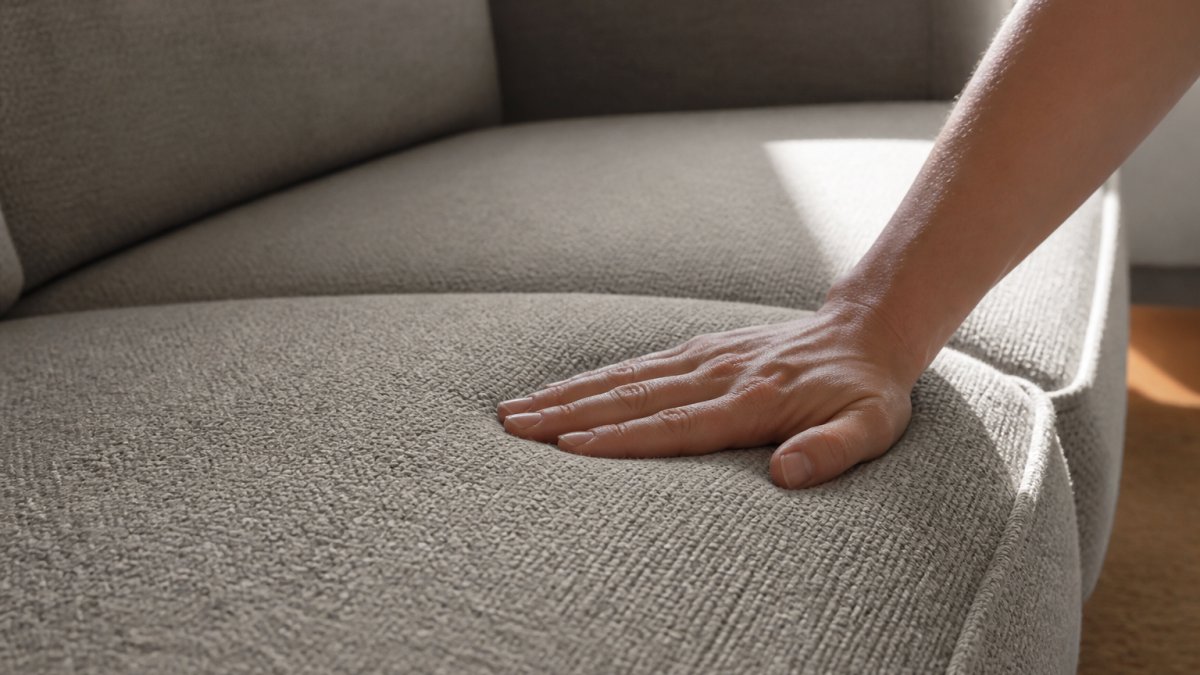
This inherent thermal adaptability remains a hallmark of authentic wool, making the process of identifying natural fibers essential for anyone seeking to curate a truly responsive and comfortable living space.
Temperature regulation in wool works through insulation without trapping heat. The crimp in wool fibres creates air pockets that provide warmth in cool conditions while remaining breathable in warmth. This is why wool blankets regulate temperature across seasons, and the same principle applies to upholstery. Your sofa adapts to ambient conditions rather than forcing a single thermal experience.
Wool Upholstery Fabric Pros and Cons: A Balanced Look
A balanced view of wool upholstery needs to move beyond ‘durable versus cheap’ and give you measures you can actually compare. The table below sets out the trade-offs most buyers care about, with the kind of specifics that make the differences meaningful.
| Characteristic | Wool Upholstery | Typical Synthetic Upholstery |
|---|---|---|
| Abrasion resistance | High; natural crimp and fibre elasticity help the surface recover from compression and rubbing | Variable; often good in flat weaves but can flatten and shine in high-traffic areas |
| Pilling | Low to moderate in well-selected upholstery weights; tighter weaves and blends reduce surface fuzz | Can be low in filament synthetics but staple synthetics may pill where fibres are loose |
| Colourfastness | Generally good, though strong sunlight will fade any textile over time; solution-dyed synthetics can be more light-fast | Often excellent in solution-dyed form; standard dyed synthetics vary |
| Flame behaviour | Inherently difficult to ignite; chars rather than melts | Usually requires chemical treatment to meet contract flammability expectations |
| Moisture and comfort | Absorbs and releases moisture vapour, moderating the microclimate | Can trap moisture, leading to a clammy feel after prolonged sitting |
| Cleaning | Blot spills promptly; mild wool-safe detergent; professional cleaning every few years | Often wipe-clean, but stains can set permanently if they penetrate |
| Lifecycle cost | Higher upfront; a long service life can lower cost per year of use | Lower upfront; shorter replacement cycle may raise cost per year |
| End of life | Renewable and biodegradable | Petroleum-based; slow to break down |
Treat the pros and cons as a specification conversation, not a brand loyalty question.
Wool vs Synthetic Upholstery Fabric: Which Is Right for Your Home
Environmental and ethical trade-offs. Wool is renewable and biodegradable, but its footprint depends on farming, processing, and transport. Look for traceability and responsible farming information where it is available, and treat broad sustainability claims with the same scrutiny you would apply to performance claims. Synthetic fabrics are petroleum-based and persist in landfill, but they may last a long time in the right application. Neither choice is automatically ‘better’ without context.
Wool Upholstery Care and Cleaning: Maintaining Your Investment
Wool upholstery fabrics require straightforward maintenance that differs from synthetic care. Regular vacuuming with a soft brush attachment removes surface dust and prevents particles from settling into the weave. Discover expert guidance on choosing and evaluating upholstery fabrics online, including care considerations. Weekly vacuuming in high-traffic areas and monthly vacuuming in lighter-use zones keeps the fabric looking fresh.
Choosing Your Perfect Wool Upholstery Piece
Explore Tetrad’s wool fabric collections to see and select specific wool upholstery options.
Contact a Tetrad specialist to discuss wool upholstery options and get personalized recommendations.
Choosing between upholstery fabrics ultimately comes down to what you value in your home.
Frequently Asked Questions
Is wool upholstery actually durable enough for everyday use?
Yes. Wool upholstery fabrics have natural elasticity and crimp structure that allows fibres to spring back after compression, resisting wear patterns that develop on sofas. The fibre’s resilience means it maintains its appearance through regular use far longer than most synthetic alternatives. Wool’s abrasion resistance is particularly strong when blended with other natural fibres, making it suitable for living rooms, family spaces, and high-traffic areas.
How does wool upholstery compare to synthetic upholstery fabric in terms of stain resistance?
Wool upholstery fabric has natural lanolin, an oil that repels liquid and resists staining better than untreated synthetics. However, wool is not stain-proof; spills should be blotted promptly. Unlike some synthetics, wool doesn’t trap moisture or odours as easily, which reduces the risk of permanent discolouration from damp stains. Synthetic fabrics may resist initial staining but often trap moisture, leading to mildew or odour problems that are harder to reverse.
What’s the best way to clean wool upholstery care and cleaning at home?
Vacuum regularly with an upholstery attachment to remove dust and debris. For spills, blot immediately with a clean, damp cloth, never rub. Use a specialist wool-safe cleaner diluted in cool water, test on a hidden area first, then apply sparingly. Allow the fabric to air-dry naturally. For stubborn stains or deep cleaning, professional upholstery cleaning every 12-18 months protects the fabric’s longevity and maintains its appearance without damaging the wool fibres.
Is wool upholstery suitable for homes with pets or children?
Wool upholstery fabric is well-suited to homes with pets and children. Its natural resilience means it resists pilling and shedding better than many synthetics, and its antibacterial properties help reduce odours. The fibre’s structure naturally resists soiling, and its durability withstands heavy use. However, wool is not completely stain-proof, so prompt blotting of accidents is important. For maximum protection in high-impact homes, choose tightly woven wool blends and consider a professional protective finish applied by your upholsterer.

