
Blog
Is Expensive Furniture Worth the Investment
Oct
Table of Contents
- Why Expensive Furniture Costs More
- Materials, Craftsmanship, and Structural Integrity
- How Long Should a Sofa Last and What Affects Lifespan
- Cost Per Use: Calculating True Value Over Time
- How to Choose a Durable Sofa Before You Buy
- Repairing vs Replacing an Old Sofa: When Investment Pays Off
- Expensive Furniture Worth the Investment: What Matters Most
- Frequently Asked Questions
Last Updated: October 14, 2026
Why Expensive Furniture Costs More
When you’re comparing a £2,000 sofa to a £500 flat-pack alternative, the price difference isn’t arbitrary. The gap reflects fundamental differences in how the pieces are designed, built, and expected to perform over time. Customers often underestimate what goes into a genuinely durable piece, and that misunderstanding drives many purchasing decisions.
Expensive furniture costs more because it uses better materials, employs skilled labour, and prioritises long-term durability over immediate profit margins. A mass-market sofa is engineered to hit a price point; a handcrafted piece is engineered to last decades. The difference compounds across every component: the frame timber, the suspension system, the upholstery stitching, and the hardware. Each decision adds cost upfront but extends the life of the furniture significantly.
The manufacturing approach also differs dramatically. Mass-produced pieces rely on standardised designs, automated assembly, and cost-cutting at every stage. Expensive furniture often involves hand-finishing, quality control at multiple stages, and bespoke customisation. This labour-intensive approach is inherently more costly, but it’s also what enables a sofa to be truly tailored to your space and preferences rather than forcing you to accept what’s available off the shelf.
Materials, Craftsmanship, and Structural Integrity
The materials in expensive furniture are simply not the same as those in budget alternatives. A high-end sofa typically uses solid hardwood frames, often kiln-dried oak, beech, or ash, rather than the particle board or plywood found in cheaper pieces. Solid wood resists warping, handles repeated stress better, and can be repaired if damaged. The joinery connecting these frame pieces uses traditional methods: mortise and tenon joints, doweling, or corner blocks that distribute weight evenly rather than relying on staples and glue alone.
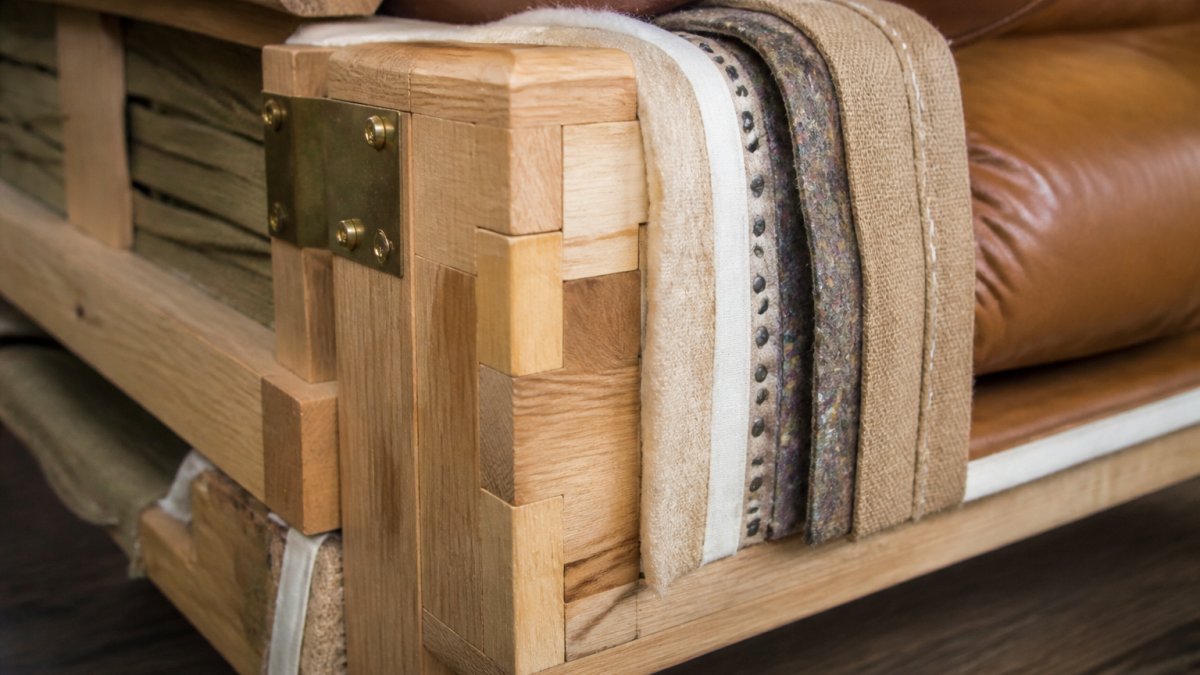
The suspension system beneath the seating surface is where durability becomes tangible. Expensive sofas use eight-way hand-tied springs or high-grade sinuous springs combined with quality webbing. These systems distribute your weight across the entire frame rather than concentrating pressure on a few points. Budget sofas often use cheaper coil springs or foam-only systems that deteriorate faster and create sagging within a few years.
Upholstery quality also separates expensive furniture from the rest. Natural fabrics like linen, wool, and leather develop character with age and wear; they’re also more repairable than synthetic blends. The stitching on expensive pieces is tighter, more consistent, and uses stronger thread. Corners and seams are reinforced. Padding uses higher-density foam or natural fillings that resist compressing into thin, uncomfortable shells.
Craftsmanship isn’t just about skill, it’s about time. A handcrafted sofa might spend weeks in production because each component is checked, adjusted, and finished individually. This meticulous approach catches defects before they reach you and ensures every detail meets a consistent standard.
How Long Should a Sofa Last and What Affects Lifespan
A well-made sofa should last 15 to 20 years with normal use, and some can go longer if maintained properly. This expectation is realistic for expensive furniture built with solid frames and quality suspension systems. Budget sofas typically last 5 to 8 years before the frame weakens, springs sag, or the upholstery begins to fail noticeably.
Several factors determine whether your sofa reaches the upper end of that range. Usage patterns matter: a sofa in a high-traffic family room will age faster than one in a formal living space. Maintenance also plays a significant role. Regular vacuuming, prompt stain treatment, and occasional professional cleaning extend the life of upholstery. Rotating cushions distributes wear more evenly. Avoiding direct sunlight prevents fading and fabric degradation.
The quality of the original construction is the foundation, though. A sofa with a weak frame will sag regardless of how well you care for it. One with poor-quality springs will lose support within a few years. A sofa with tight stitching and reinforced seams will tolerate years of use without unravelling. This is where expensive furniture’s advantage becomes apparent: it’s built to survive the wear and tear that would destroy a cheaper piece.
Environmental factors also influence longevity. Humidity, temperature fluctuations, and air quality affect both the frame and the upholstery. Natural materials like solid wood and wool adapt to these conditions better than synthetic alternatives. A sofa in a stable, well-ventilated room will age more gracefully than one in a damp basement or a room with extreme temperature swings.
Cost Per Use: Calculating True Value Over Time
The real measure of whether expensive furniture is worth the investment isn’t the purchase price, it’s the cost per year of ownership. This calculation reveals why a higher upfront cost often represents better value.
Consider two scenarios. A budget sofa costs £500 and lasts 6 years. That’s approximately £83 per year. An expensive sofa costs £2,000 and lasts 15 years. That’s approximately £133 per year. The annual cost is higher, but you’re getting a piece that remains comfortable and functional far longer. More importantly, if the expensive sofa lasts 20 years, the annual cost drops to £100, and you’ve avoided the disruption and cost of replacing it multiple times.
This calculation becomes even more favourable when you factor in replacement costs. If you buy a £500 sofa every 6 years, you’ll spend £2,000 on sofas over 24 years, plus the time and effort of shopping, arranging delivery, and disposing of the old piece multiple times. You’ll also experience the inconvenience of living without a sofa during replacements. An expensive sofa purchased once might cost the same or less over the same period while eliminating that disruption.
The calculation also overlooks hidden costs. Cheap sofas often require repairs within their lifespan, restitching seams, replacing cushions, repairing springs. These repairs are often not worth the cost relative to the sofa’s value, so you end up replacing the piece instead. Expensive furniture is repairable. If a seam comes undone or a cushion compresses, repairs are worthwhile because the underlying structure is sound and will continue to serve you for years afterward.
How to Choose a Durable Sofa Before You Buy
Assessing durability before purchasing requires understanding what to look for and what questions to ask. Start with the frame. If possible, inspect it directly or ask the retailer for detailed specifications. Solid hardwood is superior to particle board or plywood. Ask about the wood species, oak, beech, and ash are excellent choices.
Examine the joinery. Traditional methods like mortise-and-tenon joints and corner blocks indicate craftsmanship. Sofas held together primarily with staples and glue will fail faster. If you can’t see the frame directly, ask whether the manufacturer can provide images or documentation of the construction method.
The suspension system is critical. Eight-way hand-tied springs are the gold standard, but high-quality sinuous springs combined with proper webbing also perform well. Ask about the spring gauge and the webbing material. Foam-only systems are cheaper but less durable. If the retailer can’t explain the suspension system in detail, that’s a warning sign.
Upholstery material matters for both durability and repairability. Natural fibres like wool, linen, and leather are more durable than many synthetics and can be repaired more easily. If you choose a natural fabric, ask about the weave density, higher density means better durability. Leather should be full-grain or top-grain rather than bonded leather, which peels and cracks.
Check the stitching. Look for tight, even stitching throughout, especially at seams and corners. Loose stitching is a sign of rushed production. Ask about thread strength and whether seams are reinforced. Cushion construction also matters, ask whether cushions are hand-stitched or glued. Hand-stitched cushions are more durable.
Finally, ask about warranty and repairability. A manufacturer confident in durability will offer a substantial warranty and be willing to repair components. This commitment to long-term support is a marker of expensive furniture that’s genuinely built to last.
Repairing vs Replacing an Old Sofa: When Investment Pays Off
The decision to repair or replace an old sofa depends on several factors: the cost of repair, the remaining useful life of the piece, and your attachment to it. For expensive furniture built with quality materials and craftsmanship, repair is almost always the better choice.
A sofa with a solid frame and good bones can be reupholstered. This is a significant investment, potentially £1,000 to £3,000 depending on size and fabric choice, but it gives you a piece that’s essentially new for a fraction of the cost of purchasing a replacement. You’re also preserving a sofa you know is comfortable and durable. For budget sofas with weak frames or poor construction, reupholstering doesn’t make sense because the underlying structure won’t support the investment.
Specific repairs are often worthwhile on expensive pieces. A seam that’s come undone can be restitched. Springs that have lost tension can be retied. Cushions can be re-stuffed. Leather can be professionally repaired or conditioned. These targeted repairs cost far less than replacement and extend the sofa’s life by years. With budget sofas, these same repairs often cost more than the piece is worth, so replacement becomes the only practical option.
The decision also depends on whether the sofa still meets your needs. If it’s comfortable, fits your space, and you like the design, repair makes sense. If you’ve outgrown the style or it no longer suits your home, replacement might be the better choice despite the cost. But if you’re replacing simply because the piece is old, you’re likely making a false economy. An expensive sofa that’s 15 years old and needs reupholstering is still a better investment than a new budget sofa that will need replacing again in 6 years.
Expensive Furniture Worth the Investment: What Matters Most
Whether expensive furniture is worth the investment ultimately depends on your priorities and circumstances. For certain pieces and certain situations, the answer is clearly yes. For others, it’s more nuanced.
Expensive furniture makes the strongest case when you’re purchasing pieces you expect to keep long-term. A sofa you’ll live with for 15 years justifies a higher upfront cost in ways a temporary solution doesn’t.
Budget matters, of course. If you can’t afford expensive furniture without financial strain, a more affordable option is the right choice. Quality of life now is more important than theoretical long-term savings. But if you have the means and you’re making a deliberate choice, expensive furniture often delivers better value over time.
The investment also makes sense if you value design and individuality. Expensive furniture often offers customisation options, specific dimensions, fabric choices, and design details, that allow you to create something truly suited to your home. Mass-market furniture forces you to accept standardised solutions.
Finally, consider the total cost of ownership. Calculate not just the purchase price but the annual cost spread across the expected lifespan, plus the cost of replacements you’d otherwise need. Factor in the inconvenience and disruption of replacing furniture multiple times. When you account for these factors honestly, expensive furniture often emerges as the more economical choice over a decade or more.
Is expensive furniture worth the investment? For most people purchasing pieces they intend to keep long-term, the answer is yes, particularly when the alternative is replacing cheaper furniture repeatedly. The durability, repairability, and comfort of well-made pieces justify the higher cost.
Frequently Asked Questions
What makes expensive furniture worth the investment?
Premium furniture typically features superior materials (solid wood frames, high-grade upholstery), superior craftsmanship with hand-stitched details, and structural integrity that withstands decades of daily use. Quality pieces resist wear and tear, maintain comfort, and often retain aesthetic appeal longer than mass-produced alternatives. The higher upfront cost translates to fewer replacements over a lifetime, delivering genuine long-term value.
How long should a well-made sofa last?
A quality sofa built with solid wood frames, eight-way hand-tied springs, and premium upholstery can last 15-25 years with proper care. Lifespan depends on construction quality, fabric durability, usage intensity, and maintenance. Bespoke pieces with replaceable components often outlast standard furniture because worn covers can be re-upholstered rather than requiring full replacement.
Is it better to repair or replace an old sofa?
Repair becomes worthwhile when the frame and structure remain sound but upholstery, cushions, or springs show wear. Re-upholstering a quality frame costs significantly less than buying new and preserves the piece’s character and comfort. Replacement makes sense only if the frame is damaged, warped, or the structural integrity is compromised beyond safe repair. Quality sofas designed for repairability justify the investment.
How do I know if a sofa is built to last before buying?
Assess the frame (solid wood is superior to plywood), check joinery methods (mortise-and-tenon joints indicate craftsmanship), examine spring systems (eight-way hand-tied springs outlast sinuous wire), and verify upholstery quality and stitching. Ask about warranty coverage, availability of replacement parts, and re-upholstery options. Specialist retailers can guide you through these details to ensure your purchase will withstand years of use.
