
Blog
Are Traditional Chesterfield Sofas Worth the Investment?
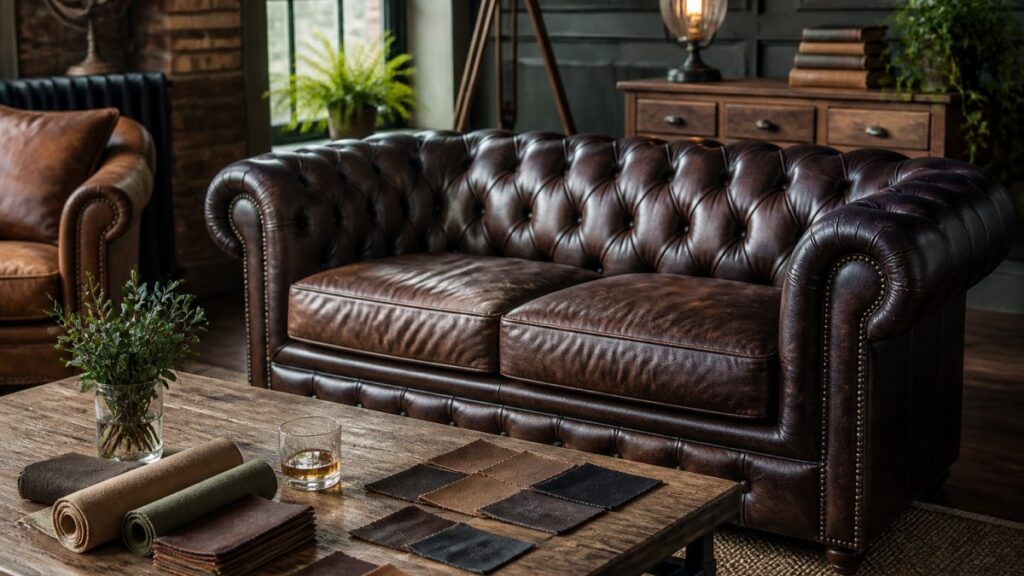
Oct
Last Updated: October 29, 2026
Quick Summary
Traditional Chesterfield sofas are worth the investment if you value craftsmanship and plan to keep the piece for many years. Their deep buttoning, rolled arms and equal-height back and arms set them apart from modern imitations. Choose the upholstery, confirm the size against your room and delivery route, and verify the construction before buying.
- Look for rolled arms, equal-height arms and back, and consistent button tufting.
- Ask whether the frame is hardwood, joined rather than stapled, with hand-tied coil springs.
- Measure doorways, hallways, stairs and lifts before ordering, not just the room.
- Leather develops a patina over time but needs regular conditioning and care away from heat.
- Request a material sample to see the hide or fabric in your own room before committing.
Table of Contents
- What Makes a Sofa a Traditional Chesterfield
- Leather Chesterfield Sofas: Patina, Care and Cost
- Fabric Chesterfield Sofas and Where They Make Sense
- Chesterfield Sofa Sizes, Seat Depth and Room Planning
- Handcrafted Chesterfield Sofas: Frames, Construction and Authenticity
- Seven Traditional Chesterfield Sofas Compared
- Booking Your Next Step: Choosing the Right Chesterfield for Your Room
- Frequently Asked Questions
What Makes a Sofa a Traditional Chesterfield
A traditional Chesterfield sofa is defined by its deep buttoning, rolled arms, and an arm and back of equal height. These features separate a classic design from the many modern sofas that borrow only its silhouette.
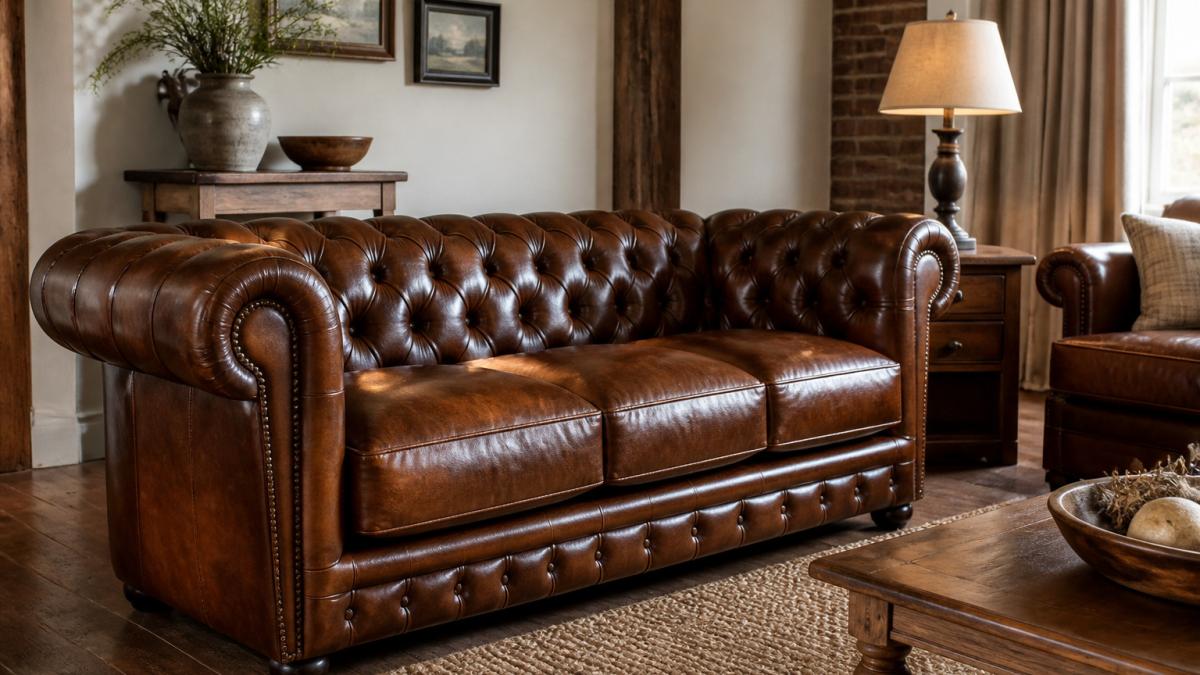
Chesterfield is a sofa style with a high, straight back and rolled arms of equal height, typically finished with button tufting across the seat and back.
Rolled arms, equal-height back and arms, and button tufting
The rolled arms are the most recognisable feature. They curve outward and down, and they set the piece apart at a glance. Equal-height arms and back give the sofa its balanced, formal proportions, which is why it reads as traditional rather than casual.
Button tufting is the detail most people associate with the style. Each button is pulled through the upholstery to create the diamond-shaped pleats across the surface. On a well-made piece, the tufting is consistent and firm rather than loose or uneven. When you compare models, look at how cleanly the buttons are set before you look at the price.
Leather Chesterfield Sofas: Patina, Care and Cost
Leather is the classic choice for a Chesterfield, and it ages in a way fabric does not. Over time, natural leather develops a patina, a soft sheen and colour depth that many owners prize. Maintenance is simple but regular.
Check the leather grade and finish before you buy, since these determine how the sofa wears. Ask whether the hide is aniline, semi-aniline or pigmented, because each one handles staining and fading differently.
Watch out: buying leather based on a showroom sample alone can mislead you, because lighting changes how colour and grain look. Request a material sample to see the hide in your own room before committing.
For cleaning guidance specific to natural leather, see How to Clean and Protect a Natural Leather Armchair at Home. Maintenance steps for this brand’s leather sofas are covered in learn how to maintain Tetrad leather sofas.
Fabric Chesterfield Sofas and Where They Make Sense
Fabric Chesterfield sofas offer a softer look and a far wider range of colours and textures. They suit rooms where a leather piece might feel too formal or where children and pets make a leather finish less practical. Linen and velvet are common choices, and each has a different character under daily use.
Fabric is more forgiving in some ways and less in others. It shows certain stains more readily but can be spot-cleaned, and it does not develop a patina the way leather does. If you want a Chesterfield that looks effortlessly lived-in from the start, fabric is often the better match.
Chesterfield Sofa Sizes, Seat Depth and Room Planning
Size matters as much as style, and a traditional Chesterfield is a bulky piece: the rolled arms add width that a seat measurement alone does not capture. Chesterfields commonly come as two-seat (snuggler), three-seat and larger configurations, and the overall width, depth and height all need to be checked against your room and your route into it. Measure the room, then measure the delivery path before you order.
Measure the route before the room
The most common reason a sofa is returned is that it will not fit through the door or up the stairs. Work through this sequence:
- Doorways: measure the clear opening width and height with the door open, not the door leaf.
- Hallways and turns: measure the narrowest point and any right-angle turn; a sofa can pass a doorway but fail a corner.
- Stairs: measure the width, the headroom and any landing; a high-backed Chesterfield is harder to tilt than a low sofa.
- Lift or stairwell: if you live in a flat, check the lift interior and the stairwell clearance.
- Legs and arms: confirm whether the feet are removable and whether the arms can be unbolted; this can be the difference between a fit and a failed delivery.
A sofa that fits the room but not the route is not a bargain. Confirm the delivery dimensions with the retailer in writing before you commit.
Seat height, depth and firmness
Seat dimensions decide how the sofa feels in daily use, not just how it looks. A deeper seat, roughly 60cm or more, suits relaxed lounging and taller occupants, while a shallower seat of around 50-55cm keeps the posture more upright and is easier to rise from. Seat height matters too: a seat around 45cm from the floor is a common comfortable target for most adults, and a lower seat can be difficult for anyone with limited mobility. If anyone in the household finds low seating hard to get out of, check the seat height and consider a firmer filling, which compresses less over time.
Plan the placement around the proportions
A high back needs clear wall space behind it, and a large three-seater can dominate a small room. As a working guide, allow around 45-60cm of circulation space in front of the sofa and beside it for side tables, and leave enough room for lamps and a coffee table without blocking the walkway. In a narrow room, a two-seat snuggler paired with a single armchair often works better than one large three-seater. Sketch the room to scale, mark the sofa footprint including the arms, and check the sightlines to any fireplace or focal point before you order.
For a sense of how these dimensions play out in real pieces, the Tetrad Tallis Snuggler Sofa product page and the Tetrad Liberty Midi Sofa page list their measurements, which you can compare against your own room plan.
Handcrafted Chesterfield Sofas: Frames, Construction and Authenticity
Frame construction determines how long a sofa lasts, and it is the area where a traditional Chesterfield most clearly separates itself from a superficially styled imitation. A well-made frame is typically built from hardwood rather than softwood or particle board, because hardwood resists warping and holds joints under the load of daily use. Ask what the frame is made from and how it is joined.
The suspension is the next thing to inspect. Traditional Chesterfields often use hand-tied coil springs, which distribute weight evenly and can be retied by a skilled upholsterer decades later. Serpentine (zig-zag) springs are cheaper and common in mass-market sofas; they are not inherently bad, but they are less repairable and tend to soften faster in the seat.
What to inspect before you buy
Use this checklist to tell a heritage-built Chesterfield from a lookalike:
- Frame: kiln-dried hardwood, joined rather than stapled; ask for the species and the joint type.
- Suspension: hand-tied coil springs tied to the frame, or a sprung base; ask whether the springs can be retied.
- Fillings: horsehair, coir or high-density foam wrapped in wadding. Horsehair and coir breathe and hold shape for decades; all-foam seats are softer initially but compress sooner.
- Tufting: buttons pulled through to the frame or to a reinforced backing, with consistent diamond spacing and firm, even pleats. Loose or uneven tufting is the clearest sign of rushed work.
- Arms and back: equal height, with the roll formed over a solid arm rather than padded onto a flat panel.
- Feet: hardwood or turned feet, firmly attached, not decorative plastic.
- Provenance: a named workshop, a stated making process and a clear answer on where the piece is made. Vague answers are a reason to ask again.
Ask the retailer to show you a frame sample or a photograph of the unfinished frame. A maker who is proud of the construction will usually have one to hand.
Authenticity is worth checking before you buy, and the questions above are the fastest way to do it. Clear answers about frame material, suspension, fillings and the upholstery process are a good sign; vague ones are a reason to ask further questions or walk away. For a brand-specific route, check how to verify authentic Tetrad furniture so you can confirm what you are buying against the maker’s own specification.
Seven Traditional Chesterfield Sofas Compared
The following shortlist gives a sense of the range available.
1. Tetrad Tallis Snuggler Sofa. A Victorian high-back Chesterfield with classic styling.
2. Tetrad Liberty Midi Sofa. A deeply buttoned Chesterfield frame with scroll arms and a 242cm-wide Midi size.
**3.
**4.
5. Timothy Oulton Westminster Button Sofa. A Chesterfield-style sofa from a third-party range.
Best for: buyers who want the widest material choice.
6. Timothy Oulton Tribeca Tufted Sofa. A tufted sofa from a third-party range.
Best for: buyers wanting a tufted finish with several size options.
7. Timothy Oulton Chesterfield Sofas (collection). A dedicated Chesterfield range from a third-party brand.
Best for: buyers comparing upholstery materials within one collection.
| Sofa | Starting Price | Upholstery | Best For |
|---|---|---|---|
| Roger + Chris Higgins | £2,980 | Leather, fabric, linen | Custom size and colour |
| Hydeline Aliso | £1,099 | Leather | Lower-priced leather |
| Timothy Oulton Westminster | Not verified for UK | Multiple (53) | Material choice |
| Timothy Oulton Tribeca | Not verified for UK | Multiple (51) | Tufted finish |
Pricing depends on size, upholstery and delivery, so check current prices on the Tetrad website or request a quote before you decide.
Booking Your Next Step: Choosing the Right Chesterfield for Your Room
A traditional Chesterfield is worth the investment when you value craftsmanship and expect to keep the piece for many years. Start with the room, then choose the upholstery, then confirm the size. Before you buy, verify the construction and ask how the piece is made. When you are ready to explore the range, explore the collection to see the available options. Tailoring these dimensions to your specific living space often reveals the true value of custom furniture when compared to standard factory production.
Frequently Asked Questions
What makes a sofa a traditional Chesterfield?
A traditional Chesterfield has a deep, straight-backed silhouette with rolled arms that sit at the same height as the back, usually finished with button tufting and nailhead trim. The frame is typically solid wood and the seat is often deep and firmly sprung. Modern versions may soften these features, so check for the rolled, equal-height arms and the fixed, handcrafted frame when comparing options.
Are traditional Chesterfield sofas comfortable for everyday use?
They can be, provided the seat depth and cushion fill suit how you sit. Traditional designs tend to have firm seats and upright backs, which some people find ideal for reading or sitting upright and others find less relaxing. Test the seat height and depth in person where possible, and consider adding scatter cushions to adjust the support for longer periods of sitting.
Are Chesterfield sofas better in leather or fabric?
Leather suits households that want a durable surface that ages with a rich patina over time, and it is generally easier to wipe clean. Fabric offers a wider range of colours and textures and is often more comfortable to sit on in warmer months. Consider how much daily use the sofa will get, whether pets or children are in the home, and how you want the piece to age before deciding.
How do you choose the right size Chesterfield sofa?
Measure the room, the doorways and the lift route before ordering, and leave clear walking space around the sofa. A two-seater suits smaller rooms, while a three-seater works well as a main seating piece. Check the overall depth as well as the width, since the arms and rolled back take up more space than a simple upholstered sofa. Ask about seat depth and height so the sofa fits how you sit.
Here at Tetrad sofas. Tetrad chairs., we help you choose a Chesterfield that fits your room and your daily life. Explore the collection and let us guide you to the right piece.

