
Blog
How to Maintain Tetrad Leather Sofas
Oct
Table of Contents
- Understanding Your Tetrad Leather Sofa
- Daily and Weekly Care for Your Leather Sofa
- How to Clean a Leather Sofa Safely
- How to Remove Stains from a Leather Sofa
- Leather Sofa Cleaning Products and Conditioning
- Protecting Leather Furniture from Sun Damage
- Long-Term Care and Maintenance Schedule
- Frequently Asked Questions
Last Updated: October 10, 2026
Understanding Your Tetrad Leather Sofa
To maintain tetrad leather sofas properly, you need to understand what you’re working with. Different leather types and finishes require different care approaches, and knowing your sofa’s specific leather will shape every maintenance decision you make.
Leather types and finishes
The finish also matters. Matte finishes show fingerprints more readily but feel natural, while glossy finishes hide marks but can feel plastic-like. Knowing your finish tells you how aggressively you can clean.
Check your sofa’s care documentation or contact Tetrad if unsure. Using the wrong cleaner on aniline leather, for example, can strip its natural oils permanently.
Checking manufacturer guidance
Before applying anything to your leather sofa, consult Tetrad’s care instructions, which are specific to your leather type and finish. Keep this documentation accessible.
Tetrad’s guidance covers recommended cleaning products, conditioning schedules, products to avoid, and warranty terms.
Following Tetrad’s guidance protects your warranty. Deviating from recommended care products can void coverage if damage occurs. When in doubt, contact Tetrad’s customer service before trying a new product.
Daily and Weekly Care for Your Leather Sofa
Regular maintenance prevents dirt from embedding into leather and extends lifespan. Most damage happens through neglect; small daily habits make the largest difference.
Routine dusting and vacuuming
Dust your leather sofa twice weekly with a soft microfiber cloth using gentle circular motions, paying special attention to seams and crevices.
Vacuum weekly using a soft brush attachment on low suction, focusing on seams, crevices, under cushions, and the base. This prevents dirt from grinding into leather when you sit.
Wiping down with the right cloth
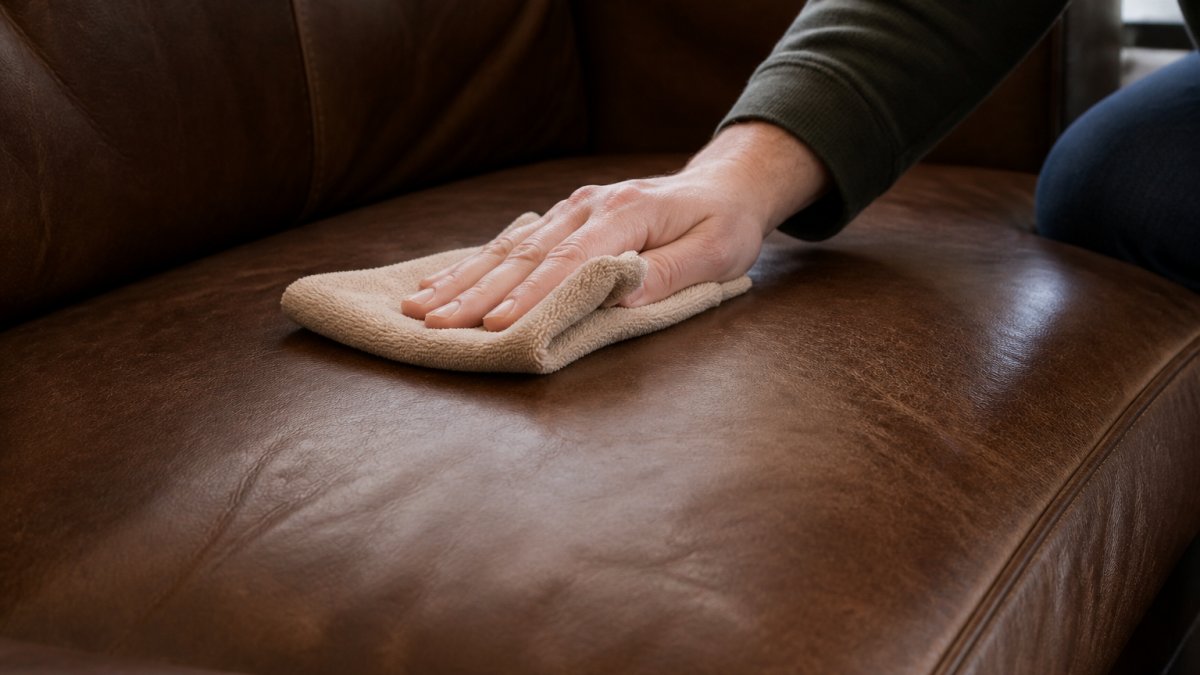
Once weekly, wipe your sofa with a barely damp microfiber cloth using distilled water only. Excess moisture damages leather by causing uneven swelling.
Wipe in the direction of the grain with light pressure, paying special attention to high-contact areas like armrests.
How to Clean a Leather Sofa Safely
Spills and stains require quick action. Responding correctly prevents permanent staining or finish damage.
Handling spills and stains promptly
Act within minutes. Blot spills immediately with a clean, dry cloth, don’t wipe or rub, as this pushes liquid deeper into the leather.
For liquid spills: blot immediately with a dry cloth, repeat with fresh sections until no liquid transfers, then air dry completely (2-4 hours). Never use heat.
For food or greasy spills, remove solids first with a soft brush, then blot residue and let dry.
Blotting versus rubbing
Blotting means pressing gently and lifting; rubbing means moving back and forth. Rubbing pushes stains deeper and damages the finish.
Always blot with fresh cloth sections. If the stain persists after several blots, stop and wait, aggressive rubbing causes more damage than leaving it alone.
For maintain tetrad leather sofas effectively, patience beats force every time.
Patch testing before full application
Before using any cleaning product, test it on a hidden area like the underside of a cushion. Apply according to instructions and wait 24 hours.
Check for colour change, texture change, discolouration, or finish damage. If anything looks wrong, don’t use that product, different leather finishes react differently.
How to Remove Stains from a Leather Sofa
Different stains require different responses. Identifying the stain type helps you choose the safest removal method.
Identifying stain type and safe response
Water marks and rings often fade as leather dries. If they persist after 48 hours, try a barely damp cloth with distilled water.
Oil and grease stains: sprinkle with cornstarch or talcum powder immediately, let sit 2-4 hours, then brush away gently. Never apply water, which spreads oil.
Ink stains: patch test first. A damp cloth with a tiny amount of rubbing alcohol may work, dab gently, don’t rub.
Food stains: remove solids first. For sugary foods, use a damp cloth. For protein-based stains, use cool water, never hot.
Caring for seams and crevices
Stains hide in seams and crevices. Use a soft brush with angled bristles to gently work into seams without damaging leather edges.
For stubborn debris: use a soft brush with gentle circular motions, vacuum with soft brush attachment, wipe with barely damp cloth if needed, then dry. Never force objects into seams.
Leather Sofa Cleaning Products and Conditioning
The right products protect and restore leather; wrong ones damage it permanently. Follow Tetrad’s guidance on approved products.
Choosing the right conditioner
Leather conditioner replenishes natural oils that evaporate over time. Without it, leather dries out, cracks, and becomes brittle.
Tetrad’s recommended products are formulated specifically for their leather types. Using non-approved products risks voiding your warranty and potentially damaging the finish. Always check Tetrad’s care documentation before purchasing a conditioner.
A quality leather conditioner should:
- Match your leather type (full-grain, top-grain, aniline, semi-aniline)
- Have a neutral scent or pleasant aroma
- Leave no greasy residue
- Provide UV protection if possible
Avoid cheap conditioners that leave sticky or greasy finishes. These attract dust and can darken the leather over time.
Conditioning frequency and technique
Most leather sofas need conditioning every 3 to 6 months. High-use sofas in sunny rooms may need conditioning more frequently. Tetrad’s care documentation specifies the schedule for your leather type.
To condition your sofa:
- Clean the leather first with a damp cloth and let it dry completely
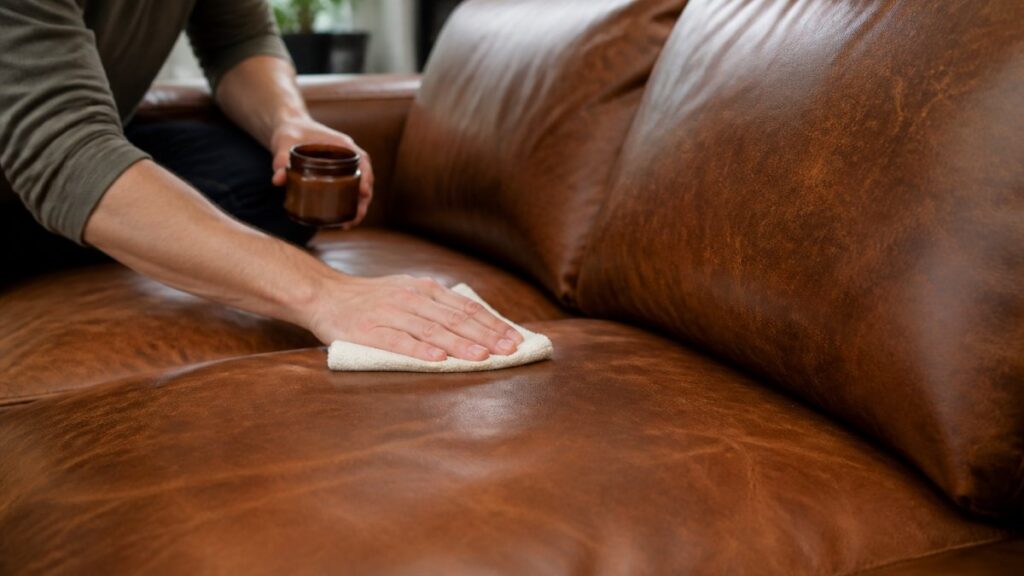
- Apply conditioner sparingly with a soft cloth
- Work in circular motions, following the grain
- Buff away excess conditioner with a clean cloth after 10-15 minutes
- Leave the sofa unused for at least 4 hours before sitting
Less is more with conditioner. Over-conditioning leaves a sticky residue that attracts dust and dirt. A thin, even coat works better than a heavy application.
Products to avoid
Never use these on your leather sofa:
- Furniture polish designed for wood (leaves residue)
- Harsh cleaners or degreasers (damage the finish)
- Silicone-based products (attract dust)
- Products with alcohol content above 5% (dry out leather)
- Saddle soap intended for horse tack (too heavy)
- Bleach or ammonia-based cleaners (cause permanent damage)
When in doubt, stick with products Tetrad recommends. The cost of approved products is minimal compared to the cost of replacing damaged leather.
Protecting Leather Furniture from Sun Damage
Sunlight is leather’s enemy. UV rays fade colour, dry out natural oils, and cause cracking over time. Strategic positioning prevents most sun damage before it starts.
Positioning and environmental control
Place your leather sofa away from direct sunlight whenever possible. If your room layout makes this difficult, use window treatments to filter UV rays. Sheer curtains, blinds, or UV-blocking film reduce sun exposure without eliminating natural light.
Keep your sofa away from heat sources:
- Direct radiator vents
- Air conditioning outlets
- Fireplaces and wood stoves
- Heated windows in winter
Extreme temperature swings cause leather to expand and contract, leading to cracking. Maintain consistent room temperature between 16°C and 24°C if possible (Temperature in the workplace: Managing workplace temperatures).
Humidity matters too. Very dry air (below 30% humidity) dries out leather. Very humid air (above 60%) can cause mildew. Aim for 40-50% humidity. A humidifier in dry climates or a dehumidifier in damp ones protects your sofa.
Preventing cracking, drying, and wear
Cracking starts invisibly. Leather loses moisture gradually, becoming less flexible. By the time visible cracks appear, significant damage has occurred. Prevention stops this process early.
Regular conditioning prevents drying. A well-conditioned leather sofa resists cracking far better than neglected leather. Combined with proper positioning away from sunlight and heat, conditioning keeps leather supple and strong.
Rotate cushions quarterly to distribute wear evenly. High-use areas fade and wear faster than others. Rotation extends the visible lifespan of your sofa.
Use throws or blankets on high-use areas during winter or when the sofa gets heavy use. This protects the leather from friction without changing your sofa’s appearance.
Long-Term Care and Maintenance Schedule
Consistency beats intensity. A simple routine performed regularly prevents most problems. This schedule keeps your leather sofa in excellent condition for decades.
Monthly, quarterly, and seasonal checks
Monthly:
- Dust twice weekly with a dry microfiber cloth
- Vacuum weekly with soft brush attachment
- Wipe down once weekly with barely damp cloth
- Check for spills or marks and address immediately
Quarterly (every 3 months):
- Deep clean using approved leather cleaner if needed
- Inspect for any damage or wear
- Check cushion zips and seams for damage
- Rotate cushions to distribute wear
Seasonally:
- Spring: Condition your leather as part of spring cleaning
- Summer: Ensure UV protection is adequate; adjust curtains if needed
- Autumn: Condition again before heating season begins
- Winter: Monitor humidity levels; use a humidifier if air is dry Consistent attention to these seasonal rhythms prevents the accumulation of grime and preserves the suppleness of the hide, a process detailed further in our leather cleaning guide.
This schedule prevents problems from developing. Regular inspection catches small issues before they become expensive repairs.
When to seek professional cleaning and repair
Most maintenance you can handle yourself. Some situations require professional help. Contact Tetrad or a professional leather cleaner if:
- Your sofa has deep stains that home cleaning won’t remove
- The leather shows signs of cracking or peeling
- Seams are coming apart or zips are broken
- You’ve spilled something you’re unsure how to handle
- The sofa needs professional conditioning after years of use
Professional cleaners have access to industrial-strength products and equipment that home cleaning can’t match. They also understand different leather types and can treat your sofa appropriately.
Tetrad’s warranty covers manufacturing defects. Understanding what’s covered helps you know when to claim warranty service versus paying for repairs yourself. Keep your purchase documentation and care records, they support warranty claims.
| Maintenance Task | Frequency | Time Required | Notes |
|---|---|---|---|
| Dust with dry cloth | Twice weekly | 5 minutes | Use microfiber cloth only |
| Vacuum with soft brush | Weekly | 10 minutes | Low suction setting essential |
| Wipe with damp cloth | Weekly | 10 minutes | Distilled water only |
| Deep clean with approved product | As needed | 30 minutes | Patch test first always |
| Condition leather | Every 3-6 months | 20 minutes | Follow Tetrad’s schedule |
| Rotate cushions | Quarterly | 10 minutes | Distributes wear evenly |
| Professional cleaning | Every 2-3 years | Varies | Contact professional cleaner |
Maintaining your Tetrad leather sofa requires consistency more than complexity. A straightforward routine of dusting, vacuuming, and occasional conditioning keeps your investment looking beautiful for decades. Proper care ensures they do.
Frequently Asked Questions
How often should you clean a leather sofa?
Dust and vacuum your leather sofa weekly using a soft brush attachment to remove dirt and crumbs before they settle into the leather. Wipe down the surface with a dry microfiber cloth every few days. For deeper cleaning, aim for every 3 to 6 months depending on use. High-traffic sofas may need more frequent attention. Always check your Tetrad documentation for specific care intervals based on your leather finish.
What is the best thing to protect a Tetrad leather sofa?
The most effective protection combines three practices: position your sofa away from direct sunlight and heat sources to prevent fading and drying; use a quality leather conditioner every 3 to 6 months to maintain suppleness and prevent cracking; and address spills immediately by blotting gently rather than rubbing. Regular conditioning is particularly important for full-grain and top-grain leather, which benefit from periodic moisture replenishment to maintain their natural appearance and durability.
Should you condition a leather sofa, and how often?
Yes, conditioning is essential for maintaining leather furniture. Leather conditioner helps prevent drying, cracking, and premature wear by replenishing natural oils. For Tetrad sofas, condition every 3 to 6 months, though this depends on your climate, heating use, and leather type. In very dry environments or heated homes, condition more frequently. Always patch test any conditioner on a hidden area first, and follow your sofa’s care instructions to ensure compatibility with your specific leather finish.
Which cleaning products should you avoid on leather furniture?
Avoid harsh soaps, bleach, acetone-based products, and oil-based cleaners, as these can damage leather finishes or cause discolouration. Do not use vinegar or alcohol on delicate leather. Steer clear of generic furniture sprays designed for other materials. When in doubt, consult your Tetrad care guide or contact the retailer for product recommendations suited to your specific leather type. Always patch test any new product in an inconspicuous area before applying it to visible surfaces.
