
Blog
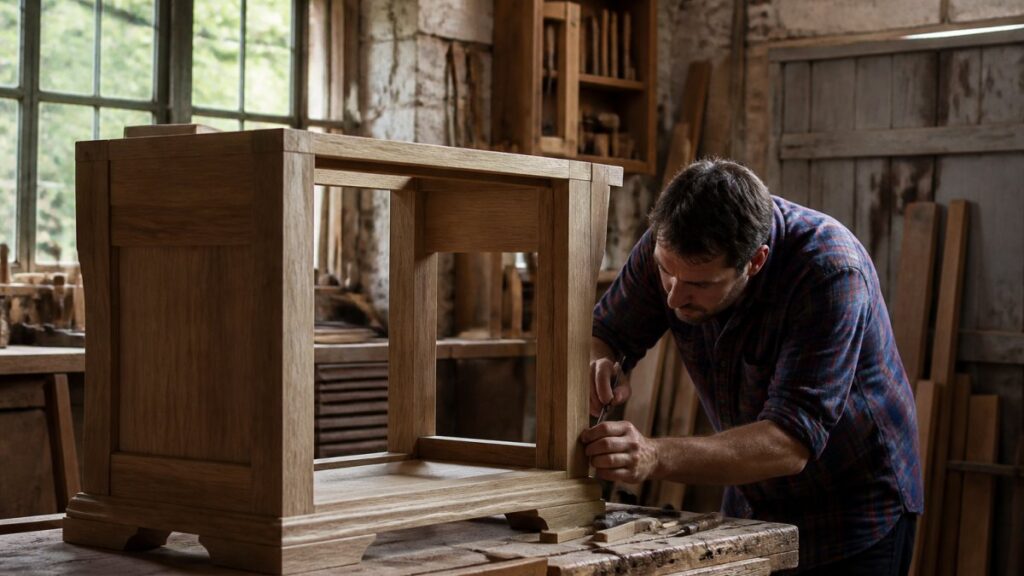
Benefits of Handcrafted British Furniture
Sep
Table of Contents
- Why Handcrafted British Furniture Stands Apart
- Traditional Chesterfield Sofas and Timeless Design
- Durability of Solid Wood Furniture: Investment Over Time
- Bespoke Furniture vs Mass Produced: What the Difference Means
- Customisation and Tailored Design for Your Space
- Sustainability and Ethical Craftsmanship
- Supporting Local Manufacturing and Communities
- Conclusion
- Frequently Asked Questions
Last Updated: September 27, 2026
Why Handcrafted British Furniture Stands Apart
Handcrafted British furniture differs fundamentally from mass-produced alternatives. Built with techniques refined over decades, each joint, stitch, and finish receives individual attention, creating pieces that respond to how people actually live rather than forcing living around standardised dimensions.
Mass production optimises for volume and cost reduction; handcrafted British furniture optimises for longevity and personal fit. The frame uses solid wood selected for stability, traditional suspension methods proven across generations, and upholstery applied by people trained to recognise quality at every stage.
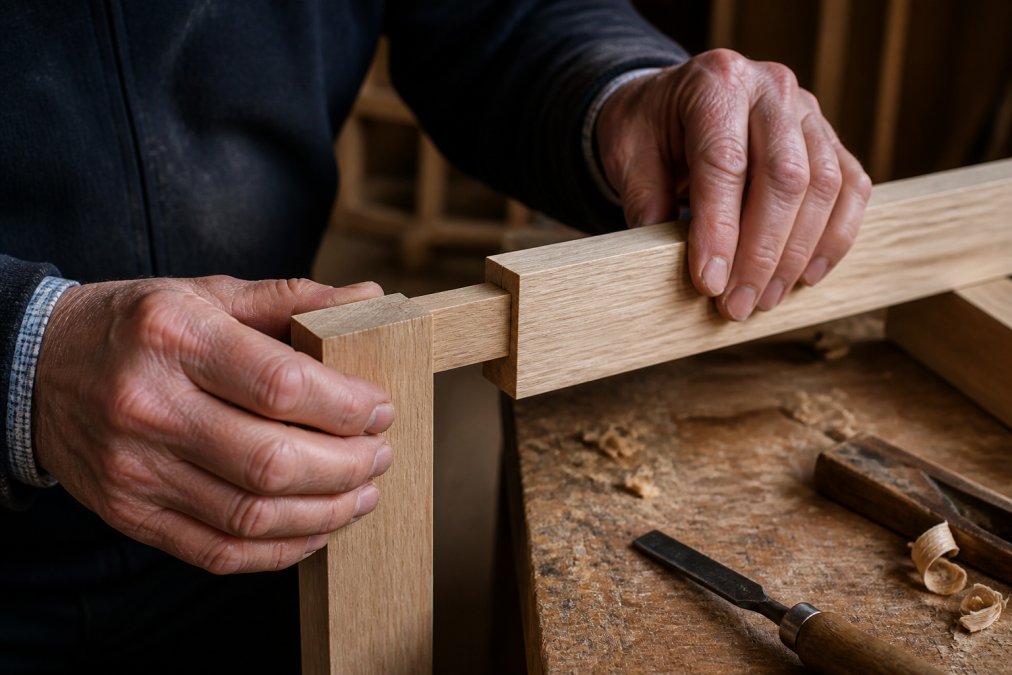
When comparing furniture, examine the frame construction. Solid wood frames with mortise-and-tenon joinery indicate traditional craftsmanship. Particle board or engineered frames signal mass production designed for rapid assembly and disposal.
A poorly constructed sofa shows wear within months; a well-made piece improves with age. Bespoke furniture vs mass produced represents a choice between immediate savings and lasting quality.
Traditional Chesterfield Sofas and Timeless Design
The Chesterfield emerged in 18th-century Britain as a functional response to how people sit. Deep button tufting held filling in place and distributed wear; rolled arms provided genuine support. The design remains virtually unchanged two centuries later because it solves real problems.
A traditional Chesterfield transcends period, working equally in Victorian townhouses and contemporary minimalist flats. This stability in design is why handcrafted British furniture commands respect among interior designers and architects.
Modern handcrafted versions maintain traditional principles while accommodating contemporary comfort: deeper seats, compression-resistant cushioning, and expanded fabric choices. The fundamental construction remains rooted in proven craft.
Traditional Chesterfield design endures because it solves real problems about how furniture performs under use. The tufting, the arm height, the seat angle, each element serves a function that hasn’t changed since the 1700s.
Durability of Solid Wood Furniture: Investment Over Time
Solid wood frames outlast engineered alternatives by decades. Kiln-dried hardwood, oak, beech, or ash, remains stable across temperature and humidity changes that cause particle board to swell and warp.
Engineered frames use veneers over plywood or MDF, cheaper and faster to assemble but prone to delamination under regular use. Such frames typically fail within five to seven years; solid wood frames perform reliably for twenty-five years or more.
The Cost-Per-Use Calculation
A mass-produced sofa costing £1,200 with a seven-year lifespan costs roughly £170 annually. A handcrafted piece costing £4,500 lasting twenty-five years costs approximately £180 per year, comparable annually, yet remains functional and repairable. Over forty years, five mass-produced sofas cost £6,000 total; one handcrafted piece costs £4,500, before accounting for disposal cycles.
Maintenance and Long-Term Care
Handcrafted British furniture delivers lifetime value through repairability. A solid wood frame can be reupholstered (£800-£1,500) restoring it to near-original condition; mortise-and-tenon joinery doesn’t weaken with age. A damaged engineered frame typically requires full replacement.
Proper maintenance extends durability significantly: annual wood conditioning (under £50), leather conditioning (£15-£30 per application), and professional fabric cleaning every two to three years (£150-£300). These costs are modest compared to replacing a mass-produced sofa.
Material Traceability and Timber Certification
Reputable makers source solid wood from certified sustainable sources: FSC (Forest Stewardship Council) or PEFC (Programme for the Endorsement of Forest Certification) certification, both recognised by UK forestry standards. A maker should specify which certification their timber carries and which forests it originates from.
Timber from certified sources is kiln-dried to precise moisture content (8-12%), ensuring stability across British home conditions. Mass-produced alternatives often use mixed sources with variable drying standards, contributing to warping and joint failure. Handcrafted British furniture from documented sources means material selected for performance, not just cost.
Many established makers exceed minimum standards, working with timber merchants who have multi-decade forest relationships. This transparency is impossible with mass production across multiple countries. You can ask a bespoke maker exactly where the oak in your sofa originated; you cannot ask a mass-production retailer.
The true investment value of handcrafted British furniture emerges over decades through repairability, modest maintenance costs, and the ability to restore rather than replace. Material traceability ensures you’re purchasing timber selected for stability and longevity, not just price.
Bespoke Furniture vs Mass Produced: What the Difference Means
Mass production standardises dimensions to fit standard delivery vehicles and doorways. A sofa comes in one depth, one width, one arm height. Your room adapts to the furniture.
Bespoke furniture inverts this logic: your space drives the design. Low ceilings get proportionally lower arms; narrow hallways get configured sofas; awkward corners receive tailored pieces. This customisation is structural, affecting frame construction and function.
Mass production uses standardised components in predetermined sequences. Bespoke production builds each piece from scratch, with decisions about wood selection, joint placement, and structure based on the specific commission. The longer timeline reflects the actual work involved.
Bespoke pieces command higher prices because they demand skilled labour, individual attention, and material selection. Mass-produced sofas are priced aggressively because volume spreads fixed costs across thousands of units. The price difference is proportional to labour and craft involved.
Avoid confusing “custom upholstery” with true bespoke construction. Many retailers offer fabric choices on standardised frames. This is customisation, not bespoke design. True bespoke means the frame itself is built to your specifications.
Customisation and Tailored Design for Your Space
Tailored design begins with measurement and conversation about your space, lifestyle, and aesthetic preferences: how you use the sofa, whether you curl up or stretch out, children or pets, existing colours.
These conversations inform decisions about seat depth, arm height, cushion firmness, and fabric durability. Families with young children choose performance fabrics; avid readers request deeper seats and supportive cushions; small rooms benefit from space-maximising configurations.
Mass production offers limited fabric choices within fixed dimensions; you choose from what exists. Bespoke furniture is created specifically for you: frame built to your room’s dimensions, cushioning specified for your comfort, finish selected to harmonise with existing pieces.
Bespoke design addresses practical constraints: a maker can design pieces to disassemble and reassemble, or specify dimensions navigating your specific access route. Mass-produced sofas come as they are; if they don’t fit, you don’t buy them.
Sustainability and Ethical Craftsmanship
Handcrafted British furniture carries inherent sustainability advantages. A sofa lasting twenty-five years uses far fewer resources per year of service than one replaced every seven years; the manufacturing carbon footprint is distributed across decades, not concentrated in a short lifespan.
Reputable makers source solid wood from managed forests, properly kiln-dried and graded for quality, contrasting with engineered alternatives using timber offcuts and questionable adhesives.
The sustainability argument for handcrafted British furniture rests on longevity and material integrity. A piece that lasts decades and can be repaired rather than replaced represents genuine environmental responsibility.
Supporting Local Manufacturing and Communities
British furniture manufacturing has contracted significantly; production shifted to lower-cost regions and many workshops closed. The remaining makers represent concentrated genuine expertise. Purchasing handcrafted British furniture directly supports the survival of these skills and communities.
The Economics of Craft Preservation
A workshop employing ten skilled makers supports thirty additional jobs across timber supply, upholstery training, and specialist finishing. When demand disappears, these skills vanish within a generation; when workshops close, entire supply chains collapse.
Accountability and Transparency
Supporting local manufacturing means accountability. You can visit a workshop, meet the maker, and understand exactly how your sofa was built. Many established makers welcome studio visits; you can observe frame construction, examine timber selection, and understand the decisions that shaped your piece.
Regional Craft Clusters and Skill Concentration
British furniture craftsmanship remains concentrated in specific regions, the Cotswolds, Yorkshire, and areas around London, where workshops cluster and knowledge transfers between makers. This clustering is fragile. When demand drops, workshops close, young people move away, and regions lose decades of accumulated expertise within a decade.
Supporting handcrafted British furniture is economically supporting the preservation of apprenticeship pathways, regional craft clusters, and the supply chains that make quality furniture manufacturing viable. Your purchase decision directly determines whether these skills remain available for future generations.
Conclusion
Handcrafted British furniture represents a fundamentally different approach to how we live with objects. The durability of solid wood furniture, the tailored design possible with bespoke construction, and the genuine sustainability of pieces built to last decades, these aren’t marketing claims. They’re structural advantages rooted in how the furniture is actually made.
EXPLORE COLLECTION
| Aspect | Handcrafted British | Mass Produced |
|---|---|---|
| Frame Material | Solid kiln-dried hardwood | Particle board or plywood veneer |
| Construction Method | Traditional joinery, hand-assembled | Standardised components, automated assembly |
| Customisation | Tailored to your space and preferences | Fixed dimensions, limited fabric options |
| Typical Lifespan | 20-30 years with proper care | 5-10 years before structural issues |
| Repairability | Frame can be reupholstered; components replaceable | Typically requires full replacement |
| Manufacturing Carbon Cost Per Year | Lower (spread across decades) | Higher (concentrated in short lifespan) |
| Labour Model | Skilled craftspeople, established careers | High-volume shift work |
Frequently Asked Questions
What are the main benefits of buying handcrafted British furniture?
Handcrafted British furniture offers superior durability, bespoke design tailored to your space, and quality materials that last decades. Unlike mass-produced alternatives, each piece is built using traditional joinery and solid wood, with attention to detail that ensures longevity. You also support local craftsmanship and receive personalised guidance throughout the selection process, ensuring your investment matches your aesthetic and functional needs perfectly.
Is handcrafted furniture more durable than mass-produced alternatives?
Yes. Handcrafted furniture uses solid wood and traditional construction methods that withstand years of use, whereas mass-produced pieces often rely on particle board, veneers, and mechanical fasteners that deteriorate faster. Artisanal construction means better joinery, quality upholstery, and frames built to be repaired rather than replaced. Many handcrafted pieces develop character and patina over time, becoming more valuable rather than worn out.
How does buying British furniture support local craftsmanship?
Purchasing handcrafted British furniture directly supports skilled makers, upholsterers, and manufacturers who employ local workers and source materials within the country. This keeps traditional techniques alive, sustains employment in manufacturing communities, and reduces the environmental impact of international shipping. Your investment funds apprenticeships and preserves heritage skills that might otherwise disappear.
Is bespoke furniture worth the higher price point?
Bespoke furniture delivers value through longevity, customisation, and personal service. While initial costs are higher, a well-made handcrafted piece lasts 20+ years with proper care, whereas mass-produced alternatives may need replacement in 5-7 years. You also receive exactly what you want, correct dimensions, preferred fabrics, and design features tailored to your home, eliminating the compromise of shopping standard ranges.
