
Blog
How to Maintain Tetrad Leather Furniture: 2026 Care Guide

Sep
Table of Contents
- What You’ll Need for Tetrad Leather Furniture Care
- Weekly Dusting and Vacuuming Techniques
- How to Remove Stains from Leather Furniture
- Best Leather Conditioner for Aniline Leather
- Preventing Leather Cracking on Sofas
- Positioning and Protecting Tetrad Leather Furniture
- Pet-Specific Leather Maintenance
- Seasonal Maintenance Schedules for Tetrad Leather
- Frequently Asked Questions
Last Updated: September 16, 2026
What You’ll Need for Tetrad Leather Furniture Care
Maintaining tetrad leather furniture starts with the right kit, not the most expensive one. Leather is a natural material, and the products you use on it matter more than how often you use them.
Here’s what to keep on hand:
- A soft, lint-free cloth or two (microfibre works well)
- A vacuum with a soft brush attachment
- A pH-balanced leather cleaner
- A quality leather conditioner suited to your hide type
- Distilled water for spot cleaning
- A leather protector spray for added stain resistance
Aniline hides and pigmented hides need very different handling. That distinction shapes almost everything below.
Before you buy a single product, identify your leather type. Aniline leather is dyed through with no protective coating, while pigmented leather has a surface finish that resists stains. Using the wrong cleaner on aniline leather can strip its colour permanently.
Weekly Dusting and Vacuuming Techniques
Dust is the quiet enemy of leather. Left to settle, it works into the grain and acts like sandpaper every time someone sits down.
Run a dry, soft cloth over the whole piece once a week to lift surface dust. Then switch to your vacuum’s soft brush attachment and go over seams, creases, and the gaps between cushions on a low setting. The brush attachment matters here; a bare nozzle can scratch the surface finish.
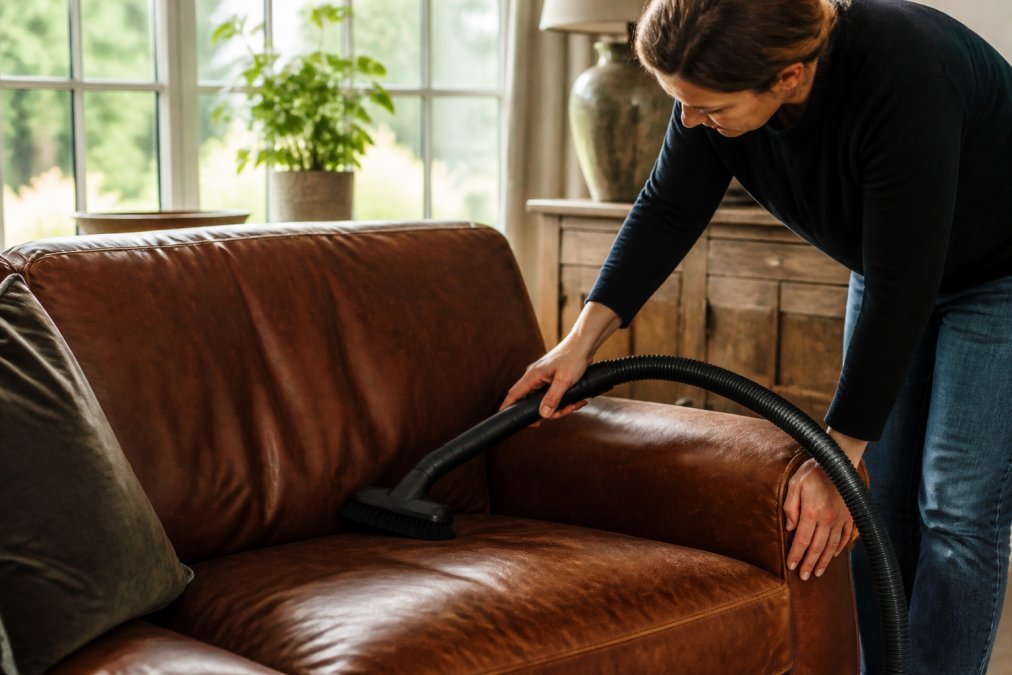
A common mistake is pressing hard during dusting. Light pressure is enough. You’re lifting dust, not scrubbing it in.
How to Remove Stains from Leather Furniture
Act fast, stay gentle, and never soak the hide. Most fresh spills come up cleanly if you handle them within a few minutes. But leather stains are not all the same, and the wrong method on the wrong stain is how a small mark becomes a permanent patch. Treat the type of stain before you treat the leather.
Here is the sequence that works for most water-based spills:
- Blot, don’t rub, with a dry, absorbent cloth.
- Dampen a second cloth with distilled water and wipe the area lightly.
- Dry immediately with a clean cloth.
- If a mark remains, use a pH-balanced leather cleaner and follow the manufacturer’s instructions.
For oil-based stains, blot first, then apply a small amount of leather cleaner and work from the outside of the stain inward to stop it spreading.
Spill Management: Damp Cloth vs Wet Cloth
A damp cloth is your default tool. A wet cloth is almost always a mistake.
“Damp” means wrung out until it barely feels cool to the touch. “Wet” means water can be pressed out of it. Excess moisture seeps into seams and stitching, and over time that’s where leather starts to smell, stiffen, or crack. If you can see water sitting on the surface, you’ve used too much.
Never use a soaking wet cloth on leather, and never let water pool in the seams. Trapped moisture breaks down the fibres and is one of the leading causes of premature cracking and mould.
Troubleshooting Specific Stains
Most guides stop at “blot and wipe.” These are the stains that actually send people searching, and each one needs a different approach.
Ink and biro marks. Act within minutes. Ink migrates into the grain and sets fast. Try a dedicated leather ink remover, applied to a cloth rather than the hide, and dab from the edge of the mark inward. Do not rub, and do not use alcohol-based hairspray or nail polish remover, which strip the finish and lift colour. If the ink has been there for days, stop and get professional advice.
Grease and oil. These darken the leather before they spread. Blot up what you can, then apply a small amount of a pH-balanced leather cleaner or a dedicated degreaser to a cloth and work gently. A light dusting of cornflour or talcum powder left on the mark for a few hours can draw out surface oil before you clean. Expect the darkened area to lighten over a few days as the oil dissipates; do not over-clean in the meantime.
Water rings and water marks. These look alarming but are usually temporary. Water displaces the natural oils in the surface, leaving a darker ring. Let the area dry naturally, away from direct heat, then condition the whole panel lightly. Most rings fade within 24 to 48 hours. Do not attack them with more water, which deepens the mark.
Dye transfer from clothing. Dark denim and new dark clothing are the usual culprits, especially on lighter hides.
If a stain has been there for more than a few days, has changed the texture of the leather rather than just the colour, or covers a large area, stop. Home remedies applied repeatedly do more damage than the original mark. A leather specialist can often fix in an hour what a week of DIY attempts makes worse.
What Not to Use
A short list worth memorising: no bleach, no ammonia, no vinegar, no saddle soap on finished hides, no baby wipes (they contain oils and alcohol), and no abrasive pads. These either strip the finish, dry the hide, or leave a residue that attracts more dirt. If you would not put it on your own skin, it does not belong on aniline leather.
Best Leather Conditioner for Aniline Leather
The best leather conditioner for aniline leather is a pH-balanced, water-based formula with no solvents, silicones, or heavy dyes. Aniline hides are dyed through rather than coated, so anything harsh enough to strip a stain will strip the colour too.
Preventing Leather Cracking on Sofas
Cracking comes from dryness, and dryness comes from three things: heat, sunlight, and neglect. Fix those and you’ll add years to the hide.
The areas that crack first are the ones you never think about: the tops of arms, the front edge of the seat, and the crease where the backrest meets the seat. Give these spots an extra pass with conditioner.
Positioning and Protecting Tetrad Leather Furniture
Where the sofa sits matters as much as how you clean it. A few simple placement rules prevent most of the damage people blame on “bad leather.”
- Keep at least 30cm of clearance from heat sources.
- Move the piece out of direct sunlight, or use a blind during peak hours.
- Leave a little space behind and beside it for airflow.
- Use a leather protector to boost stain and scratch resistance.
Pet-Specific Leather Maintenance
Claws, accidents, and dander are the three issues that come up most with pets, and all three are manageable with the right habits. This is the area most care guides skip entirely, which is odd, because a household with a dog or cat puts more wear on a leather sofa in a year than a child-free home does in five.
Claws and Scratches
Trim your pet’s claws regularly and keep a throw over the seat they favour. That single habit prevents most of the damage.
Accidents and Odour
Blot immediately and clean with a pH-balanced cleaner, then dry thoroughly. Never use ammonia-based products; the smell attracts pets back to the same spot, and ammonia also degrades the finish.
Dander, Hair, and Oils
Pet hair works into seams and creases the same way grit does, so vacuum with the soft brush attachment more often than your standard weekly pass if you live with a heavy shedder. A rubber glove or a slightly damp cloth run over the surface lifts embedded hair that a vacuum misses.
Choosing and Protecting the Right Hide
If pets are a permanent feature of your home, mention it when you’re choosing a piece. Some hides handle daily wear far better than others, and a specialist retailer can point you toward the right one. As a rule, a pigmented or protected finish resists claws and accidents better than a pure aniline hide, which shows every mark. If you already own an aniline piece, a leather protector spray and a well-placed throw are your best defence.
Keep a dedicated pet throw on the seat your pet claims. Wash it weekly. It is far easier to launder a throw than to repair a scratched seat, and the pet still gets its spot.
Never use household disinfectants, floor cleaners, or pet shampoos on leather upholstery. They are formulated for hard surfaces and will strip the finish, leaving a dull, patchy surface that no amount of conditioner will restore.
Seasonal Maintenance Schedules for Tetrad Leather
A little structure beats sporadic effort. Here’s a simple routine you can follow year-round:
| Frequency | Task | Why It Matters |
|---|---|---|
| Weekly | Dust and vacuum with a soft brush | Prevents grit working into the grain |
| Monthly | Wipe with a damp cloth and dry | Removes build-up before it sets |
| Every 3-6 months | Condition the hide | Replenishes oils and prevents cracking |
| Twice a year | Deep clean and apply protector | Refreshes stain resistance |
| Seasonally | Check placement near heat and sun | Stops slow, invisible damage |
Frequently Asked Questions
How long should a Tetrad sofa last?
With proper care, a Tetrad sofa is built to last 20 years or more. The hardwoods and traditional joinery are made to withstand daily use. Regular cleaning, conditioning, and protection from sunlight and heat will keep the leather supple and the frame strong. Many owners pass their Tetrad pieces on to the next generation.
Is washing-up liquid safe for cleaning leather furniture?
No, washing-up liquid is too harsh for leather. It strips natural oils and can damage the surface finish, leading to dryness and cracking. Use a pH-balanced leather cleaner or a diluted mild soap specifically made for leather. Always test on a hidden area first and follow with a conditioner.
What is the best product to condition a leather sofa?
For aniline leather, choose a conditioner free from waxes, silicones, or petroleum-based ingredients. Look for a water-based formula that nourishes without clogging pores. Apply a small amount with a soft cloth, let it absorb for 15 minutes, then buff gently. Always patch-test first.
How often should I treat my leather furniture?
Condition your Tetrad leather furniture every 6 to 12 months, depending on use and climate. Dry or sunny rooms may need conditioning every 4 to 6 months. Clean spills immediately and dust weekly. A seasonal schedule helps prevent drying and cracking, keeping the hide soft and resilient.
