
Blog
Signs of High Quality Sofa Construction
Sep
Table of Contents
- What Defines High Quality Sofa Construction?
- The Best Sofa Frame Materials for Long-Term Durability
- How to Check Sofa Suspension Quality
- Sofa Cushion Filling Types Comparison
- Upholstery Indicators: Fabric, Stitching and Pattern
- The Squeak Test and Frame Stability Checks
- A Visual Inspection Checklist for Buying a Sofa
- Post-Purchase Care: Protecting Your Sofa Construction
- Frequently Asked Questions
Last Updated: September 7, 2026
When you spend over £2,000 on a piece of furniture, the fear of it sagging, creaking, or looking tired within five years is genuine. Understanding the signs of high quality sofa construction is the only way to separate a true heirloom from an expensive mistake. Understanding the difference between a well-built frame and a disposable one is immediately visible once you know where to look.
High quality sofa construction is the combination of materials and joinery methods that determine whether a frame remains stable for decades or begins to fail after a few years of daily use. The good news is that you do not need to be a master upholsterer to spot the difference. Below, we break down the five core areas that define durability, the specific tests you can perform in a showroom, and the visual checklist you need when buying online. We will also cover the simple maintenance habits that protect your investment long after delivery.
What Defines High Quality Sofa Construction?
Quality in a sofa is not about how it looks in the showroom; it is about how it is built beneath the surface. A genuinely well-constructed sofa relies on three interdependent systems: a stable frame, a supportive suspension, and resilient cushioning. If any one of these fails, the entire piece suffers. A common mistake is focusing solely on fabric choice while ignoring the internal structure that determines longevity.
Most mass-produced sofas are designed to last five to seven years (furnituretoday.com). Quality construction, by contrast, targets a service life measured in decades. The tell-tale signs are found in the weight of the frame, the precision of the joinery, and the density of the padding. When you lift a corner of a well-built sofa, it should feel heavy and solid, not hollow. This initial impression rarely deceives.
The Best Sofa Frame Materials for Long-Term Durability
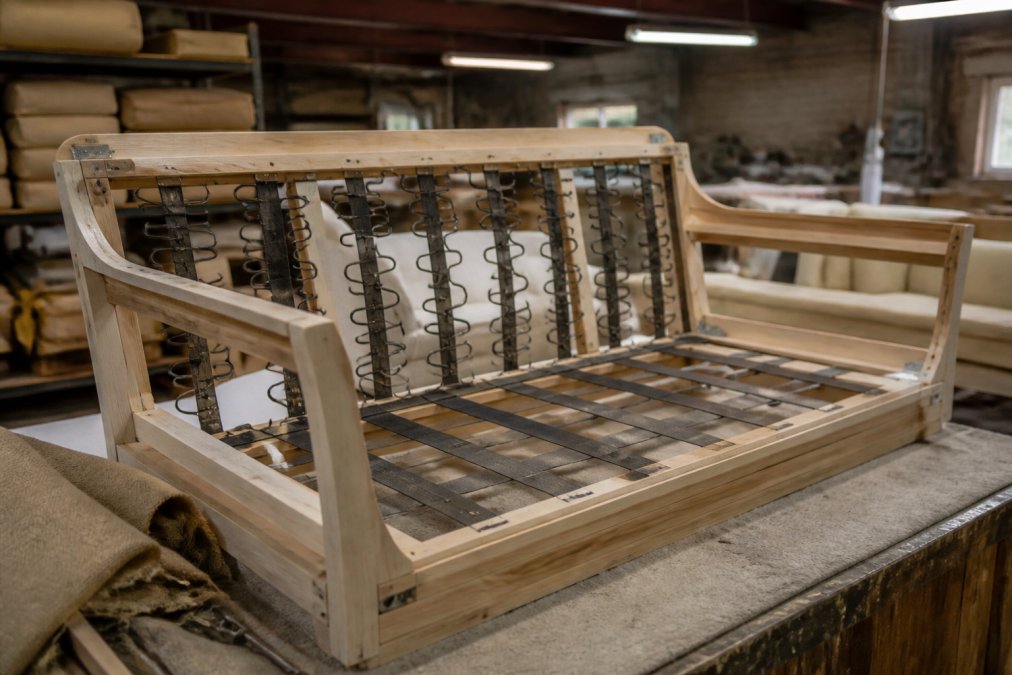
The frame is the skeleton of the sofa, and the best sofa frame materials are those that resist warping, cracking, and loosening over time. Your first check should always be the wood itself. High-quality frames use hardwoods that have been slowly dried to remove internal moisture, preventing the twisting and splitting that plagues cheaper softwoods.
Kiln-Dried Hardwood vs. Softwoods and Composites
Kiln-dried hardwood is the gold standard. The process slowly reduces the wood’s moisture content to a stable level, which prevents the frame from warping in centrally heated rooms or humid conditions. Beech, ash, and oak are common choices because of their density and strength. Softwoods like pine are cheaper, but they dent easily and lack the rigidity needed for long-term frame stability.
Engineered composites, such as particleboard or MDF, are a red flag. They are heavy but brittle, and the screw holes strip easily when joints are stressed. If you can see exposed edges of the frame, check whether the wood has a visible grain. A smooth, uniform edge with no grain pattern indicates a composite material that will not hold joinery securely for long.
Frame Joinery: Dowel, Corner Blocks and Glue
The way frame pieces are joined is as important as the wood itself. The most durable construction uses double dowel joinery reinforced with water-based adhesive. Dowels are wooden pegs inserted into precisely drilled holes in both pieces of wood, creating a mechanical lock that resists the lateral stress of daily sitting.
Corner blocks are the second critical element. These triangular pieces of wood are screwed and glued into each corner of the frame to brace the joints. They prevent the frame from racking, which is the side-to-side wobble that destroys cheaper sofas. A quick test is to push firmly on the back of the sofa at the top corner. If you feel any give or hear a creak, the joinery is suspect. Properly constructed frames should feel absolutely rigid.
How to Check Sofa Suspension Quality
Suspension is the system that supports the cushions and absorbs the impact of sitting. It is the most stressed component of any sofa, and how to check sofa suspension quality is a skill every buyer should learn. Without a strong suspension, even the best frame will fail prematurely as the cushions bottom out onto a sagging base.
Sinuous Springs vs. Eight-Way Hand-Tied Systems
Two main suspension systems dominate the market. Sinuous springs, also known as zig-zag springs, are S-shaped wires that run from the front of the frame to the back. They are an effective, modern solution when made from heavy-gauge wire and properly secured at both ends. Cheaper versions use thinner wire that loses its tension quickly.
Eight-way hand-tied systems are the traditional mark of luxury. Each coil spring is tied by hand to its neighbours in eight directions, creating a web of interconnected support. This system distributes weight evenly and provides a superior, more responsive feel. However, it is labour-intensive and significantly more expensive. For most homes, a high-quality sinuous spring system with a spring gauge of at least 4mm offers excellent durability and comfort.
A common mistake is assuming all sinuous springs are equal. Check the gauge (thickness) of the wire. Thin springs feel bouncy in the showroom but lose their tension within a couple of years, leading to a sagging seat. Always ask the retailer for the spring gauge specification.
Sofa Cushion Filling Types Comparison
Cushion filling determines both comfort and how quickly a sofa develops unsightly sagging. The sofa cushion filling types comparison below clarifies the options. The density of the foam core is the single most important factor, not the outer layer of softness.
| Cushion Core | Best For | Longevity | Maintenance |
|---|---|---|---|
| High-Resiliency Foam | Firm support, daily use | 10+ years | Low, minimal plumping |
| Fibre Wrap over Foam | Softness with support | 5-8 years | Regular plumping needed |
| Feather and Down | Luxury softness | 3-5 years | Daily plumping required |
High-Resiliency Foam, Down and Fibre Wraps
High-resiliency foam is the workhorse of quality cushioning. It is a dense, springy foam that recovers its shape quickly after compression. The key metric is density, measured in kilograms per cubic metre. A density below 25 kg/m³ will break down quickly, while premium sofas use cores of 30 kg/m³ or higher (foamonline.com). This is the difference between a cushion that stays firm for a decade and one that develops a permanent dent in two years.
Down and feather wraps add a layer of plush comfort over the foam core. They feel luxurious but require daily plumping to maintain their shape. Fibre wraps are a synthetic, hypoallergenic alternative that offers similar softness with better shape retention. For a sofa that requires minimal upkeep, a solid high-resiliency foam core is the most practical choice.
Upholstery Indicators: Fabric, Stitching and Pattern
The upholstery is the most visible sign of quality, and it reveals a great deal about the care taken in construction. Fabric durability is measured using the Martindale rub test, which indicates how well the material withstands abrasion. For a family living room, look for a rub count of at least 30,000. A tight weave is essential, as loose weaves allow dirt to penetrate and cause fibres to snag.
Inspect the stitching along the seams and the welt piping. Stitches should be small, even, and tight, with no loose threads or skipped stitches. The seam integrity is critical at stress points, such as where the arm meets the seat. A high-quality maker will reinforce these areas with extra stitching.
Pattern matching is a subtle but telling detail. On a well-made sofa, the fabric pattern flows continuously from the seat over the front edge and down to the floor. If you are buying a patterned fabric, check that the design aligns at the seams. Mismatched patterns indicate rushed manufacturing and a lack of quality control.
When checking fabric, run your hand across the surface against the nap. A quality fabric will feel consistent, while a cheap one may show shading or uneven colour. For leather, check the backing: top-grain leather has a suede-like backing, while cheaper bonded leather has a fibrous backing layer.
The Squeak Test and Frame Stability Checks
Most buyers never perform a structural diagnostic on a sofa before purchase. The squeak test is a simple method to assess frame stability and suspension health. Sit on the edge of the sofa and gently rock back and forth. Listen carefully. A quality frame with secure joinery and lubricated springs should be silent. Any creaking or squeaking indicates friction between wooden joints or metal components, which will only worsen over time.
Perform the wobble test next. Place your hands on the back of the sofa and attempt to push it side to side. There should be zero lateral movement. Then, apply pressure to the arms, both downward and outward. The arms are a common failure point, and any flex suggests inadequate corner blocking.
A Visual Inspection Checklist for Buying a Sofa
When you are ready to inspect a piece, whether in a showroom or via high-resolution photos online, use this systematic checklist. It covers the signs of high quality sofa construction from top to bottom.
- Lift the corner: A heavy frame indicates solid hardwood, not lightweight composites.
- Check visible wood: Look for a natural grain pattern, indicating kiln-dried hardwood.
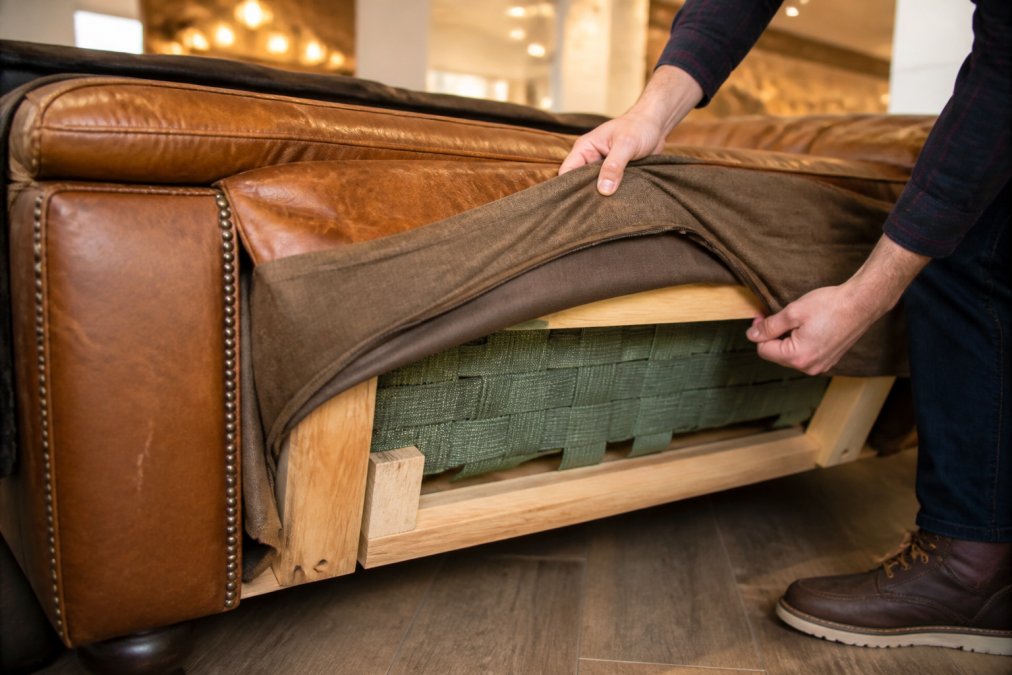
- Inspect the base: Turn it over if possible. The dust cover should be a breathable fabric, not a flimsy non-woven material that tears easily.
- Press the seat cushions: They should feel firm and recover quickly when you lift your hand.
- Run your hand along seams: Feel for even, tight stitching with no puckering.
- Perform the squeak test: Rock gently and listen for any creaking.
- Push the back: Apply firm pressure to check for rigidity and frame stability.
- Examine the legs: They should be solid wood or metal, securely attached with bolts, not glued or stapled.
Post-Purchase Care: Protecting Your Sofa Construction
The quality of the initial construction determines the ceiling of a sofa’s lifespan, but maintenance determines how close you get to that ceiling. Proper care protects the frame, suspension, and cushioning from premature failure. The most important habit is regular rotation of the seat cushions. This ensures even wear across the foam core and prevents one side from flattening prematurely.
Environment plays a significant role in structural integrity. Kiln-dried wood still responds to extreme humidity changes. Avoid placing the sofa directly against a radiator or in constant direct sunlight, which can dry out the wood and fade fabrics. Keeping the room at a consistent, moderate temperature helps prevent frame warping.
The single most important insight is that you cannot judge a sofa by its cover. The frame material, joinery method, and suspension system determine longevity. Always ask the retailer specific questions about these internal components before you buy.
When buying online, the challenge is that you cannot physically perform these tests. This is where the reputation and transparency of the retailer become your primary tool. A specialist retailer should be able to tell you the exact wood species, the spring gauge, and the foam density of every sofa they sell. If they cannot, that is a warning sign in itself. Our expertise lies in guiding you through these details for handcrafted Tetrad collections, ensuring the piece you choose is built to last.
Choosing a quality sofa is an investment in your daily comfort and the long-term character of your home. The technical details of frame joinery, suspension, and cushion density are the difference between a piece that lasts twenty years and one that needs replacing in five. Our team at Artisan Sofas is here to help you navigate these choices with confidence, offering personal guidance on every fabric and collection to match your exact needs. EXPLORE COLLECTION
Frequently Asked Questions
How can you tell if a sofa is high quality?
Look beyond the surface fabric and check the internal construction. A high quality sofa will have a kiln-dried hardwood frame with dowel or corner-block joinery, a sturdy suspension system, and high-resiliency foam cushions. Lift one corner of the sofa; a well-built frame will not twist or creak. Examine the stitching for even tension and check that patterns align at the seams.
What is the best sofa frame material for durability?
Kiln-dried hardwood is the best sofa frame material for long-term durability. The kiln-drying process removes moisture, reducing the risk of warping or splitting over time. Look for frames made from hardwood like beech or ash. Avoid frames constructed from softwoods, particleboard, or plastic, as these are more likely to break or sag under daily use.
How do I check sofa suspension quality?
To check sofa suspension quality, press down firmly on the seat. A quality suspension will offer firm, even resistance and return quickly to its original shape without creaking. Sinuous springs should be heavy-gauge steel, securely clipped to the frame. The highest quality, eight-way hand-tied systems, provide superior support but are more expensive to produce.
What is the difference between foam and feather sofa cushions?
High-resiliency foam cushions hold their shape and offer firm support, making them a practical, durable choice. Feather and fibre wraps over a foam core provide a softer, more luxurious feel but require regular plumping to maintain their appearance. A high quality sofa often combines a foam core with a feather wrap for both support and comfort.
Why is fabric rub count important for sofa quality?
Fabric rub count, measured by the Martindale test, indicates how well upholstery will withstand abrasion. A rub count above 30,000 is suitable for heavy domestic use. This is a key indicator of high-quality upholstery. Choosing a fabric with a high rub count and a tight weave helps prevent pilling and ensures your sofa looks good for years.
