
Blog
Is Performance Velvet Worth the Price?
Nov
Last Updated: October 31, 2026
Quick Summary
Performance velvet is worth the price if you want velvet’s look without velvet’s fragility. The premium pays off when you match it to your household, sun exposure and finish preference, and judge it by cost per year rather than sticker price.
- Performance velvet is usually polyester or a polyester blend with a shorter, denser pile and a matte finish.
- For domestic sofas, 20,000 Martindale rubs suits light use and 30,000 or more heavy daily use.
- Performance velvets are frequently WS or W cleaning codes, while traditional velvets are often S or X.
- Performance velvet typically costs £45-£85 per metre and lasts 8-12 years in daily use.
- A five-year fabric warranty is only meaningful if you read what it excludes.
Table of Contents
- The Verdict: Is Performance Velvet Worth the Price?
- Performance Velvet vs Regular Velvet: What Actually Differs
- How to Clean Performance Velvet Upholstery
- Performance Velvet with Pets: The Honest Tradeoffs
- Velvet Sofa Lifespan: What Determines How Long It Lasts
- Durability, Stain Resistance and the Evidence Behind the Claims
- The Cost Question: Price Premium vs Cost Per Year of Use
- Choosing Your Performance Velvet Sofa
- Frequently Asked Questions
The Verdict: Is Performance Velvet Worth the Price?
Performance velvet is worth the price if you want velvet’s look without velvet’s fragility.
The honest answer depends on three things: who uses the sofa, how much direct sun it gets, and whether you value the matte finish over a high sheen. Get those right and the premium pays for itself in lifespan.
Below, we break down what differs, how to clean it, and how to judge cost per year rather than sticker price.
Performance Velvet vs Regular Velvet: What Actually Differs
Performance velvet is a velvet-look upholstery built from tightly woven synthetic fibres, usually polyester or a polyester blend, finished with a matte surface and treated for stain resistance. For a direct side-by-side breakdown of performance velvet vs traditional velvet, including durability, stain resistance and maintenance, see our comparison. Traditional velvet is typically woven from cotton, silk, or viscose, with a deeper pile and a softer, more reflective sheen.
Fibre, weave and the matte finish
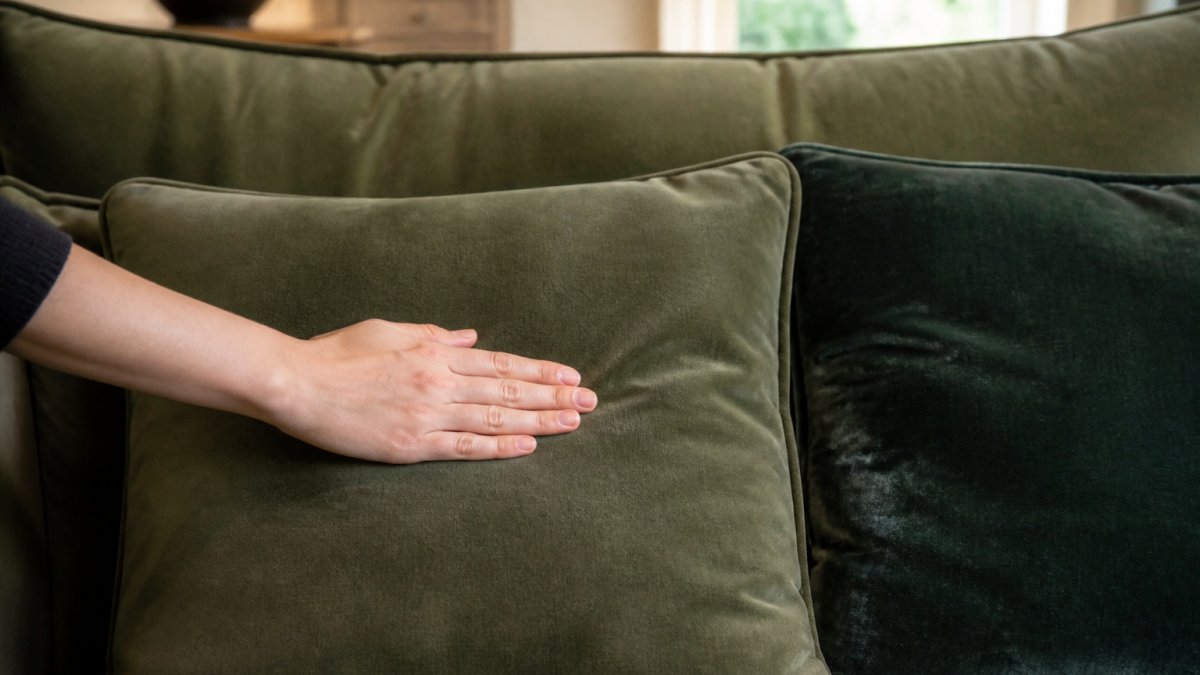
Traditional velvet’s luxury comes from its pile: a dense forest of short fibres that catches light and shifts colour as you move, and that same pile makes it delicate. Performance velvet uses a shorter, denser pile on a tighter weave, so it reads as velvet at arm’s length but looks flatter and more matte across a room.
The trade-off is real. If you want deep, light-catching shimmer, traditional cotton or silk velvet delivers it in a way performance fabric does not. If you want a calm, contemporary surface that holds colour evenly, performance velvet is the better fit.
Crushing, pressure marks and pile direction
Pile direction still matters: brushed one way performance velvet looks slightly lighter, the other way darker.
How to Clean Performance Velvet Upholstery
Cleaning performance velvet is straightforward if you act quickly and avoid soaking the fabric. For step-by-step guidance, see how to clean a velvet sofa at home without ruining the pile. Blot, do not rub. Use a mild detergent solution and a clean cloth, work from the outside of the stain inward, and air dry away from direct heat. For routine care, vacuum on a low setting with a soft brush head.
Spill-specific care: wine, coffee, grease and pet accidents
- Red wine: blot immediately, then dab with a solution of mild washing-up liquid and cool water. Never rub, or you push the pigment into the pile.
- Coffee: blot while wet, then treat with the same mild solution. Dried coffee needs a little more dwell time before blotting.
- Grease: blot off what you can, then apply a small amount of diluted washing-up liquid and work gently. Rinse with a clean damp cloth.
- Pet accidents: blot, then clean with an enzyme-based cleaner formulated for upholstery. Test on a hidden area first.
Performance Velvet with Pets: The Honest Tradeoffs
The tradeoffs are worth stating plainly. A determined cat will still find a loose thread, and no fabric survives repeated scratching in the same corner. Pet accidents need prompt enzyme treatment, because odour can settle into the backing even when the surface looks clean. And light colours show muddy paw prints in a way darker tones do not.
Velvet Sofa Lifespan: What Determines How Long It Lasts
A velvet sofa’s lifespan depends far more on its frame and cushioning than on the fabric. A well-built hardwood frame with proper jointing can last decades; the upholstery will need attention long before the structure does.
The variables that actually decide how long a velvet sofa lasts:
- Sun exposure: any velvet fades in direct sunlight over time; positioning matters as much as fabric choice.
- Care: prompt spill treatment and regular vacuuming add years.
Durability, Stain Resistance and the Evidence Behind the Claims
Performance fabric makers describe their products as easy to clean and long-wearing, and Crypton’s explanation of indoor performance fabrics makes the case that performance upholstery is an investment in furniture longevity. That is a reasonable claim, and it matches what we see in practice. But “performance” is not a regulated standard in the UK. It is a marketing category, and quality varies enormously between mills. Some performance velvets are genuinely tough; others carry the label with only a light treatment. The difference shows up in the specification, not the label.
What the test numbers actually mean
When a fabric is described as durable, the claim usually rests on a Martindale abrasion test: a circular rubbing motion under a known load, with the result expressed as a number of rubs before visible wear. For domestic sofas, a common benchmark is 20,000 rubs for light use and 30,000 or more for heavy daily use; contract-grade fabrics often exceed 40,000.
Stain resistance is harder to verify because there is no single universal test. Some mills use oil and water repellency tests; others rely on a topical treatment that can diminish with cleaning. A useful question is whether the resistance is inherent in the fibre or applied as a finish: inherent tends to last longer, applied finishes may need refreshing.
Cleaning codes and what they tell you
Most UK upholstery fabrics carry a cleaning code telling you which solvents or water-based methods are safe: W (water-based), S (solvent-based), WS (either), and X (vacuum only). Performance velvets are frequently WS or W, which is one reason they suit busy homes; traditional velvets are more often S or X, meaning you cannot reach for a mild detergent solution without risk. Check the code on the sample or ask the retailer, it is the single most practical piece of information for judging whether the fabric suits your household.
Separating verified specification from marketing language
A performance velvet worth its premium will come with a specification you can inspect: fibre content, Martindale rub count, cleaning code, and any stated fabric warranty. If a retailer cannot supply those details, treat the performance claim with caution. The same applies to warranties: a five-year fabric warranty is only meaningful if it states what is covered, who honours it, and whether it excludes pile crushing or shading. Read the exclusions before you assume the premium buys peace of mind.
For a broader framework on matching fabric to lifestyle, our guide on how to choose the right sofa fabric walks through durability ratings and maintenance needs.
The Cost Question: Price Premium vs Cost Per Year of Use
Performance velvet costs more than standard fabric, and most buyers fixate on that gap. The better question is cost per year of use. Our handcrafted furniture cost breakdown compares bespoke pieces with mass-produced sofas on a cost-per-year basis. A sofa that lasts fifteen years at a higher price often costs less annually than a cheaper sofa replaced twice. That logic is sound, but it only helps if you put numbers against it.
A worked example, using typical UK upholstery prices
Pricing depends on size, fabric, and finish, so direct readers to Tetrad’s website for current prices or a quote. You can apply the framework to any quote. Suppose a three-seater in standard velvet is quoted at one price and the same frame in performance velvet at a higher price. If the standard velvet shows unacceptable wear in eight years and the performance velvet lasts twelve, the standard option costs £250 per year and the performance option £200 per year, the cheaper sticker price is the more expensive sofa. If the performance velvet lasts only ten years, the two are roughly level, and the premium buys convenience rather than savings.
How performance velvet compares with specific alternatives
A like-for-like comparison with other upholstery fabrics makes the trade-off clearer than any general claim.
| Fabric | Typical price band (per metre) | Abrasion resistance | Stain behaviour | Pet suitability | Expected fabric life in daily use |
|---|---|---|---|---|---|
| Traditional cotton or viscose velvet | £30-£60 | Low to moderate | Poor; blotting only, often solvent clean | Limited; claws snag the pile | 5-8 years |
| Performance velvet (polyester) | £45-£85 | Moderate to high | Good; usually water-cleanable | Better; tight weave resists snags | 8-12 years |
| Microfibre | £25-£50 | High | Very good; often machine-cleanable covers | Good; hair brushes off | 8-12 years |
| Leather | £60-£150 | High | Excellent; wipes clean | Good, but claws can mark | 10-15 years |
| Linen | £35-£70 | Moderate | Poor; stains set quickly | Limited; snags easily | 6-10 years |
| Other performance weaves (e.g. solution-dyed acrylic) | £40-£80 | High | Very good; bleach-cleanable in some ranges | Good | 10-15 years |
Performance velvet sits in the middle of the price range but offers a combination the alternatives do not: the matte velvet look with water-cleanable stain resistance. Microfibre is cheaper and tougher but does not look like velvet; leather is more durable but a different aesthetic entirely; linen is beautiful but the least forgiving listed. Judge the premium against what you would otherwise buy for a similar look and feel, not against the cheapest fabric on the swatch ring.
The long-term ownership view
Add the cleaning code and abrasion rating to your quote comparison, and the premium becomes a calculable choice rather than a leap of faith.
| Factor | Traditional Velvet | Performance Velvet |
|---|---|---|
| Upfront cost | Lower | Higher |
| Stain resistance | Low | High |
| Crush recovery | Poor | Good |
| Pet suitability | Limited | Better |
| Expected fabric life | Shorter | Longer |
| Cost per year of use | Often higher | Often lower |
Choosing Your Performance Velvet Sofa
Choosing well comes down to matching the fabric to the room. Decide who uses the sofa daily, how much sun the room gets, and whether pets or children are in the mix.
The Furniture Industry Research Association publishes guidance on upholstery performance and care that is worth reading before you commit.
When you are ready to see the options, explore the Tetrad collection to find the tone and texture that suits your room.
Frequently Asked Questions
Is performance velvet worth paying more for?
It depends on how the sofa is used. Performance velvet costs more than standard velvet because the fabric is engineered for stain resistance and abrasion resistance, and it holds its matte finish without the crushing that marks traditional velvet. In a formal room used occasionally, a standard velvet may serve you just as well for less money.
What makes performance velvet different from standard velvet?
Standard velvet is typically woven from cotton, silk or viscose, and its pile is what gives it that deep sheen, but also what crushes and marks. Performance velvet usually uses synthetic fibres such as microfiber, with a tighter construction and a matte finish. It looks slightly less lustrous than silk velvet, which some buyers see as the trade-off.
Is performance velvet safe for cats?
No upholstery fabric is claw-proof, and performance velvet is no exception. The bigger risk is snagging on the pile during a cat’s launch off the arm. Trim claws regularly, offer a scratching post nearby and choose a tight-weave performance velvet rather than a deep-pile one.
How long does a velvet sofa last?
Fabric choice affects that figure: traditional velvet in a busy room may show crushing and wear within a few years, Frame construction, cushion filling and how often the sofa is cleaned matter as much as the velvet itself.
Does performance velvet show marks or pet hair?
Pet hair sits on the surface rather than weaving into the pile, so a lint roller or vacuum with an upholstery attachment lifts it quickly. Light-coloured performance velvet will still show dark pet hair, so match the fabric tone to your animals if that bothers you.
The challenge is not finding a beautiful velvet sofa. It is finding one that still looks beautiful after five years of family life. At Tetrad, we build handcrafted British furniture with over 50 years of craftsmanship behind every piece, and we guide you through every fabric choice personally so you know exactly what you are buying. Explore our collection and choose a sofa built to be lived on, not just looked at.

