
Blog
7 Steps to Prevent Sun Damage on Leather Furniture
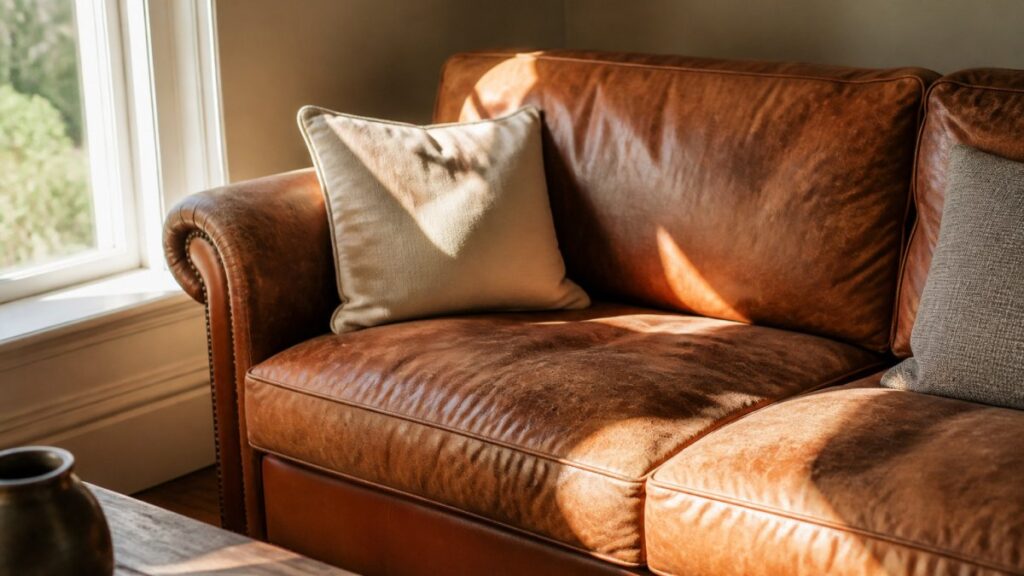
Oct
Last Updated: October 30, 2026
Quick Summary
Sun damage leather furniture is best prevented by moving the sofa away from direct sunlight, blocking UV with window film or lined curtains, and keeping it clear of radiators and fires. Gentle regular cleaning and conditioning that suits the leather type also help it resist fading and drying over time.
- Position the sofa at least 20 to 30 cm away from the window.
- Use lined, lighter-coloured curtains or blinds during the hottest part of the day.
- Keep the sofa away from radiators and open fireplaces, since heat dries leather out.
- Use a UV-filtering window film, which can be removed without damaging the glass.
- Dust weekly, wipe spills straight away, and test conditioners on a hidden area first.
Table of Contents
- Does Leather Fade in the Sun? What Happens to Your Sofa
- Assess Your Living Room: Which Spots Get the Most Sun
- Step 1 to 3: Reposition, Block and Keep Heat Sources Away
- Choosing Window Coverings and Furniture Covers That Actually Block UV
- How to Protect a Leather Sofa from Sunlight Day to Day
- Choosing a Leather Conditioner for Sofas Safely
- Leather Sofa Fading Repair: What You Can and Cannot Fix
- Book Your Tetrad Leather Sofa Consultation Before the Sun Gets to It
- Frequently Asked Questions
Leather sofas are built to last, but a few hours of direct sun each day can quietly undo years of care. Sun damage leather tends to be slow, so it often goes unnoticed until the colour has faded and the surface has started to dry out. Sun exposure is most often a concern in living rooms with large south- or west-facing windows, and much of it is preventable with a few simple changes. For brand-specific steps, see our Tetrad leather care routine.
Sun damage to leather is a real and common problem. Leather fades when UV rays break down the dyes and finish on its surface, and heat dries out the natural oils that keep it soft. The good news is that you do not need to replace your furniture or buy expensive treatments. You need a clear plan. Below, we walk through how sun damage happens, how to check your own room, and seven practical steps to protect your sofa.
Does Leather Fade in the Sun? What Happens to Your Sofa
Yes, leather fades in the sun, and it usually happens gradually. Ultraviolet light breaks down the pigments in the dye, so the colour lightens and can look uneven where sunlight hits most often. Heat adds to the problem by drying the leather, which can lead to stiffness, fine surface cracks and a dull, chalky look.
Here is what to watch for:
- Colour loss: The seat cushion or arm nearest the window looks paler than the rest.
- Dryness: The surface feels rough or stiff when you run your hand across it.
- Fine cracking: Small lines appear, often where the leather bends.
- Uneven patches: Blotchy areas show up where the light falls in a fixed pattern.
Watch out: Heat and sun together do more harm than either alone, so a sofa in a hot, sunny corner ages faster than one in a shaded spot.
Assess Your Living Room: Which Spots Get the Most Sun
Before you move anything, spend a day tracking where the light falls. Check the room at different times, because the sun moves across the sky and the exposed area changes through the day.
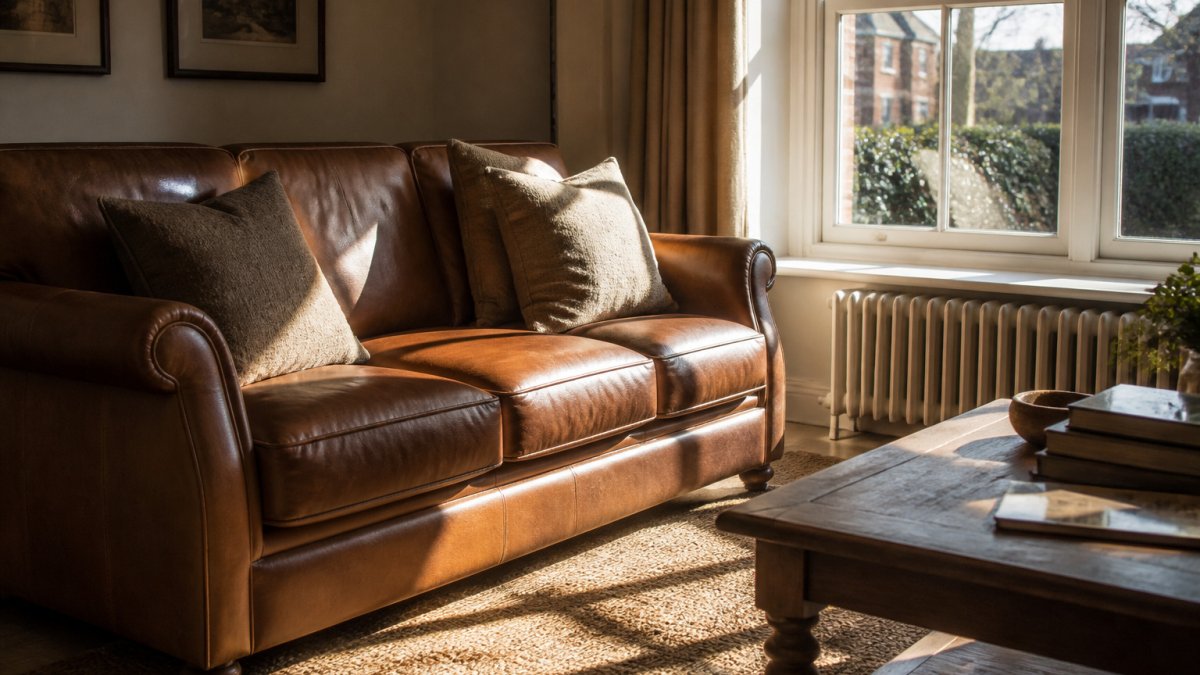
- Note the window direction: South and west-facing windows usually get the strongest afternoon sun.
- Mark the hot spots: Look for areas where sunlight lands on the sofa for several hours.
- Check for radiators and fires: Heat sources near the sofa add drying stress even without direct sun.
- Consider the season: Summer sun is far stronger, so re-check your room as the year changes.
Once you have a map of the room, you can decide which steps will do the most good.
Step 1 to 3: Reposition, Block and Keep Heat Sources Away
The first three steps are the easiest and cost nothing.
Step 1: Move the sofa out of direct sun. Position it at least 20 to 30 cm away from the window so the strongest rays do not reach the leather. Turning the sofa to face a different direction can make a large difference.
Step 2: Block the light at its source. Use blinds or curtains during the hottest part of the day. Lined, lighter-coloured curtains reflect more light than thin dark ones.
Step 3: Keep heat sources away. Do not place the sofa against a radiator or near an open fireplace. Heat dries leather out, and the damage builds up over time even if the sun is not shining directly on it.
Choosing Window Coverings and Furniture Covers That Actually Block UV
Not all window treatments block UV equally, and the right choice depends on how much light you want to keep in the room. The table below compares the main options by how much UV they typically block, how much visible light they let through, and how well they suit a living room where the sofa is on show.
| Option | Typical UV block | Visible light | Best for | Watch-outs |
|---|---|---|---|---|
| UV-filtering window film | High (most films are rated to block the majority of UV) | Medium to high, clear films keep the view | Renters and anyone who cannot change blinds | Professional fitting gives the neatest result; cheap films can bubble |
| Solar shades | High | Low to medium, darker fabrics cut more glare | West-facing rooms with afternoon glare | Fabric choice matters more than colour; open weaves block less UV |
| Lined curtains | Medium to high when closed | Low when closed | Rooms where you want soft furnishings | Thin or unlined curtains let much of the UV through |
| Blackout blinds | Very high | Very low | Bedrooms and media rooms | Can feel heavy and dark in a living room |
| Sheer or voile | Low | High | Diffusing light, not blocking UV | Offer little protection for leather |
A practical approach is to combine two layers: a UV-filtering film or solar shade for daytime, plus lined curtains you close during the strongest afternoon sun. That keeps the room usable while cutting the UV that reaches the leather.
Measure the window carefully. Cover the full opening, including the edges where low sun sneaks in, and check that the treatment sits close to the glass rather than hanging loose.
Furniture covers are a second line of defence. Choose a breathable, light-coloured cover that fits well so it does not trap moisture against the leather. Remove it on dry days so the leather can breathe.
If you are unsure which option suits your room, start with a UV-filtering film on the sunniest window. It is the least disruptive change and can be removed without damaging the glass or the frames.
How to Protect a Leather Sofa from Sunlight Day to Day
Protection against sun damage leather works best as a routine, not a one-off job. A few minutes each week keeps the leather in good condition.
- Dust the sofa weekly with a soft cloth or a soft brush attachment on a vacuum.
- Wipe spills straight away with a lightly damp cloth, then dry the area.
- Check the sofa monthly for dryness, fading or new cracks.
- Rotate the cushions regularly so wear and sun exposure spread evenly.
A common mistake is to over-clean. Harsh cleaners strip the protective finish, which leaves the leather more open to sun damage. Stick to gentle products made for leather.
Choosing a Leather Conditioner for Sofas Safely
A good conditioner can restore softness and help the leather resist drying, but the right product depends on the finish. Aniline and semi-aniline leathers are dyed through and have little or no surface coating, so they absorb products readily and can darken or patch. Pigmented leathers have a protective finish that sits on top, so they need a product that cleans and conditions without stripping that layer. For a full guide to maintaining aniline leather safely, see our care guide.
Use this as a starting point, then check the care label that came with your sofa:
- Aniline and semi-aniline: Choose a mild, water-based conditioner made for unfinished or lightly finished leather. Avoid heavy oils, waxes and anything labelled as a renovator until you have tested it. Apply sparingly with a soft cloth and buff off any excess.
- Pigmented and protected leathers: A pH-neutral leather cleaner followed by a light conditioner suited to finished leather is usually enough. Avoid abrasive creams and household cleaners, which can dull the finish and leave it more open to UV damage.
- Faux leather: Wipe with a damp cloth and mild soap. Conditioners designed for real leather can leave a sticky residue on synthetic surfaces.
Before you use any product, test it on a small, hidden area such as the underside of a cushion. Apply a small amount with a soft cloth, let it soak in, and check the result after a day. Use conditioner sparingly, about once or twice a year, rather than as a monthly habit, over-conditioning can leave aniline leathers tacky and attract dust. For step-by-step home cleaning and protection, see our guide.
Avoid products containing solvents, silicone or heavy oils on aniline and semi-aniline leather. They can draw out dye unevenly and leave permanent dark patches that no amount of cleaning will reverse.
If you are unsure which product to use, check the care label that came with your sofa. It will usually name the leather type and the products the manufacturer recommends. When in doubt, a specialist leather retailer or upholsterer can confirm the finish before you buy anything. Professional guidance remains the most reliable way to ensure your investment stays protected, especially when applying the same principles of leather upholstery care to other high-end surfaces in your home or vehicle.
Leather Sofa Fading Repair: What You Can and Cannot Fix
Light fading can sometimes be improved with a gentle clean and a suitable conditioner, but it cannot always be reversed. Once the dye has broken down, the original colour does not come back. Professional re-dyeing or re-finishing can restore the look, but results vary with the leather type and the extent of the damage. You can also browse Tetrad leather and fabric finishes if replacing or re-covering is the better option.
Some damage, such as deep cracking or large patches of lost colour, may need professional attention or replacement of the affected panel. The earlier you act, the more you can save, which is why prevention matters so much.
Book Your Tetrad Leather Sofa Consultation Before the Sun Gets to It
If you are buying a new leather sofa, planning its position from day one can save problems later. Pricing depends on the piece, the leather and the finish you choose, so please check our website or ask us for a current quote. Get in touch to talk through your room and find the right Tetrad leather sofa for your home.
Frequently Asked Questions
Does leather fade in the sun?
Yes. Ultraviolet light breaks down the dyes and protective topcoat on leather, so the surface lightens and can look patchy over time. Pieces that sit in direct sun for several hours a day, especially near south or west-facing windows, are the most affected. Leather that is well maintained with a conditioner and kept out of strong direct light tends to resist fading far better than leather left unprotected. Moving the sofa a short distance or adding a window covering is usually the quickest fix before any repair work is needed.
How do I protect a leather sofa from sunlight without buying new furniture?
Start by moving the sofa at least 20 to 30 cm away from the window, or rotating the room so it sits out of the main beam of light. Close blinds or lined curtains during the brightest part of the day, and add a throw or cover over the arms and seat when you are out. Keep the sofa away from radiators and fireplaces too, because heat speeds up drying and cracking. These changes cost nothing and cover most of the risk for a typical living room.
What is the best leather conditioner for sofas?
Choose a conditioner made specifically for leather upholstery and check the label for its suitability for your leather type, such as aniline, semi-aniline or pigmented. Test any product on a hidden area first, such as underneath a cushion, and apply it sparingly with a soft cloth. Avoid household cleaners, which can strip the finish. Condition on a regular schedule, typically every few months, and always follow the manufacturer’s guidance for your specific sofa, since pricing and product availability vary and should be confirmed with the retailer.
Can faded leather sofa fading be repaired?
Mild fading can often be improved by a professional leather restorer, who may clean, recondition and apply a matching colour coat. Deep or uneven fading is harder to correct and may need the panel re-dyed or the surface refinished. Results depend on the leather type, the extent of damage and the finish, so ask a specialist to assess the piece in person. Prevention through repositioning, window coverings and regular conditioning remains the most cost-effective approach.

