
Blog
How to Maintain an Aniline Leather Sofa: 2026 Care Guide
Sep
Table of Contents
- What Aniline Leather Is and Why It Needs Different Care
- Daily and Weekly Maintenance: Dusting, Vacuuming and Moisture Balance
- Aniline Leather Cleaning Products: What to Use and What to Avoid
- How to Remove Stains from Aniline Leather: A Step-by-Step Method
- Leather Conditioning Frequency: How Often and How Much
- Protecting Your Sofa from Sunlight, Pets and Everyday Wear
- Common Cleaning Mistakes That Damage Aniline Leather
- Restoring Faded or Dry Aniline Leather
- Frequently Asked Questions
Last Updated: September 17, 2026
What Aniline Leather Is and Why It Needs Different Care
Aniline leather is a full-grain hide dyed with soluble dyes but left without a pigment or polymer topcoat, which is why it feels so supple and demands a gentler routine than most sofa owners expect. Aniline is not delicate, but it is honest.
Full-Grain, Porous and Absorbent: The Three Traits That Shape Every Decision
Those three traits dictate every choice you’ll make. The surface is porous, so liquids soak in rather than sitting on top, and absorbent, so natural oils from your hands and hair become part of the finish over time. That slow accumulation produces the rich patina aniline is prized for, but it also means a spilled glass of red wine is a genuine event rather than a wipe-clean inconvenience.
Treat every spill on aniline leather as urgent. The hide starts absorbing within seconds, and what soaks in cannot simply be wiped away.
Daily and Weekly Maintenance: Dusting, Vacuuming and Moisture Balance
Daily care for aniline leather is mostly about removing surface dust before it works into the grain. A dry microfibre cloth, passed over the sofa with a light hand, prevents the abrasive build-up that dulls the finish.
A quick weekly routine:
- Dust the whole sofa with a dry microfibre cloth
- Vacuum seams, folds and under cushions with a brush attachment
- Wipe body oils from armrests and headrests with a barely damp cloth
- Rotate and plump cushions to spread wear evenly
- Check for new marks while the surface is clean and easy to read
Aniline Leather Cleaning Products: What to Use and What to Avoid
The best aniline leather cleaning products are pH-neutral and free from solvents, detergents and silicones. Anything alkaline strips the natural oils the hide relies on, while alcohol-based cleaners lift dye with the dirt.
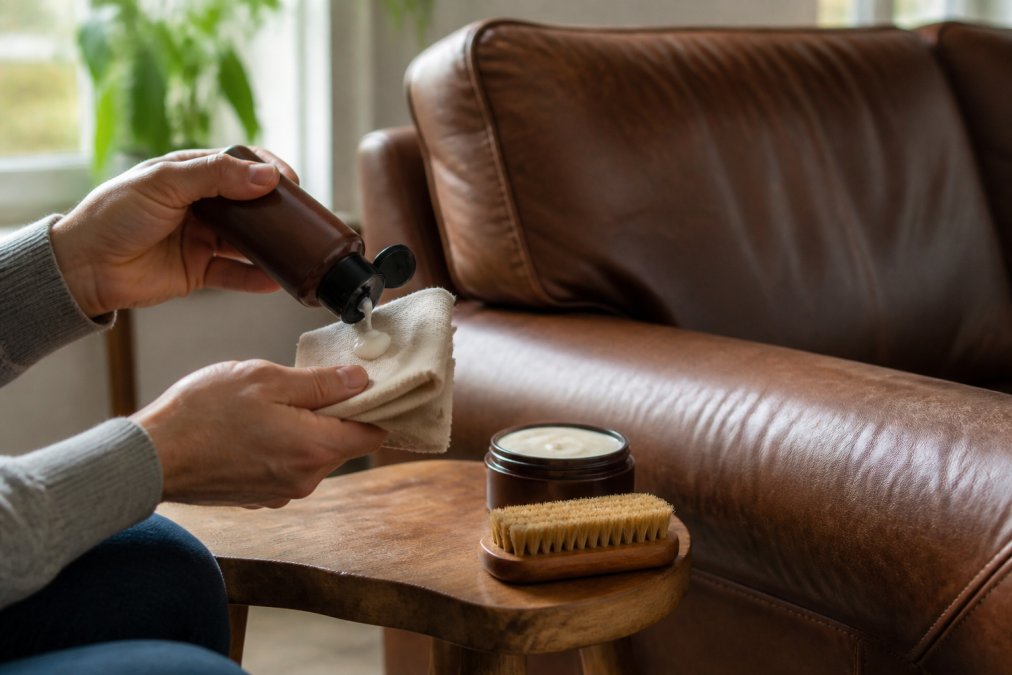
Safe to use:
- pH-neutral leather cleaner or a mild soap flake solution
- Distilled water rather than tap water, which can leave mineral deposits
- Wax-based or natural leather balsam for conditioning
- Soft microfibre cloths, one for cleaning and one for buffing
Avoid entirely:
- Household multi-surface sprays, washing-up liquid and bleach
- Baby wipes, which often contain alcohol and lanolin
- Saddle soap, which is too alkaline for aniline
- Coloured cloths that may transfer dye onto damp leather
How to Remove Stains from Aniline Leather: A Step-by-Step Method
Speed matters more than technique when you’re learning how to remove stains from aniline leather. Blot, never rub, and work from the outside of the mark inward so you don’t spread the ring. Aniline has no pigment or polymer topcoat, so nothing sits between the spill and the fibre structure of the hide, and liquid wicks sideways through the grain as well as downwards, which is why a small splash becomes a wide tide mark if you scrub it outward.
- Blot immediately. Press a clean, dry, white cloth onto the spill and hold it there, replacing it as it absorbs. White cloth matters because dye from a coloured cloth can transfer onto damp leather.
- Spot test first. Apply a drop of your chosen cleaner to a hidden area, such as under a cushion, and wait fifteen minutes. Check for colour lift and texture change, not just a visible reaction.
- Clean gently. Dampen a microfibre cloth with distilled water and a little pH-neutral cleaner. Work in light circular motions over the stain only, then blot.
- Blot dry. Press a dry cloth over the area to draw out moisture. Do not use a hairdryer or radiator, because fast drying sets a ring.
- Let it settle. Aniline leather often looks darker while damp and lightens as it dries. Judge the result the next day, not immediately.
- Condition afterwards. Once fully dry, apply a thin layer of balsam to restore moisture balance to the cleaned patch.
A Stain-by-Stain Playbook
Most guides stop at “blot and clean”. Different stains need different mechanisms, and treating them all the same is how small marks become permanent.
Never scrub a stain with a stiff brush or abrasive pad. Aniline has no protective coating to sacrifice, so you’ll abrade the grain itself, and that damage is permanent.
Keep a small stain kit near the sofa: a white microfibre cloth, a bottle of distilled water, a pH-neutral cleaner, a cotton bud pack and a sheet of blotting paper. The single biggest factor in stain outcomes is how quickly you act, not which product you own.
Leather Conditioning Frequency: How Often and How Much
Condition aniline leather two to four times a year for a sofa in normal daily use, and less often for a piece in a spare room. The test is touch, not the calendar. If the hide feels dry or looks dull in raking light, it’s ready.
Condition in the evening and leave the sofa unused overnight. The hide absorbs better when it isn’t being sat on straight away, and you’ll avoid transferring product onto clothing.
Protecting Your Sofa from Sunlight, Pets and Everyday Wear
Sunlight exposure is the single most underrated threat to aniline leather, and most guides barely mention it. UV energy attacks the chemical bonds in the soluble dyes and dries the surface, and because aniline has no pigment topcoat, fading shows up quickly and unevenly, the colour doesn’t just lighten, it shifts in tone. A sofa half in sun and half in shade develops a visible boundary within a couple of years, and no amount of conditioning will reverse it.
Practical UV protection:
- Position the sofa away from south-facing windows where you can, since these receive the most direct sun through the day.
- Use blinds, curtains or a sheer voile during the brightest hours, roughly late morning to mid-afternoon in summer.
- Rotate cushions and, where possible, move the sofa’s position slightly every few months so no single panel takes the full dose.
- Consider a window film that filters UV while letting visible light through, a common solution where the layout can’t change.
- Glass blocks some UVB but very little UVA, so a sunny window seat is not the protection it feels like.
Pet-specific maintenance:
- A washable throw over the seat cushions gives you a barrier that can be laundered weekly, which is far easier than cleaning the hide itself.
- Trim claws regularly, and keep a scratching post nearby so the sofa isn’t the most rewarding target in the room.
- Wipe pet oils from the seat and armrests weekly with a barely damp cloth, before they have time to soak in.
- For fresh claw marks, leave them alone for a few days. Aniline leather has some natural recovery, and many light scratches blend back as the oils redistribute. Rubbing them while fresh makes them worse.
- For pet accidents, blot immediately and clean with a pH-neutral cleaner, then condition once dry. Urine is alkaline and will strip oils if left, so speed matters.
- If a pet has a favourite spot, rotate the cushions more often so wear and oils spread rather than concentrate.
Sunlight and pets cause the two most common forms of irreversible aniline damage. Both are far easier to prevent than to repair, and both are routinely under-covered in standard care advice.
Common Cleaning Mistakes That Damage Aniline Leather
The mistakes that ruin aniline sofas are consistent, and most come from treating leather like fabric. Washing-up liquid, all-purpose spray and baby wipes all remove the natural oils that keep the hide supple, and the damage shows up months later as cracking along the seams.
Restoring Faded or Dry Aniline Leather
Restoration for aniline leather ranges from a straightforward conditioning routine to professional re-dyeing, depending on how far the fade has gone. If the leather feels dry but the colour is even, a thorough clean followed by a quality balsam applied over several weeks will often restore much of the suppleness.
| Problem | Likely Cause | First Step | When to Call a Professional |
|---|---|---|---|
| Dry, dull surface | Lost natural oils | Clean and condition with balsam | If dryness persists after 4 weeks |
| Uneven fading | Sunlight exposure | Move out of direct light | For re-dyeing panels |
| Water rings | Uneven drying | Dampen whole panel evenly | If rings remain after drying |
| Ink or dye transfer | Absorbed pigment | Blot and use ink remover | If mark has set for weeks |
| Cracking along seams | Long-term moisture loss | Condition thoroughly | Once cracks are visible |
Frequently Asked Questions
What are the drawbacks of aniline leather?
Aniline leather is porous and absorbent, so it marks easily and fades in direct sunlight. Spills soak in quickly rather than sitting on the surface, which makes prompt blotting essential. It also develops a patina over time, which many owners love but others see as uneven colouring. There is no protective coating, so scratches and dye transfer from clothing show more readily than on semi-aniline or pigmented leather. Regular conditioning helps keep the surface supple and slows moisture loss.
How often should I condition my aniline leather furniture?
Condition every three to six months in normal conditions, and every two to three months in dry, centrally heated rooms or sunny spots. Over-conditioning clogs the pores and attracts dust, so more is not better. Apply a small amount of pH-neutral leather balsam with a microfibre cloth, working in circular motions, then buff off any excess. If the leather feels dry or looks dull between sessions, a light top-up is fine. Always spot test on a hidden area first.
Can I remove water stains from aniline leather?
Yes, in most cases. Water stains happen because moisture disturbs the natural oils in the leather. Blot the area with a clean, dry cloth, then dampen the whole panel lightly with distilled water so the mark blends with the surrounding leather. Let it dry naturally, away from radiators or direct sun. Once dry, apply a thin layer of leather conditioner to restore moisture balance. Deep or repeated staining may need professional restoration.
Is washing-up liquid safe to use on aniline leather?
No. Washing-up liquid strips the natural oils that keep aniline leather supple, and its surfactants are too harsh for porous, unprotected surfaces. Even diluted, it can leave residue that dulls the finish and speeds up cracking. Stick to a pH-neutral leather cleaner designed for aniline or semi-aniline hides, or use distilled water with a microfibre cloth for light marks. If you are unsure about a product, spot test it on the back or underside of the sofa first.
