
Blog
What Is White Glove Furniture Delivery? A Complete Guide
Sep
Table of Contents
- What Is White Glove Furniture Delivery?
- White Glove vs. Standard Delivery: What’s the Difference?
- The Benefits of White Glove Delivery for Your Furniture
- What’s Included: From Unpacking to Furniture Assembly Services
- How to Prepare for Furniture Delivery: A Step-by-Step Guide
- Is White Glove Delivery Worth It? When to Choose It
- Conclusion: Protecting Your Investment
- Frequently Asked Questions
Last Updated: September 5, 2026
What Is White Glove Furniture Delivery?
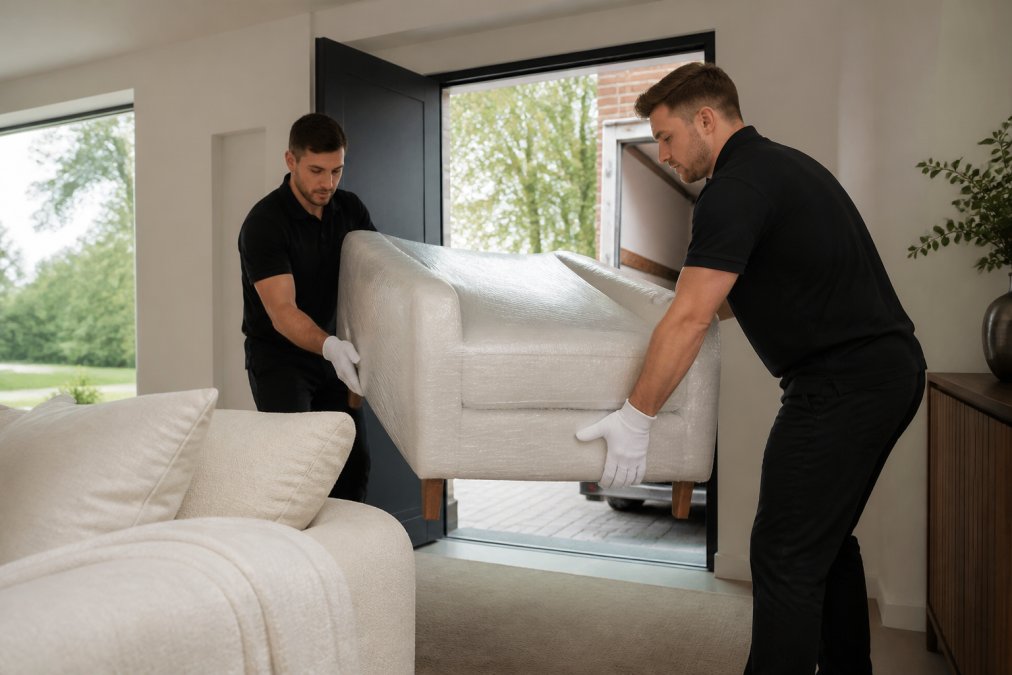
White glove furniture delivery is a premium, full-service logistics option where a two-man team handles your purchase from warehouse to placement in your home. Unlike standard courier drops, it includes careful transport, protective packaging, and professional handling. At Artisan sofas, we arrange this level of care for every handcrafted Tetrad piece we sell.
The service is called “white glove” because handlers treat your furniture with a butler’s care, wearing gloves to prevent marks. For expensive, heavy, or delicate pieces, this removes the anxiety of whether your investment will survive the journey.
White Glove vs. Standard Delivery: What’s the Difference?
The core difference comes down to where the courier’s responsibility ends and yours begins. Standard delivery typically means a single driver brings your item to the kerb or front door, leaving you to move it inside, unpack it, and dispose of packaging.
White glove delivery extends the service deep into your home. The team handles heavy lifting, navigates narrow staircases and doorways, and brings furniture to your chosen room. This matters most for large items like sofas that are difficult to manoeuvre and easy to damage.
| Service Feature | Standard Delivery | White Glove Delivery |
|---|---|---|
| Delivery location | Kerb or front door | Room of your choice |
| Heavy lifting | Customer responsible | Professional two-man team |
| Packaging removal | Customer disposes | Team removes and takes away |
| Furniture assembly | Not included | Included where required |
| Item inspection | Rarely performed | Full inspection on arrival |
The table above shows that white glove is not merely a nicer van or a friendlier driver. It is a fundamentally different level of service designed to protect your purchase and your property.
The Benefits of White Glove Delivery for Your Furniture
Choosing white glove delivery protects your furniture and home in ways standard couriers cannot match. The most obvious benefit is damage prevention, as professionals use protective padding and proven techniques to move oversized items without scraping walls or scratching floors.
There is also a significant convenience factor. The service saves you from hiring separate removal help, renting a van, or risking injury. A signed proof of delivery confirms the item arrived in good condition, providing clarity if you need to raise an issue with the retailer.
What’s Included: From Unpacking to Furniture Assembly Services
A full white glove service typically includes scheduled delivery within a set window, careful transport with protective wrapping, and a two-man team. Once inside, the team unpacks, inspects for transit damage, and positions the item in your chosen room. Many providers also include furniture assembly, essential for items with detached legs or multiple sections.
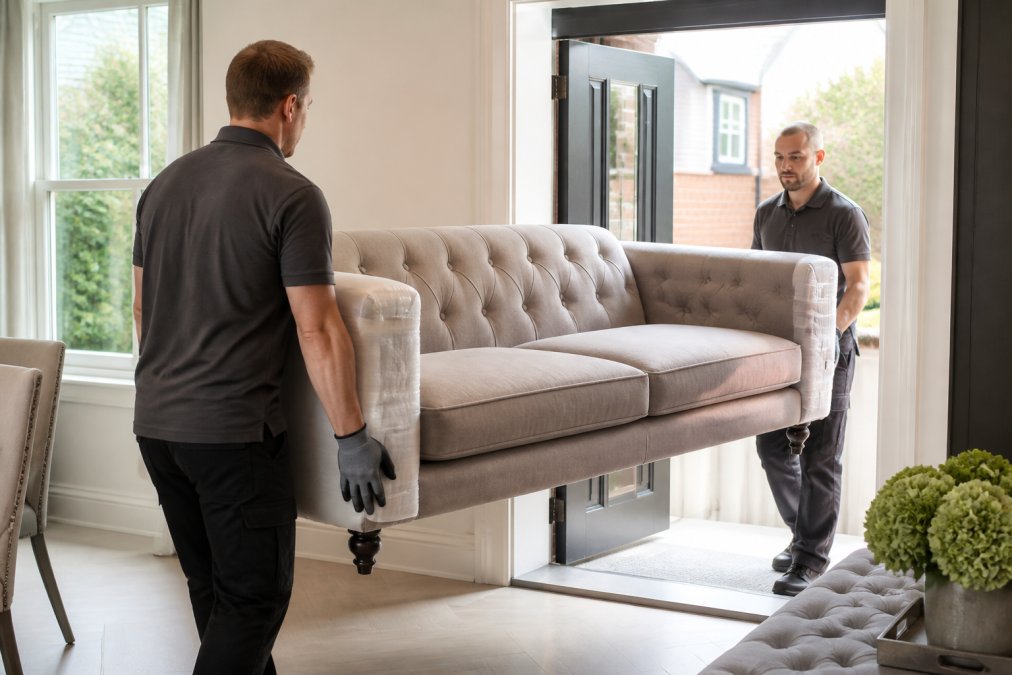
The team typically removes all packaging and takes debris away, saving you the hassle of disposing of large boxes and plastic wrap. You are left with a fully placed, ready-to-use piece rather than a pile of boxes in your hallway. For items requiring assembly, the team arrives with tools and completes setup before leaving.
How to Prepare for Furniture Delivery: A Step-by-Step Guide
Knowing how to prepare for furniture delivery ensures the process runs smoothly and protects your property and the delivery team. The steps below cover the practical details that make the difference between a seamless installation and a stressful afternoon.
-
Measure your access routes with a tape measure, not a guess. Measure the width and height of your front door, hallway, staircase, and the final room’s doorframe. For staircases, also measure the landing space at the top and bottom, as a sofa often needs to be pivoted there. A common mistake is measuring only the widest point of the sofa; you must also account for the diagonal height when the piece is tilted. A three-seater sofa with a 90 cm width and 85 cm seat height may need a diagonal clearance of over 180 cm when turned on its side to navigate a stairwell. If you are unsure, ask the retailer for the item’s ‘packaged dimensions’, the box is often larger than the furniture itself.
-
Clear the path and protect the floor. Move rugs, doormats, and any freestanding ornaments or small furniture out of the way. This is not just about creating space; it is about preventing trip hazards for the delivery team who are carrying a heavy, awkward load. Lay down dust sheets, old blankets, or thick cardboard on vulnerable surfaces, especially if the team must cross hardwood, marble, or light-coloured carpet. The protective padding the team carries protects the furniture, but your floor covering protects your property from scuffs and scratches caused by boots and the base of the item.
-
Remove internal doors where possible. If your hallway or the final room has a door that is narrower than the sofa, consider lifting it off its hinges before the team arrives. This is a simple job with a screwdriver or an Allen key for most modern hinges, and it can add several centimetres of clearance. If you are not comfortable doing this, tell the delivery company in advance so they can bring the appropriate tools and do it themselves.
-
Confirm the delivery window and access details. Most white glove providers offer a timed slot, typically between two and four hours. Confirm the slot the day before and ensure someone over 18 is home to receive the delivery and sign the proof of delivery. If you live in a flat, inform the team in advance about lift dimensions, stair access, or any parking restrictions near your building. A quick call to the dispatch office can save the team from circling the block and you from a delayed delivery.
-
Decide on the final position and protect the approach. Mark where you want the furniture to go, a piece of masking tape on the floor is ideal, so the team can place it correctly the first time. Also, consider the approach path from the entrance to that spot. If the sofa must pass through a narrow gap between a wall and an existing piece of furniture, move that piece or measure the gap to ensure it is wide enough. The team can pivot and angle the sofa, but they cannot squeeze it through a space that is physically too small.
Failing to measure your access routes before delivery day is the most common cause of returns and delays. A sofa that cannot navigate a tight staircase may have to be returned, which incurs significant cost and frustration for all involved. If you live in a period property with narrow, winding stairs, consider asking the retailer whether the sofa is available in a modular design that can be carried up in sections.
-
Prepare for the packaging removal. The team will take away the cardboard, plastic wrap, and foam, but you should designate a spot near your bin or outside door for them to stack the debris. If you live in a flat with a shared bin area, check whether there are restrictions on large cardboard disposal. The team will handle the heavy lifting, but having a clear exit route for the packaging prevents them from having to backtrack through your home.
-
Have a contingency plan for the ‘what if’. If the sofa genuinely cannot fit, the team will stop and assess the situation. They will not force the item through a tight space as this risks damage to the furniture and your walls. In this case, you may need to accept a partial delivery (leaving the item in the hallway) or arrange a return. Knowing this possibility beforehand helps you stay calm and make a rational decision on the day.
Is White Glove Delivery Worth It? When to Choose It
White glove delivery is worth the additional cost for large, heavy, or expensive furniture where damage risk is high and assembly is required. For a modest side table you can carry yourself, standard delivery is perfectly adequate. For a substantial handcrafted sofa, the service is close to essential. The decision comes down to three factors: the value of the item, the complexity of the installation, and your own physical capability.
The Cost Reality: What You Are Actually Paying For
Standard delivery for a large sofa in the UK typically costs £30-£60 and stops at your front door (which.co.uk). White glove delivery typically adds £80-£150, bringing the total to roughly £110-£210 (which.co.uk). For that premium, you pay for two trained professionals, a vehicle with space for protective wrapping, and time to unpack, assemble, and remove debris. Compared against hiring a man-with-a-van (often £50-£80 per hour) plus a handyman for assembly (another £50-£100), the white glove premium is often comparable, with a single point of responsibility if anything goes wrong (checkatrade.com).
A Decision Framework for Your Purchase
Use the following criteria to decide whether the premium is justified:
- Item value above £1,000. If the sofa or cabinet costs more than £1,000, the white glove premium represents less than 10-15% of the purchase price. That is a reasonable insurance premium against a £1,000+ item being scratched, dented, or dropped during a DIY move.
- Assembly is required. Sofas with detached legs, recliner mechanisms, or modular sections require tools and know-how. A standard delivery leaves you with a box of parts and no instructions on how to attach the legs without stripping the threads. White glove teams assemble these items daily and carry the correct Allen keys and spanners.
- You live above the ground floor. Staircases are the single greatest risk point for furniture damage. A two-man team is trained to pivot and lift heavy items on stairs, whereas a single standard courier will often refuse to go beyond the ground floor for liability reasons.
- The item is fragile or has delicate finishes. Antique pieces with turned legs, glass-topped tables, or upholstery in light-coloured fabrics benefit from the protective wrapping and careful handling that white glove teams provide as standard.
When Standard Delivery Is the Sensible Choice
Standard delivery is perfectly adequate for items under £300, pieces that come fully assembled and are light enough for one person to carry, or furniture destined for a ground-floor room with a wide, straight entrance. If you are buying a small occasional table or a lightweight bookshelf, paying an extra £100 for white glove service is difficult to justify. In those cases, the risk of damage is low and the assembly requirement is minimal.
Check whether assembly is included in the quoted price before you buy. Some providers charge extra for attaching legs or connecting recliner mechanisms, while others, including our service at Artisan sofas, build this into the white glove experience. Also ask whether the quoted price includes removal of packaging, some companies charge a separate ‘debris disposal’ fee of £15-£25.
The Hidden Value: Insurance and Liability Clarity
One aspect most guides overlook is insurance. With standard delivery, the courier’s liability typically ends at kerbside drop; if you damage the item dragging it inside, recourse is limited. With white glove delivery, liability extends until the item is placed in your room and you sign the proof of delivery. If the team scratches your floor or damages the furniture, responsibility is clearly theirs. Before booking, ask whether they carry goods-in-transit and public liability insurance, most reputable providers do, and this is a significant part of what your premium pays for.
The price difference between standard and white glove delivery is usually modest relative to the cost of the furniture itself. When you are spending a significant sum on a piece designed to last decades, paying for professional handling is a sensible safeguard rather than an unnecessary luxury.
Conclusion: Protecting Your Investment
White glove furniture delivery turns a stressful logistical challenge into a seamless experience, ensuring your new furniture arrives undamaged and placed exactly where it belongs. The service covers everything from transport and unpacking to assembly and debris removal.
When you invest in handcrafted furniture, the delivery method should match the quality of the piece itself. At Artisan sofas, every Tetrad sofa arrives through our professional white glove service, supported by over 50 years of British craftsmanship and our personal guidance on fabric, leather, and collection choices. Get started with Artisan sofas and experience furniture delivery that treats your new piece with the care it deserves.
Frequently Asked Questions
What is the difference between standard courier and white glove delivery?
A standard courier typically delivers items to your doorstep or ground floor only, leaving the package with you to manage. White glove delivery is a premium delivery service that includes a two-man team, careful handling, and placement of your furniture in your chosen room. The team will unpack the item, inspect it for any damage, and remove all packaging debris. For heavy or fragile items, white glove delivery offers a level of care and damage prevention that standard couriers cannot match.
Does white glove delivery include assembly and packaging removal?
Yes, most white glove services include furniture assembly and packaging removal as standard. The delivery team arrives with the necessary assembly tools to put your furniture together on site. After assembly, they will place the item in your preferred room and take away all protective packaging and debris for disposal or recycling. This service means you avoid the hassle of disposing of large cardboard boxes and plastic wrap, making the entire process convenient and stress-free.
How should I prepare my home for a white glove delivery team?
Before your delivery window, measure your doorways, hallways, and stairwells to ensure your new furniture can pass through, and clear a path of any obstacles or fragile items. Move existing furniture out of the way to create a clear space in the room of choice. Have a plan for where you want the item placed. On the day, keep pets and small children in a separate room for safety. This preparation helps the team work efficiently and prevents damage to your home.
What are the drawbacks of white glove service?
The main drawback of white glove service is the cost, which is higher than standard delivery because you are paying for specialist handling, a two-person team, and additional services like assembly. You may also need to be flexible with delivery scheduling, as these services often offer specific delivery windows rather than a same-day option. However, for expensive, delicate, or handcrafted furniture, the benefits of damage prevention and convenience usually outweigh the extra expense.
Explore the Tetrad collection and let our team guide you to the perfect handcrafted piece for your home.
This article was written using GrandRanker
