
Blog
How to Clean Luxury Velvet Sofa Fabric Safely
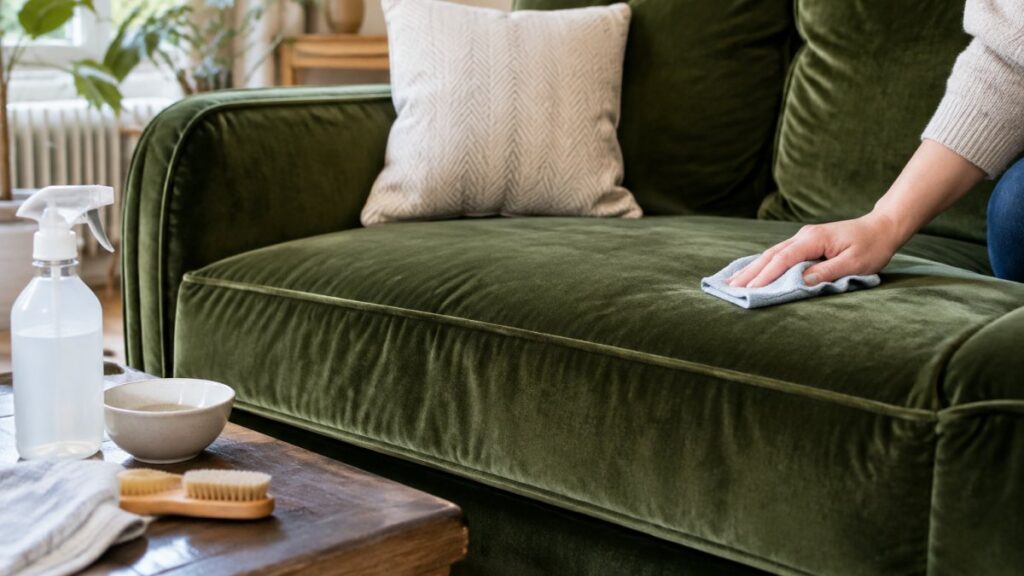
Nov
Last Updated: November 4, 2026
Quick Summary
Clean a velvet sofa safely by checking its care label and fibre content first, then gently vacuuming or brushing away dust. For spills, blot with a clean, pale cloth and use a suitable cleaner only if the label permits it and a hidden spot test dries without changes.
- Move a soft brush or vacuum attachment with the pile and keep suction gentle.
- Apply an approved upholstery cleaner to a clean white cloth, not directly to the fabric.
- Let the fabric dry completely before brushing the pile.
- Seek professional advice for silk, valuable or antique velvet, unclear labels, and set-in stains.
Table of Contents
- How to clean luxury velvet sofa fabric: check the fabric first
- Step 1: Prepare the sofa and remove surface dust
- Step 2: Choose velvet upholstery cleaning products and spot test
- Step 3: Remove spills and stains with careful blotting
- How to remove water stains from velvet and dry the fabric
- Step 4: Restore the pile and decide when to call a professional
- Velvet sofa maintenance tips for lasting care
- Frequently Asked Questions
How to clean luxury velvet sofa fabric: check the fabric first
Velvet can look worn after a spill, but the wrong cleaning method can cause lasting damage. How to clean luxury velvet sofa fabric depends on its fibre and care label. This guide explains how to check the fabric, lift dirt gently and know when home cleaning is the wrong choice.
Velvet upholstery is fabric with a raised surface of short, dense fibres called pile. The pile can flatten or mark if you rub it, soak it or use an untested cleaner. Start with the maker’s care instructions, not a general sofa-cleaning tip.
Check whether the fabric is cotton velvet, silk velvet or synthetic velvet, and look for any cleaning code or care notes. Fibre type affects how the fabric responds to water and cleaning products. If the label is missing or unclear, ask the retailer or fabric maker before using a liquid cleaner.
Browse Tetrad fabric collections to help identify velvet and other upholstery options.
Step 1: Prepare the sofa and remove surface dust
The safest first step is dry cleaning: clear loose dirt before you add moisture. Remove cushions, check seams and use a vacuum attachment with a soft brush. Keep the suction gentle, and move with the pile rather than pressing hard against it.
A common mistake is starting with a damp cloth while surface dust is still present. That can turn loose dirt into marks. For pet hair, lift what you can with a lint roller or a clean, soft brush; avoid sticky tools that tug at the pile.
- Take off cushions and check each side.
- Vacuum seams and creases with care.
- Brush lightly in the direction of the pile.
- Pick up pet hair without pulling fibres.
Step 2: Choose velvet upholstery cleaning products and spot test
Choose a cleaner only after checking the sofa’s care label and identifying the velvet’s fibre content. “Velvet” describes a pile construction, not a single fibre, so a method that is acceptable for one velvet may leave another stained, distorted or permanently flattened. If the label gives a cleaning code, follow it; if the code or fibre content is missing, ask the retailer or fabric maker before applying liquid or solvent.
- Cotton velvet: Water can leave rings, shrink the ground fabric or disturb the pile, particularly if a patch is wetted unevenly. Avoid soaking and do not assume that a mild detergent is safe just because it is gentle on skin.
- Silk velvet: Treat as especially delicate. Water can mark or change the handle, while rubbing can damage the fine pile. Do not use a home-made detergent or vinegar solution unless the maker specifically approves it; seek a specialist for stains that do not lift with dry blotting.
- Polyester or other synthetic velvet: Some synthetic fabrics tolerate limited water-based cleaning better than delicate natural fibres, but dyes, backing, finishes and blends still vary. The fibre name alone does not make a cleaner safe.
- Blended velvet: Use the care instructions for the finished upholstery, not just the most prominent fibre in the blend. A small amount of a delicate fibre or a special finish can determine the safest method.
If the label permits a cleaning product, choose one intended for upholstery and compatible with that care code. Do not combine products or add a second cleaner to try to remove residue: mixing ingredients can cause unexpected reactions, and leftover detergent may attract dirt or leave a visible patch. Avoid bleach, abrasive powders and unapproved household sprays. A pH-neutral product is not automatically suitable for every velvet.
Spot test in a hidden area, such as the back of a skirt or an inconspicuous part beneath a removable cushion. Apply the product to a clean white cloth rather than directly to the fabric, use the smallest amount needed, and follow the product directions. Let the test area dry completely before checking it in good light for colour transfer, a ring, stiffness, pile distortion or a change in sheen. A test that looks fine while damp is not a pass.
Watch out: Stop if the cloth picks up dye or the test patch dries with a different texture or colour; do not try to correct the change with more cleaner.
For valuable, antique or silk velvet, or where the label is unclear, professional advice is safer than experimenting with a DIY mix. Do not use a steam cleaner unless the fabric maker explicitly approves it: heat and moisture can affect the pile, dye, backing or adhesive even when the surface initially appears unharmed.
Step 3: Remove spills and stains with careful blotting
For a fresh spill, blot gently with a clean, pale cloth; never rub. Work from the edge towards the centre, using a dry part of the cloth each time. This lifts liquid without spreading it or crushing the pile.
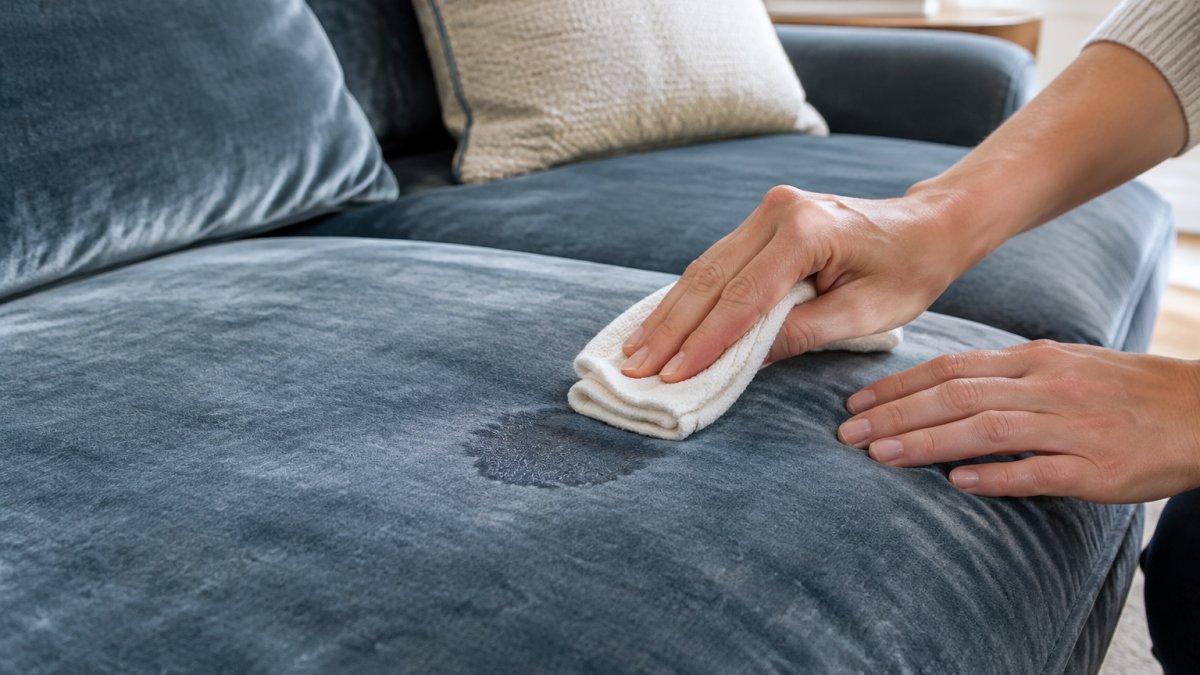
For marks that remain, follow the care label and use only a cleaner that passed your spot test. Apply it to the cloth, not straight onto the sofa, and use gentle agitation only if the fabric instructions allow it. Stop if colour transfers or the pile changes.
- Blot; do not scrub.
- Use a fresh cloth area as it absorbs liquid.
- Avoid soaking the upholstery.
- Get professional advice for unknown or set-in stains.
How to remove water stains from velvet and dry the fabric
To learn how to remove water stains from velvet, first check whether the fabric maker permits damp cleaning. Water rings can form when moisture dries unevenly, so avoid adding more water across a large area. If the care label allows it, lightly dampen a clean cloth with distilled water and treat the affected area gently, without soaking it.
Let the fabric air dry away from direct heat. Do not use a hairdryer or place the sofa in strong sun. The Furniture Industry Research Association’s upholstery guidance can help you find general care information, but the sofa’s own care instructions take priority.
If the mark spreads, the colour shifts or the fabric stays damp, stop. Moisture trapped in upholstery can cause further damage.
Step 4: Restore the pile and decide when to call a professional
Wait until the fabric is completely dry before restoring the pile. Brush lightly with a clean, soft upholstery brush, following the direction of the nap; use short strokes and stop if the fibres resist or the sheen changes. The aim is to realign the pile, not to scrub away a mark. If a cushion cover is removable, check its care instructions before taking it off or washing it: a removable cover is not necessarily machine-washable.
Watch out: Do not brush, rub or apply heat to damp velvet; pressure on wet pile can leave a flattened or shiny patch, and direct heat may affect the fabric or its backing.
Home care is generally most appropriate for routine dust, loose pet hair and a small, fresh spill that can be blotted without wetting the upholstery. Stop DIY treatment and contact a professional cleaner if any of these apply: Persistent stains or deep-seated grime often require a more methodical approach to clean upholstery at home without compromising the delicate pile of the fabric.
- The fibre content or cleaning code is unknown, missing or unclear.
- The sofa is silk velvet, antique, valuable, or has a delicate finish or mixed-fibre construction.
- A spot test causes colour transfer, a ring, stiffness, pile change or loss of sheen.
- The stain is large, set in, oily, sticky, or has already been treated with another product.
- Water marks keep returning, liquid has soaked into the cushion, or the fabric remains damp after surface blotting.
- The mark spreads or becomes more visible when it dries.
When contacting a cleaner, describe the fibre content and care code if known, what caused the stain, when it happened, and every product already used. Ask whether the proposed method is suitable for that specific velvet, whether it involves water, solvent or heat, and whether the cleaner will test an inconspicuous area first. A professional should explain the risks and expected result rather than promise that every stain can be removed without a trace.
For a fresh spill while arranging help, lift any solid material gently with a spoon or blunt edge, then blot liquid with a clean, pale cloth. Do not rub, add a succession of cleaners or saturate the area; those steps can spread the stain and make later treatment harder. Once the fabric is fully dry, a gentle brush in the direction of the pile can help restore its appearance.
Velvet sofa maintenance tips for lasting care
Good velvet sofa maintenance tips focus on prevention, not frequent wet cleaning. Brush away surface dust, deal with spills promptly and rotate cushions if the sofa design allows it. Avoid pressing the same spot for long periods, since compression can flatten the pile.
A simple care routine:
| Task | Method | When |
|---|---|---|
| Remove dust | Gentle vacuum and soft brush | Regularly |
| Lift pet hair | Lint roller or soft brush | As needed |
| Treat a spill | Blot with a clean cloth | Promptly |
| Refresh the pile | Brush when fully dry | After cleaning |
For more detail, read our guide to cleaning a velvet sofa at home. If you are choosing upholstery, our guide to choosing fabric online explains how to assess options and request samples.
Velvet rewards careful care, but set-in stains and uncertain fabric labels call for expert help. At Tetrad sofas. Tetrad chairs., we offer personal guidance across Tetrad fabrics, collections and furniture, with professional white glove delivery. Get started with Tetrad sofas. Tetrad chairs. to explore a sofa fabric that suits your home and care preferences.
Frequently Asked Questions
Can you use water on velvet upholstery?
Sometimes, but the fabric composition and care instructions decide whether water is suitable. Synthetic velvet may tolerate careful spot cleaning, while cotton velvet and silk velvet can react differently and develop marks or moisture damage. Check the sofa’s care label first, then test a small hidden area with a barely damp cloth and distilled water. Avoid soaking the fabric, and let it air dry without heat.
How do you get a stain out of a velvet sofa?
Act promptly: lift away any solid residue, then blot the spill with a clean, dry cloth. Do not rub, as friction can flatten the pile and spread the stain. Follow the care label, spot test a suitable cleaner in a hidden area, and use only a small amount. Work gently from the outside of the mark towards its centre, then allow the upholstery to air dry.
How do you restore the pile on a crushed velvet sofa?
Once the velvet is fully dry, brush the affected area gently in the direction of the pile with a soft brush. Do not press an iron onto velvet or apply steam unless the manufacturer specifically permits it.
Should I use a professional cleaner for my luxury velvet sofa?
Choose a professional upholstery cleaner when the care label calls for specialist cleaning, a stain persists after cautious spot treatment, or the fabric is silk velvet or otherwise delicate. Professional help is also prudent if the sofa has widespread marks, water rings or signs of moisture damage. Tell the cleaner the fabric composition and what has already been applied, so they can assess the safest method.

