
Blog
How to Match Leather to Decor: A 2026 Styling Guide
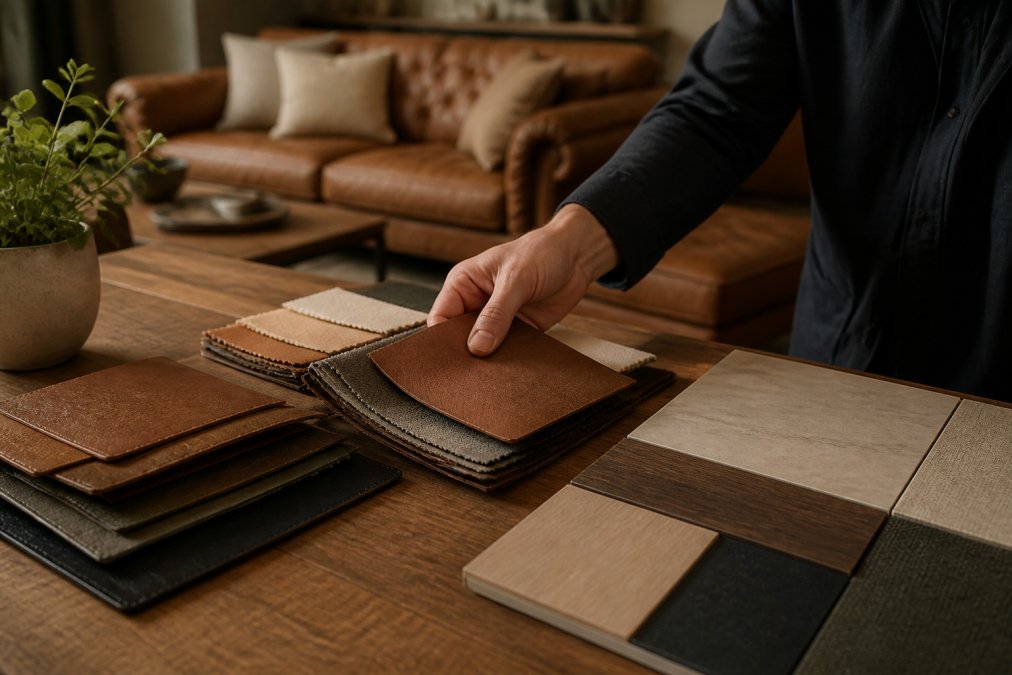
Sep
Table of Contents
- Step 1: Build a Colour Palette Around Your Leather
- Step 2: Mixing Leather and Fabric Furniture in One Room
- Step 3: Choose the Best Cushion Colours for Leather Sofas
- Step 4: Layer Natural Textures and Lighting for Balance
- Step 5: How to Clean Leather Sofas Without Damaging the Finish
- Step 6: Small Space Leather Styling and Budget-Friendly Hacks
- Step 7: Common Mistakes to Avoid When Matching Leather to Decor
- Frequently Asked Questions
Last Updated: September 13, 2026
Step 1: Build a Colour Palette Around Your Leather
Learning how to match leather to decor starts with one decision: your leather sets the palette, not the other way round. This guide from Artisan Sofas covers colour families, cleaning and small-space styling.
Start with the leather’s undertone. A cognac or chestnut hide pulls warm, so it wants creams, beiges and soft wheats. A cooler grey or charcoal leather sits better against ivory, cool greys and pale timber. Get this call right and everything after becomes easier.
Photograph your leather in daylight, then hold paint swatches against that photo on your phone. Undertones that look identical in a showroom often separate under natural light at home.
Warm Tones: Cognac, Tan, and Chestnut
Warm leathers carry orange and red undertones and age into a rich patina. Pair cognac, tan or chestnut with cream, sand and oatmeal textiles, then add one darker anchor such as walnut or espresso. Brass fittings and warm timber floors harmonise naturally. Avoid cool greys directly against warm leather; the contrast reads as a clash.
Cool Tones and Neutral Contrasts
Cool leathers lean grey, taupe or near-black. Build a neutral palette around ivory, cool grey and pale oak, and let contrast do the work. A charcoal sofa against cream walls and a wheat rug feels calm and architectural. Add one warm accent, such as a tan cushion or copper lamp, so the room does not turn clinical.
Step 2: Mixing Leather and Fabric Furniture in One Room
Mixing leather and fabric furniture works when you vary visual weight. One leather piece should anchor the room while fabric softens it.
A common mistake is buying a full leather suite; it looks showroom-fresh then feels heavy and cold within a month. Instead, pair one leather sofa with a fabric armchair, or a leather armchair with a linen sofa. Balance texture against texture: smooth leather next to bouclé, wool or linen. If your leather is glossy, choose matte fabrics; if matte, a little sheen adds interest.
| Leather Piece | Fabric Partner | Why It Works |
|---|---|---|
| Tan leather sofa | Cream linen armchair | Softens warm tones |
| Charcoal leather armchair | Wheat wool sofa | Adds warmth to cool tones |
| Cognac leather ottoman | Beige bouclé sofa | Texture contrast, low visual weight |
Step 3: Choose the Best Cushion Colours for Leather Sofas
The best cushion colours for leather sofas repeat a tone already in the room rather than introduce a new one. Cream, ivory, sand and beige suit warm leathers; slate, pewter and off-white suit cooler hides. But “safe” is where most guides stop, which is why so many leather sofas look like a showroom display rather than a home.
Work from a three-tier system instead. Tier one is the base neutral echoing your walls or rug. Tier two is a mid-tone bridging the leather and the base, a shade or two lighter or darker than the hide. Tier three is the single accent that gives the arrangement a focal point. One accent per sofa is the rule; two read as clutter, three as a mistake.
For warm leathers, the accent tier works best with rust, terracotta, olive, mustard or forest green. For cool leathers, navy, ink blue, plum or deep charcoal with a visible weave adds weight without fighting the grey. If your leather is very dark, keep the base tier light and let the accent carry the contrast.
Sizing matters as much as colour. Interior stylists typically size cushions at roughly 45cm to 55cm square for a standard two- or three-seater, with one smaller 30cm to 35cm cushion layered in front. Two large squares at each end, one smaller textured cushion in front of each, gives a symmetrical arrangement that suits most sofas. For a chaise or corner unit, break the symmetry: cluster three cushions at one end and leave the other bare so the leather becomes the negative space.
Fabric choice changes how the colour reads. Smooth leather against smooth cotton looks flat; against bouclé, wool, linen or velvet it creates the texture contrast that makes the palette feel intentional. If your leather is glossy, choose matte cushion fabrics; if matte or distressed, a little sheen such as velvet or sateen adds interest without competing.
Rotate cushion covers seasonally so the sofa reads differently without new furniture: heavier wool and velvet in autumn and winter, lighter linen and cotton in spring and summer, with the accent colour swapped to match. Two sets of covers in complementary palettes effectively give you two sofas for the price of one set of cushions.
Photograph your arranged cushions, then remove the accent tier and photograph again. If the sofa looks better without the accent, the accent colour is wrong, not the arrangement.
Cushion Pairings That Work With Common Leather Tones
| Leather Tone | Base Tier | Mid Tier | Accent Tier |
|---|---|---|---|
| Cognac or tan | Cream | Oatmeal | Rust or forest green |
| Chestnut or conker | Ivory | Sand | Olive or mustard |
| Charcoal or slate | Off-white | Cool grey | Navy or plum |
| Espresso or near-black | Pale linen | Warm grey | Terracotta or copper |
| Oxblood or burgundy | Stone | Blush | Ink blue or emerald |
Use the table as a starting point, not a rule. The test is whether the cushion repeats a tone that already exists in the room, whether the rug, curtains, artwork or timber floor.
Step 4: Layer Natural Textures and Lighting for Balance
Texture layering separates a styled room from a furnished one. Leather alone is smooth and reflective, so it needs natural materials around it to feel grounded.
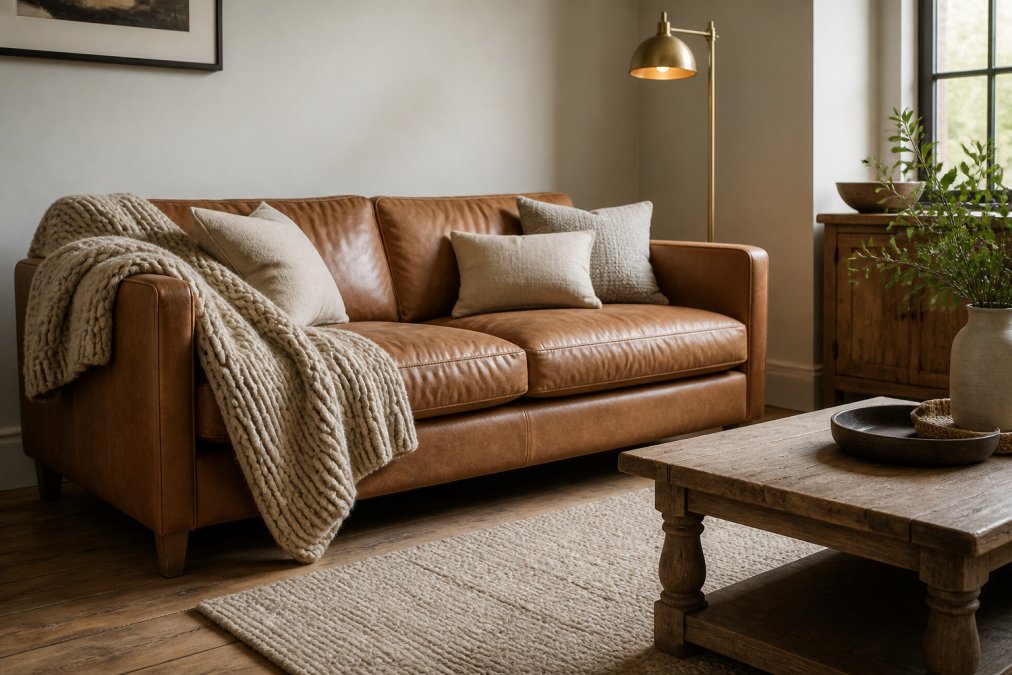
Add a wool or jute rug under the seating area, a chunky knit throw over one arm, and at least one piece of timber or rattan. Ambient lighting matters as much as the textiles: a floor lamp with a warm 2700K bulb flatters leather, while cool white overhead light makes even good hides look plastic. Use two or three light sources at different heights rather than one ceiling fixture.
Leather reflects light, so the room’s lighting scheme changes how the colour reads. Warm, layered lighting deepens cognac and tan; cool overhead light flattens them.
Step 5: How to Clean Leather Sofas Without Damaging the Finish
Cleaning leather safely comes down to frequency and restraint. Dust weekly with a dry microfibre cloth, and wipe monthly with a cloth wrung out in lukewarm water with a drop of mild soap. Dry immediately.
Never use alcohol, solvent cleaners, baby wipes or abrasive pads; they strip the finish and cause cracking. Keep the sofa out of direct sunlight and at least 30cm from radiators, because heat dries the hide (the NHS). For deeper conditioning, follow the manufacturer’s guidance rather than a generic product. As documented in the Society of British and International Interior Design’s guidance on material care, correct maintenance protects both the finish and the value of a piece.
Testing a new cleaner on a hidden area is not optional. Some products lift dye within seconds, and a patch behind the sofa is the only place that mistake is recoverable.
Step 6: Small Space Leather Styling and Budget-Friendly Hacks
Small rooms suit leather better than most people expect, provided you choose the right piece. A leather armchair or two-seater in a light tone keeps a compact living room from feeling closed in, while a dark oversized sofa will swallow it. What most guides skip is the practical detail: which pieces work in a compact room, how to style around them without spending, and how to handle material choices when budget decides.
Choosing the Right Leather Piece for a Compact Room
A leather armchair typically occupies around 80cm to 90cm of floor width, and a two-seater sofa around 150cm to 170cm. A three-seater starts at 190cm and climbs quickly, which is why it so often overwhelms a flat. Measure the wall, subtract at least 40cm of breathing room on each side, and let that number decide the piece.
Light tones such as cream, sand, dove grey or pale tan reflect more light and read as smaller in a compact room. Dark leathers absorb light and shrink the space, so if you own a dark sofa, compensate with pale walls, a pale rug and a mirror to bounce daylight back in. Visible legs, timber or metal, let floor show through and make any sofa feel lighter than a skirted or plinth-based design.
Styling a Small Space Without Adding Clutter
Keep the palette tight: two neutrals plus one accent. In a compact room, every additional colour competes for attention, so the accent should appear in no more than two or three places, such as a cushion and a lamp base.
A mirror opposite the window is the most effective free change you can make: it doubles the daylight and makes the leather read at its true colour rather than in shadow. A wool or jute rug extending just under the front feet of the sofa, rather than the whole seating area, defines the zone without eating floor space. A corner floor lamp adds a second light source at a different height, which flatters leather far more than a single overhead fitting.
Budget-Friendly Changes That Actually Shift the Look
Most changes that make a leather sofa look styled rather than merely owned cost very little. In rough order of impact per pound spent:
- New cushion covers in a coordinated three-tier palette. Two or three covers can transform a sofa for the price of a takeaway meal.
- A secondhand wool or jute rug. Wool and jute age well and hide wear, and both appear regularly in charity shops and online marketplaces.
- A repositioned lamp. Moving an existing lamp from a ceiling-adjacent corner to a lower side table changes how the leather reads more than most people expect.
- A chunky knit throw draped over one arm. This adds texture, breaks up a large expanse of leather and can be moved or removed seasonally.
- A single piece of timber or rattan, such as a side table or a tray, to ground the smooth leather surface.
What to avoid: buying a full set of matching accessories in one go. A room styled in a single shopping trip looks like a catalogue page rather than a home, and leaves no room for pieces you will want to add later.
If You Are Considering Alternatives to Leather
If budget or ethics are steering you away from leather, the styling rules change slightly. Faux and vegan leathers, typically polyurethane or polyvinyl chloride based, have a more uniform surface and a cooler, flatter sheen than real hide. They do not develop a patina, so the colour you buy is the colour you keep, which makes them easier to match but less forgiving of cheap finishes that peel or crack within a few years.
When styling faux leather, lean harder on natural textures around it, such as wool, jute, linen and timber, because the material itself provides less visual interest than real hide. Choose matte fabrics over glossy ones to avoid a plastic-on-plastic effect. If you are weighing up materials on durability and responsible sourcing, WRAP’s research on sustainable textiles is a useful starting point.
In a small room, the leather piece should be the lightest-toned and most compact option that still seats everyone you need it to. Everything else, from cushions to rugs to lighting, can be changed cheaply later.
Step 7: Common Mistakes to Avoid When Matching Leather to Decor
Most leather styling failures trace back to three decisions. Matching every piece to the same tone creates a flat, showroom look with no focal point. Ignoring undertones means warm leather fights cool walls. Neglecting maintenance turns the patina you wanted into cracking within a few years.
A fourth mistake is styling around the sofa rather than the room. Spatial balance matters: leave breathing room around the leather piece, and let one item, a rug, a lamp or an artwork, act as the focal point.
Compact living rooms and renters who want a leather look without committing to a full suite. One well-chosen armchair plus textiles delivers most of the effect.
Frequently Asked Questions
What sofa colours will look outdated in 2026?
Very dark, flat browns and heavily distressed leathers can feel dated. Instead, look for leather with natural patina and warm undertones like cognac, tan, or chestnut. These tones age gracefully and work with both neutral palettes and accent pieces. If you already own a dark sofa, soften it with ivory, cream, or beige textiles and add ambient lighting to reduce visual weight.
Can you mix different leather colours in a living room?
Yes, but keep it intentional. Use one dominant leather tone, such as a chestnut sofa, and introduce a second leather as an accent piece like a footstool or armchair. Bridge the two with a shared neutral palette of wheat or sand textiles. Avoid mixing more than two leather colours in a small room, as it breaks spatial balance and makes the space feel cluttered.
How do you balance dark leather furniture in a small room?
Lighten the surrounding palette with ivory, cream, or beige walls and curtains. Choose a rug in a pale neutral to reflect light, and add a large mirror opposite the sofa. Use ambient lighting from brass fittings or a floor lamp to soften shadows. Keep cushion colours for leather sofas in the same light family to avoid visual weight pulling the room down.
How can I make a leather sofa look more modern?
Swap heavy, traditional cushions for textured throws in linen or boucle. Add a slim-line floor lamp with a brass fitting and introduce a contemporary rug with a simple geometric pattern. Keep the leather clean and conditioned so the patina develops evenly. Mixing leather and fabric furniture, such as a leather sofa with a fabric accent chair, also updates the look without replacing the main piece.
Matching leather to decor is a process of small, deliberate decisions, and it gets much easier when you can see and feel the hide before you commit. At Artisan Sofas, we offer handcrafted British furniture from Tetrad with personal guidance through every leather and fabric, plus white glove delivery that includes positioning your piece properly in your home. Explore the collection and find the leather that suits your room.
