
Blog
How to Clean a Velvet Sofa at Home Without Ruining It
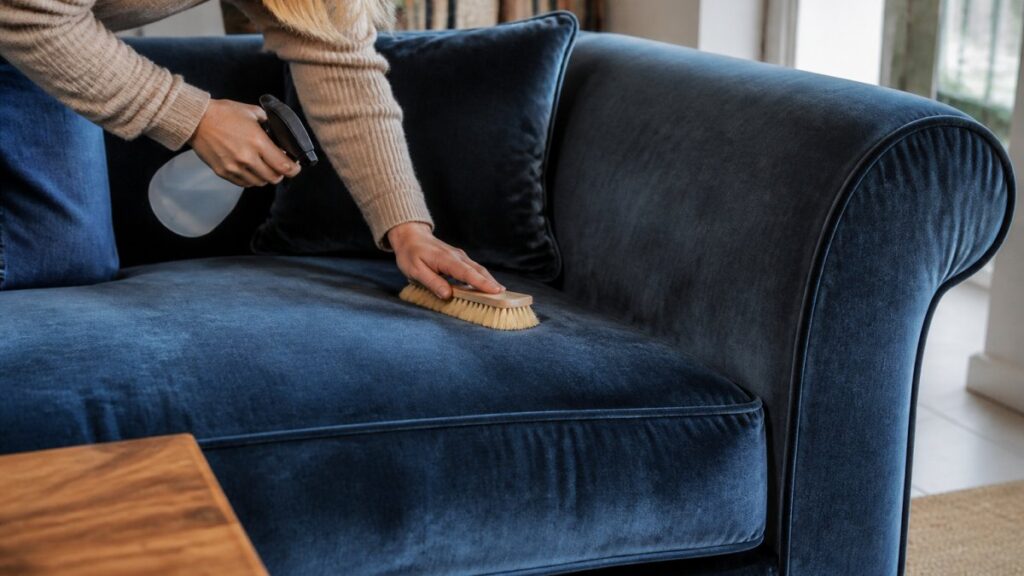
Oct
Last Updated: October 29, 2026
Quick Summary
To clean velvet sofa upholstery at home, first read the care label under the seat cushion and follow its code: W means water-based cleaning is fine, S means solvent only, WS allows either, and X means vacuum only. Vacuum first with a brush attachment, then dab marks with suds from a mild dishwashing liquid, blot dry and dry the whole panel evenly.
- If the care label is missing or unreadable, treat the sofa as S until you check with the maker.
- Whip mild dishwashing liquid and lukewarm water into foam and skim only the suds onto a soft cloth.
- Vacuum velvet furniture weekly on a low setting using the brush attachment on your vacuum hose.
- Blot spills instead of rubbing, working from the outside of the stain inward with a clean dry cloth.
- Dry the whole panel with a cool hairdryer held well back so the edge dries at the same rate as the centre.
Table of Contents
- Start With the Care Label Before You Clean a Velvet Sofa
- How to Clean Velvet Upholstery With a Mild Soap Solution
- How to Remove Dust and Pet Hair From Velvet
- How to Remove Stains From a Velvet Sofa: A Stain-by-Stain Decision Tree
- Drying Velvet Properly to Prevent Water Marks
- How to Restore Velvet Pile After Cleaning
- When Home Cleaning Is Unsafe: Steam, Mold and Calling a Professional
- Keeping Your Tetrad Velvet Sofa in Shape Between Cleans
- Frequently Asked Questions
Start With the Care Label Before You Clean a Velvet Sofa
The single most useful thing you can do before you clean velvet sofa upholstery is read the small label tucked under the seat cushion.
The answer to how to clean velvet sofa fabric without causing damage almost always starts with the same step: find the code.
Velvet is a woven fabric with a short, dense pile. The pile is what gives it that deep colour and soft sheen.
Reading the Codes: W, S, WS and X
Upholstery care codes are short and worth learning. They usually sit on a tag under the cushions or on the base of the frame.
- W means water-based cleaning is fine. Mild soap and water are safe.
- S means solvent only. Keep water off the fabric and use a dry-cleaning solvent.
- WS means either water-based or solvent cleaners are acceptable.
If the label is missing or unreadable, treat the sofa as S until you have checked with the maker. The British Standards Institution guide to care labelling sets out how care information should be presented on textiles, which helps you interpret an unfamiliar label.
Cotton, Polyester and Viscose: Why Fibre Changes the Method
Fibre type decides how much moisture the fabric will take and how easily the pile recovers. This is the part most guides skip.
- Cotton velvet absorbs water readily. Use less solution and dry it quickly.
- Polyester velvet resists water and dries fast, but heat can crush the pile.
- Viscose velvet is the delicate one. It marks easily with water and needs a light touch.
Backing construction matters too. A foam or bonded backing holds moisture longer, so you need more drying time. If you want to confirm which velvet you own, check the fabric details for your piece and the fabric collections on the Tetrad sofas.
How to Clean Velvet Upholstery With a Mild Soap Solution
For a W or WS velvet, a mild soap solution handles most everyday marks. The method is simple, but the order matters.
- Vacuum the area first with a brush attachment.
- Mix a few drops of mild dishwashing liquid into a bowl of lukewarm water.
- Whip the water with a whisk until it foams, then skim only the suds onto a soft cloth.
- Dab the mark gently. Do not soak the fabric.
- Blot dry with a clean towel and let the pile settle.
Use suds rather than liquid. Foam carries the cleaning action without flooding the fibres, which is the main cause of water marks on velvet.
Mixing the Solution and Spot Testing a Hidden Area
Never skip the spot test. Choose a discreet area, such as the back of the sofa or under a cushion, and apply a little solution there first.
- Wait until it dries fully before you judge the result.
- Check for colour change, ring marks or a stiff patch.
- If anything looks wrong, stop and switch to a solvent cleaner.
A common mistake is testing on a visible panel because it is easier to reach. Test where a mistake will not show.
How to Remove Dust and Pet Hair From Velvet
Dust and pet hair sit on top of the pile, so they come off with suction and a soft brush, not with liquid. Vacuum velvet furniture weekly on a low setting using the brush attachment on your vacuum hose.
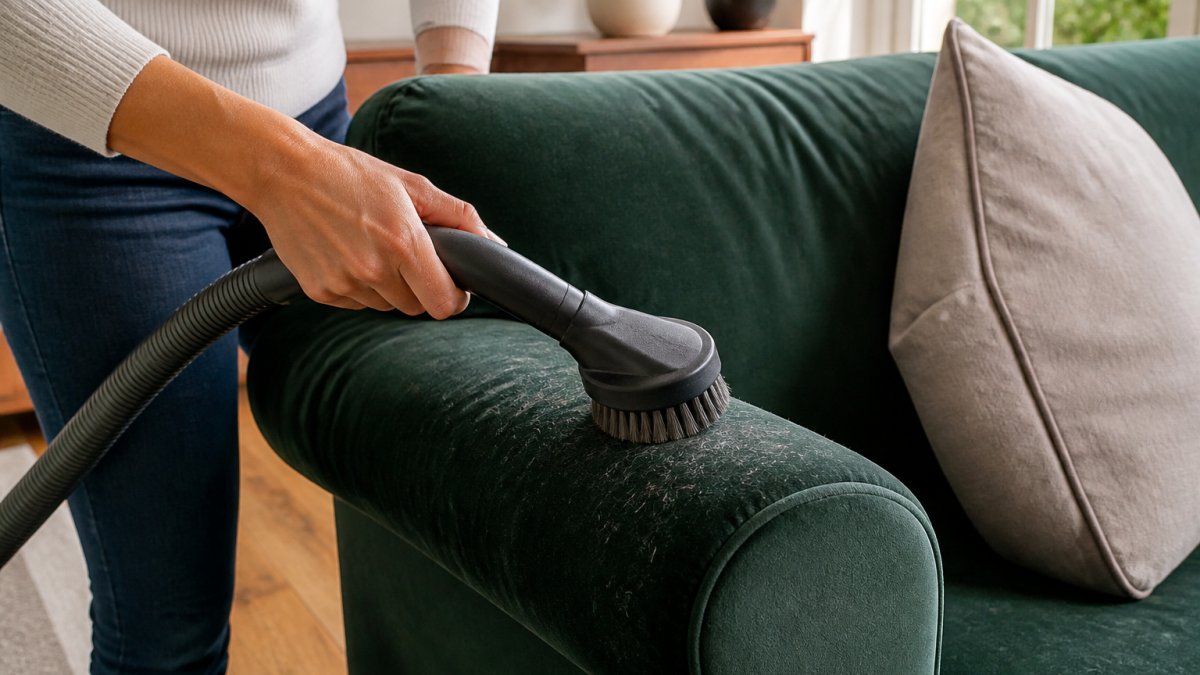
For stubborn hair, a dry brush or a rubber glove run gently across the nap gathers it into a line you can pick up. Persistent shedding often requires more specialized techniques for removing pet hair that go beyond simple surface brushing.
How to Remove Stains From a Velvet Sofa: A Stain-by-Stain Decision Tree
Treat stains by type, not by panic. Work out what spilled, check the care code, then pick the gentlest method that will lift it. Answer two questions before you touch the sofa: what is the stain, and what will the fabric tolerate?
Step 1: Identify the Stain and the Fabric
Before any cloth comes out, classify the spill:
- Water-based (drinks, food, mud, pet accidents): usually treatable with mild suds on a W or WS velvet.
- Oil-based (grease, butter, cosmetics, some inks): needs a solvent, so check for an S or WS code first.
- Dried or set-in: the pile may already be flattened; treat gently and accept that some marks need professional care.
Then confirm the care code. On an S fabric, water-based methods are off the table entirely. On an X fabric, vacuum only and call a professional for anything wet.
Step 2: Match the Method to the Stain
| Stain | First move | Method | Limit to watch |
|---|---|---|---|
| Water or drink | Blot immediately | Cool hairdryer to dry evenly | Do not rub; rings form fast |
| Grease or food | Blot, then solvent on a cloth | Dab outward from the edge | Test solvent on a hidden area first |
| Pet accident | Blot, then mild suds, then dry | Enzyme cleaner only if label allows | Never soak; odour can linger in backing |
| Ink | Dab with solvent, working outward | Fresh cloth section each dab | Stop if the colour starts to spread |
| Mud | Let it dry fully, then brush off | Soft brush in one direction | Do not wet mud; it pushes deeper |
| Dried food | Loosen with a soft brush | Mild suds on a barely damp cloth | Do not pick at the pile |
Step 3: Know When to Stop
Home treatment has limits. Stop and call a professional if:
- The stain spreads as you work, which suggests the dye is migrating.
- The fabric feels stiff or crunchy after drying, which points to residue left in the pile.
- The mark has soaked into the backing or foam.
Blot, Never Rub: Working Through Spills and Stains
Blotting lifts liquid out of the pile. Rubbing pushes it into the backing and flattens the nap, which leaves a permanent shiny patch. Press a clean, dry cloth onto the spill and hold it there. Swap to a fresh section of cloth as it absorbs. Work from the outside of the stain inward so you do not spread the mark.
Never pour cleaning solution directly onto velvet. Apply it to the cloth first, then dab. Direct pouring floods the backing and is the most common cause of water rings and mould.
Fibre-Specific Stain Limits
- Cotton velvet absorbs water readily, so use less solution and dry quickly to avoid rings.
- Polyester velvet resists water but heat can crush the pile, so keep hairdryers cool.
- Viscose velvet marks easily with water; use the lightest touch and consider professional care for anything beyond a fresh spill.
If you are unsure which fibre you have, check the care label and the fabric collection pages before treating the stain.
Drying Velvet Properly to Prevent Water Marks
Water marks on velvet come from uneven drying, not from the water itself. When one patch dries faster than the surrounding fabric, dissolved minerals and cleaning residue concentrate at the edge and leave a ring. The fix is to dry the whole panel evenly and to remove as much moisture as possible before air drying.
Step-by-Step Drying
- Blot first. Press a dry towel onto the area to lift as much moisture as you can. Swap to a dry section of towel as it absorbs.
- Dry the whole panel, not just the patch. Use a hairdryer on the cool setting, held well back from the fabric, and keep it moving across the entire panel so the edge dries at the same rate as the centre.
- Keep air moving. Open a window or use a fan to circulate air across the room. Do not trap moisture under cushions or against a wall.
- Lift cushions. Remove seat and back cushions and stand them on edge so air reaches the base and backing.
- Let the pile settle. Once dry, brush the nap back in one direction with a soft clothes brush.
Preventing Water Rings
- Use suds rather than liquid, and apply to a cloth, not the fabric.
- Do not overwet. A barely damp cloth is enough for most marks.
- Dry evenly across the whole panel, not one spot.
Ventilation and Overwetting Precautions
Foam and bonded backings hold moisture longer than the surface pile. If water reaches the backing, it can take days to dry and may lead to mould. Keep the room ventilated, avoid trapping moisture under cushions, and do not put the sofa back against a wall until it is fully dry.
Never use a hot setting or place the sofa near a radiator. Heat sets marks and can crush the pile. On viscose or an S fabric, skip heat entirely and allow more drying time.
If mould or mildew appears, stop home treatment and call a professional upholstery cleaner.
How to Restore Velvet Pile After Cleaning
Cleaning can leave the nap lying flat. Restoring velvet pile is mostly about gentle brushing and patience. Once the fabric is fully dry, brush the pile back in one direction with a soft clothes brush.
Steam can help lift flattened fibres, but only on a W or WS velvet and only briefly. Hold the steamer well back and keep it moving. On viscose or an S fabric, skip steam entirely.
When Home Cleaning Is Unsafe: Steam, Mold and Calling a Professional
Some problems should not be handled at home. Call a professional upholstery cleaner if you see any of these:
- Mould or mildew, which needs proper treatment and drying, not a surface wipe.
- A large spill that has soaked into the backing or foam.
- An S or X fabric that needs more than a vacuum.
Watch out: over-wetting a foam-backed sofa can trap moisture inside and lead to mould that returns after every clean. If damage has already happened, check what protection applies before you spend money on repairs.
Keeping Your Tetrad Velvet Sofa in Shape Between Cleans
Regular, light care beats occasional deep cleaning every time. A simple routine keeps velvet looking its best.
- Vacuum weekly with a brush attachment on low suction.
- Brush the pile in one direction every few weeks.
- Blot spills immediately, before they soak in.
For anything beyond a surface mark, check the care label and seek advice on fabric-specific care before you reach for a cloth. Owners of brown velvet corner sofas can review Brown Velvet Corner Sofas: Tetrad Models Reviewed to match their model and follow the right care routine.
Cleaning velvet is not hard once you know the fibre, the care code and the drying rules. The risk is guessing. For guidance on your Tetrad sofa, visit the Tetrad sofas. Tetrad chairs. website to explore the collection.
Frequently Asked Questions
Can you use water to clean a velvet sofa?
It depends on the care label. Codes starting with W or WS mean water-based cleaning is acceptable, so a mild dish soap and water solution is safe when applied sparingly and blotted rather than soaked. An S code means solvent-only cleaning and water should be avoided entirely, while X means vacuum only. Always spot test a hidden area first, and never saturate the fabric, as excess water can leave marks and flatten the pile.
Is velvet ruined if it gets wet?
Not necessarily. Many velvet sofas, particularly polyester and cotton velvet, recover well from light moisture if you blot the area promptly and let it air dry away from direct heat. The real risk is over-wetting, which can cause water rings and matted pile. If a spill soaks through to the backing, or the care label says solvent clean only, contact a professional upholstery cleaner rather than attempting to dry it yourself.
How do you get dust and pet hair off a velvet sofa?
Use the soft brush attachment on your vacuum hose on the lowest suction setting, working in the direction of the pile. For stubborn pet hair, a dry brush or a slightly damp rubber glove lifted across the surface collects fibres effectively. Vacuum weekly if you have pets, and finish by brushing the pile back into place so the nap sits uniformly and the texture looks even.
Can you steam-clean a velvet sofa?
Steam can revive crushed pile and loosen light soiling, but it carries risk on velvet. Too much moisture or heat can shrink some fibres and leave water marks on cotton velvet. Check the care label first, keep the steamer moving and never hold it against one spot. If the label specifies professional cleaning or the fabric is viscose, leave steaming to a specialist upholstery cleaner.

