
Blog
7 Steps to Choose Performance Fabric for Your Living Room
Oct
Last Updated: October 24, 2026
Quick Summary
Choose a performance fabric living room by matching fabric properties to your household’s use: prioritize stain resistance and higher rub counts for families with children or pets, solution-dyed fibres for bright rooms, and test swatches at home for at least a week before ordering.
- Martindale rub count of 30,000 rubs suits daily living rooms; 50,000+ is ideal for homes with pets or young children.
- Solution-dyed fibres resist fading exceptionally well because colour is built into the fibre structure, not applied afterward.
- Polyester-acrylic blends or solution-dyed polyester offer the best balance of durability, feel, and performance for most households.
- Stain resistance works through protective treatments or the fabric’s inherent properties; easy-clean fabrics release stains before they bond.
- Always request rub count, lightfastness rating, and care code in writing before ordering a sofa.
Table of Contents
- What Performance Fabric Is and Why It Matters for Living Room Upholstery
- Understanding Stain Resistance and Easy-Clean Sofa Fabrics
- How to Interpret Sofa Fabric Durability and Rub Count
- Performance Fabric vs Standard Upholstery Fabric: Key Differences
- Fibre Types: Acrylic, Polyester, Olefin, and Solution-Dyed Options
- Selecting the Best Performance Fabric for Sofas Based on Your Household
- Testing Fabric Samples and Placing Your Custom Order
- Frequently Asked Questions
What Performance Fabric Is and Why It Matters for Living Room Upholstery
Performance fabric is upholstery designed to withstand everyday wear, spills, and stains while maintaining its appearance. Unlike standard upholstery, performance textiles are treated or constructed to resist water, soil, and fading. They’re built for real life, homes with children, pets, and the occasional accident.
Clients choose performance fabric because it lets them live without worry: a juice spill won’t permanently mark the sofa, and pet owners get fabrics that resist hair and odours. The trade-off is worth understanding: some performance fabrics feel different from untreated natural fibres, though modern options have closed that gap significantly.
Your sofa is likely the most-used piece of furniture in your home, and standard upholstery can show wear within months under heavy use in a performance fabric living room.
Understanding Stain Resistance and Easy-Clean Sofa Fabrics
Stain resistance works through two methods: protective treatments applied to the fabric surface, or the fabric’s inherent properties. Solution-dyed fibres (covered later) have colour built into the fibre itself, making them naturally resistant to fading and easier to clean, while surface treatments create a barrier that repels liquids and prevents stains from setting.
Easy-clean sofa fabrics typically release stains before they bond: water-based spills bead up rather than soaking in, giving you time to blot. Most respond to a damp cloth, mild soap, and blotting; some need professional cleaning for stubborn marks, but everyday spills don’t become permanent problems.
When evaluating stain resistance, check whether the fabric is treated or solution-dyed: treated fabrics may need reapplication after years of cleaning, while solution-dyed options maintain resistance indefinitely. Ask about stain-response testing against red wine, coffee, or pet accidents, manufacturers often publish these details.
How to Interpret Sofa Fabric Durability and Rub Count
Fabric durability is usually expressed as a Martindale rub count: a laboratory test in which a fabric sample is rubbed against a standard abrasive under defined pressure until visible wear appears.
Here is how Martindale bands are commonly read for domestic upholstery:
- 10,000-20,000 rubs: Light domestic use (occasional chairs, formal rooms with minimal traffic)
- 20,000-30,000 rubs: General domestic use (everyday living rooms in quieter households)
- 30,000-50,000 rubs: Heavy domestic use (family living rooms, daily use)
- 50,000+ rubs: Very heavy domestic or light commercial use (high-traffic rooms, homes with pets or young children)
For a living room, 30,000 rubs is a sensible floor if the room is used daily, and 50,000+ is worth targeting with children, pets, or frequent entertaining. But rub count only describes resistance to friction, it says nothing about staining, fading, pilling, or feel, so never compare it alone.
What the test does and does not predict. Martindale simulates repeated surface abrasion, so it reasonably guides how a fabric resists thinning, fuzzing, and wear-through at contact points such as seat cushions and armrests.
Other specifications worth comparing alongside rub count:
- Abrasion and pilling resistance. Pilling is the formation of small fibre balls on the surface; it is assessed separately from Martindale wear and is often reported on a scale rather than as a rub count. A fabric can be abrasion-resistant and still pill, so ask about both.
- Colourfastness to light. This is usually reported on a blue wool scale (1-8), where higher is better. For a living room with large windows or direct sun, look for a high lightfastness rating and consider solution-dyed fibres, which hold colour within the fibre itself.
- Colourfastness to rubbing (crocking). This checks whether colour transfers when the fabric is rubbed, which matters for dark dyes and for pale upholstery nearby.
- Dimensional stability. How much the fabric stretches or shrinks affects how covers fit over time, particularly on removable covers.
How to compare specifications without over-trusting one number. Line up the same metrics across fabrics, rub count, lightfastness, pilling, and care code, rather than a high number on one against a low one on another.
Ask for the rub count, lightfastness rating, and care code in writing before you order. If a fabric is described only as “durable” without a figure, request the specification, a maker who tests their fabrics will have it to hand.
Performance Fabric vs Standard Upholstery Fabric: Key Differences
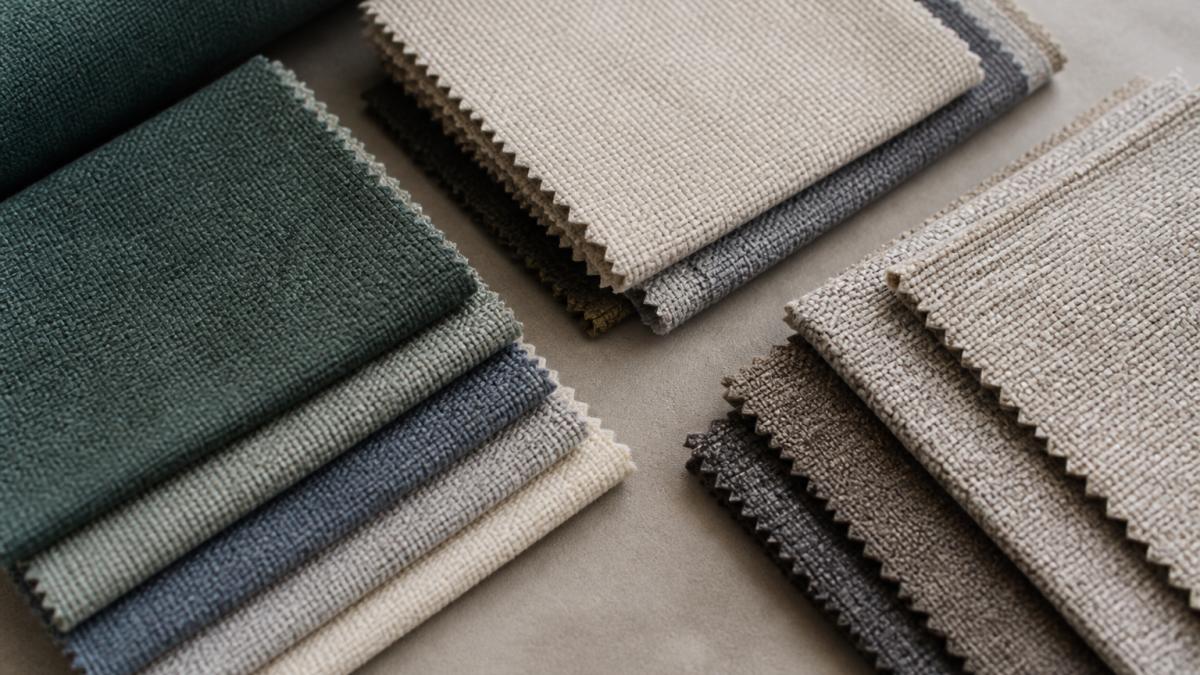
Standard upholstery fabrics are often chosen for aesthetics alone. They may be beautiful linen, wool, or cotton blends, but they lack the protective treatments or fibre construction of performance textiles: a wine spill can set within minutes, fading occurs faster in sunlight, and pilling and wear become visible sooner.
Performance fabric prioritises durability and cleanability without sacrificing appearance. Modern performance textiles come in velvet-like textures, linen-inspired weaves, and traditional looks. The difference is what happens when life happens.
Here’s the practical distinction:
| Aspect | Standard Upholstery | Performance Fabric |
|---|---|---|
| Stain resistance | Minimal | High |
| Fade resistance | Variable | Excellent |
| Cleaning | Professional recommended | DIY friendly |
| Durability (rub count) | 10,000-30,000 | 30,000-100,000+ |
| Lifespan in active homes | 3-5 years | 7-10+ years |
| Texture variety | Extensive | Good and growing |
| Cost | Often lower | Higher upfront |
The choice depends on your household: a formal, rarely used living room may suit standard fabric, while the room your family actually lives in calls for performance fabric. Many clients find the durability and peace of mind justify the investment.
Fibre Types: Acrylic, Polyester, Olefin, and Solution-Dyed Options
Acrylic fibres are synthetic and naturally water-resistant, soft to touch, wool-like, and mildew-resistant.
Polyester is durable and resists moisture, often blended with other fibres to improve performance. Pure polyester can feel stiff, but blends create softer textures; it handles stains well, dries quickly, and rub counts often exceed 50,000.
Olefin (polypropylene) is one of the most stain-resistant fibres available, naturally repelling water and soil, ideal for families with pets or young children.
Solution-dyed fibres are synthetic fibres where colour is added during production rather than applied afterward. Solution-dyed polyester, acrylic, or olefin resist fading exceptionally well because colour is part of the fibre structure, ideal for living rooms with large windows or bright natural light.
For most performance fabric living room settings, a polyester-acrylic blend or solution-dyed polyester offers the best balance of durability, feel, and performance. If pet accidents are a concern, olefin-based fabrics are your most forgiving option.
Selecting the Best Performance Fabric for Sofas Based on Your Household
Most guides stop at “match the fabric to your household”.
Step 1: Map how the room is used. Note the daily pattern: is the sofa the main seating for TV and family life, an occasional seat in a formal room, or a mix?
Step 2: Note where the sofa sits. Position matters as much as use.
Step 3: Match properties to the household. Use the table below as a starting point, then confirm the actual specification of any fabric you shortlist.
| Household or room condition | Priority properties | Sensible starting points |
|---|---|---|
| Young children, frequent spills | Stain release, cleanability, 30,000+ rubs | Solution-dyed polyester, olefin blends, tight weaves |
| Pets (hair, odour, accidents) | Moisture resistance, tight weave, darker tones or patterns | Olefin, solution-dyed polyester, performance weaves |
| Bright room, direct sun | High lightfastness, solution-dyed colour | Solution-dyed acrylic or polyester |
| Daily family use | 30,000-50,000+ rubs, pilling resistance | Polyester blends, performance weaves |
| Formal, lightly used room | Appearance and feel can lead | Standard or lower-performance fabrics remain viable |
| Prioritising softness | Balance hand feel against rub count | Acrylic blends, softer polyester blends |
Step 4: Weigh comfort and feel alongside performance. Breathability, hand feel, heat retention, texture, and even noise vary between fibres and weaves, and a durable fabric can feel cool, warm, smooth, or coarse.
Step 5: Check care and warranty before you commit. Confirm the care code (water-based or solvent cleanable), whether covers are removable, and what the warranty excludes, wear, fading, and staining are often treated differently. Ask whether protection is built into the fibre or applied as a finish, since applied finishes can need reapplication. A short checklist before ordering:
- Care code and recommended cleaning method in writing
- Rub count, lightfastness, and pilling specification
- Whether covers are removable and washable
- Warranty terms, including exclusions for fading and staining
- Whether protection is inherent or a surface finish
- Swatch available to test at home before ordering
Step 6: Test the swatch in the room. Order two or three samples and live with them for at least a week, on the sofa, near the window, in evening light. Test a water droplet and mild soap solution on an inconspicuous corner, and check how the fabric feels against skin. This turns a specification sheet into a decision you can live with.
Explore Tetrad’s fabric collections(page:4) to see how performance options suit different styles. Learn how to choose the right sofa fabric(page:1) for a deeper assessment of your needs.
Testing Fabric Samples and Placing Your Custom Order
Before committing to a sofa, request fabric samples: seeing colour and texture in your own lighting is essential, and many people discover their chosen fabric looks different at home than in a showroom.
When ordering, you’ll work with our team to evaluate performance options.
Ask about cleaning instructions specific to your chosen fabric. Some performance fabrics respond to water-based cleaning; others require solvent-based methods. Understanding this before your sofa arrives prevents damage from incorrect cleaning.
Learn how to choose upholstery fabric online(page:3) for detailed guidance on sampling and ordering. Compare Tetrad sofa styles and collections(page:5) to see available performance fabrics for your chosen design.
Once you’ve selected your fabric and sofa style, our white glove delivery service ensures your investment arrives in perfect condition and is positioned exactly where you want it in your living room.
Frequently Asked Questions
What is the best performance fabric for a sofa?
The best performance fabric for sofas depends on your household’s needs. Solution-dyed acrylic and polyester blends offer excellent stain resistance and durability, while olefin provides water resistance. Look for fabrics with high abrasion ratings to withstand daily wear. Explore our collection to find the right match for your specific requirements.
How do I compare fabric durability for a living-room sofa?
Compare durability using the rub count (Martindale abrasion test), measured in cycles. Fabrics with higher rub counts suit moderate to heavy daily use and families with children or pets. Check colorfastness ratings (how well the fabric resists fading in direct sunlight) and water resistance specifications. Ask about protective treatments applied during manufacturing. Request fabric samples to assess feel and appearance retention after simulated wear testing before committing to your purchase.
Is performance fabric suitable for homes with pets and children?
Yes, performance fabric is ideal for pet and child-friendly homes. Solution-dyed fibres resist staining from spills, urine, and mud because colour runs through the fibre rather than coating the surface. Water-resistant treatments and high abrasion ratings withstand scratching and repeated cleaning. Performance textiles lift stains more easily than standard upholstery and tolerate frequent washing. Our advisors can recommend specific fabrics and finishes suited to your household’s activity level.
What’s the difference between performance fabric and standard upholstery?
Performance fabric features protective treatments, solution-dyed fibres, and synthetic materials engineered for stain resistance, moisture resistance, and durability. Standard upholstery lacks these treatments and stains more easily. Performance textiles withstand higher rub counts versus standard fabrics. Performance fabrics resist mildew and moisture, making them practical for living rooms with heavy use. Standard upholstery offers more natural aesthetics but requires careful maintenance and suits lower-traffic spaces or homes without children or pets.
Choosing performance fabric for your living room is an investment in durability and peace of mind. The right fabric choice means your sofa stays beautiful through years of real living. At Tetrad sofas. Tetrad chairs., we guide you through every option, from Martindale ratings to fibre types, so you select fabric that matches both your style and your household’s needs. Explore our fabric collections to see performance options available for your next sofa.

