
Blog
How to Commission Bespoke Living Room Furniture
Oct
Table of Contents
- Define Your Brief and Vision
- Take Precise Living Room Furniture Measurements
- Understand the Bespoke Furniture Design Process
- Select Materials, Fabrics, and Finishes for Bespoke Sofa Design
- How to Price Bespoke Furniture and Agree Terms
- Navigate Lead Times, Delivery, and Installation
- Common Mistakes to Avoid When Commissioning Bespoke Furniture
- Frequently Asked Questions
Last Updated: October 17, 2026
Define Your Brief and Vision
Learning how to commission bespoke living room furniture starts with clarity. Before contacting a maker, understand your space, lifestyle and budget well enough to guide the process, perfect answers aren’t required.
At Tetrad sofas and chairs, we work with customers who know exactly what they need and others still figuring it out. Both work, but the clearer your brief, the faster the process.
A design brief is your written summary of what you’re looking for, so makers understand your needs without endless emails. It should answer:
- What is the main purpose of this furniture? (Daily seating, entertaining, relaxation, guest bedroom backup?)
- Who will use it? (Young family, empty nesters, pets in the home?)
- What style appeals to you? (Modern, traditional, transitional, eclectic?)
Establish your budget and timeline
Money and time shape every decision, so be honest about both from the start.
Budget isn’t just the final price. It includes:
- The furniture piece itself
- Fabric or leather choices (these vary significantly)
- Customisation options (additional cushions, legs, arms)
Timeline matters equally. Lead times vary with the maker’s workload, your customisation choices and delivery logistics. Knowing your deadline helps you choose the right maker and set realistic expectations.
Write down your budget and timeline before your first consultation. Makers respect clients who know their constraints. It speeds up the design process and prevents wasted time on options that won’t work for you.
Gather inspiration and reference images
Before you meet a designer or maker, collect images, colours and styles that resonate with you.
Where to find inspiration:
- Interior design magazines and websites
- Social media platforms like Pinterest and Instagram
- Showrooms and furniture galleries
Create a folder of 15-25 images that genuinely appeal to you. Patterns will emerge in the colours, shapes or design eras you’re drawn to.
Sharing images isn’t saying “copy this exactly”, it’s saying “this is the visual language I speak.” A skilled designer extracts the principles and applies them to your space.
Take Precise Living Room Furniture Measurements
Measurement is where theory meets reality. A sofa that looks perfect in a showroom is a nightmare if it won’t fit through your doorway or leaves no walking space.
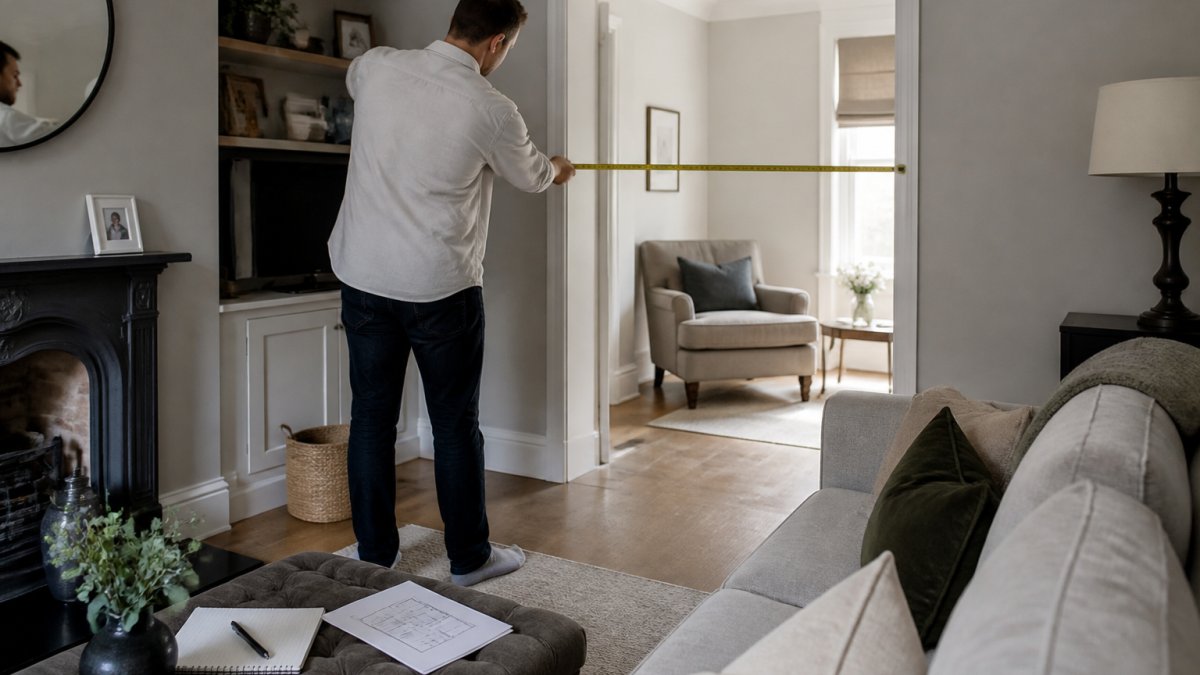
Measure twice, order once, the golden rule of bespoke furniture commissioning.
Measure doorways and access points
Your sofa or chair must physically enter your home, where most problems start. Measure every potential route:
- Front door width and height
- Hallway widths at narrowest points
- Stairwell dimensions if the furniture must go upstairs
Measure the actual opening, not the frame, plus the diagonal as well as straight width and height, furniture often needs angling through doorways. Makers usually do their own access check, but understand your space first.
A common mistake is measuring only the doorway width and forgetting about height. A tall wingback chair or high-backed sofa can jam against a doorframe even if the width is fine. Always measure height, width, and diagonal.
Account for layout and spacing
Your layout determines how your bespoke furniture functions. Measure the space where you plan to place the piece:
- Distance from the wall to the opposite wall
- Distance from windows and radiators
- Clearance needed for doors to open fully
A sofa filling 80% of your wall looks impressive in a showroom but cramped at home. Leave breathing room, designers typically recommend at least 45 centimetres of walking space around furniture.
Also measure existing pieces’ heights. With a low coffee table, a 65-centimetre sofa arm works better than 85. Floor-to-ceiling windows suit a low-slung modern sofa; standard windows suit a back that aligns with the sill.
Understand the Bespoke Furniture Design Process
Understanding how to commission bespoke living room furniture means following a clear design process sequence. Understanding each stage tells you what to expect and when decisions are needed.
Most makers follow this path: initial consultation, brief refinement, sketches or 3D models, approval, fabric and finish selection, production, delivery. Steps vary, but the logic is the same: define, visualise, refine, build.
Initial consultation and design approval
Your first conversation is exploratory: you discuss your brief, space, preferences and budget, and both sides assess fit.
A good initial consultation covers:
- Your living room layout and the furniture’s intended purpose
- Your style preferences and any reference images
- Your budget range
After this conversation, the maker can create an initial design concept, a sketch, 3D rendering or physical mock-up, depending on their process.
The initial consultation is your chance to assess the maker’s communication style and expertise. Do they ask thoughtful questions? Do they listen to your needs or push their own vision? Trust your instinct here, you’ll be working together for months.
Sketches, 3D models, and revisions
3D models are increasingly common because they preview how the finished piece will look in your space; some makers even offer augmented reality renderings viewable via phone.
This is your chance to request changes, arm height, cushion depth, leg style. Most makers include 2-3 revisions in their quotation; additional revisions may cost extra.
Don’t be shy about asking for changes. Once production starts, modifications become expensive or impossible.
Select Materials, Fabrics, and Finishes for Bespoke Sofa Design
The materials you choose define how your bespoke furniture looks, feels and performs, one of the most enjoyable and important parts of commissioning.
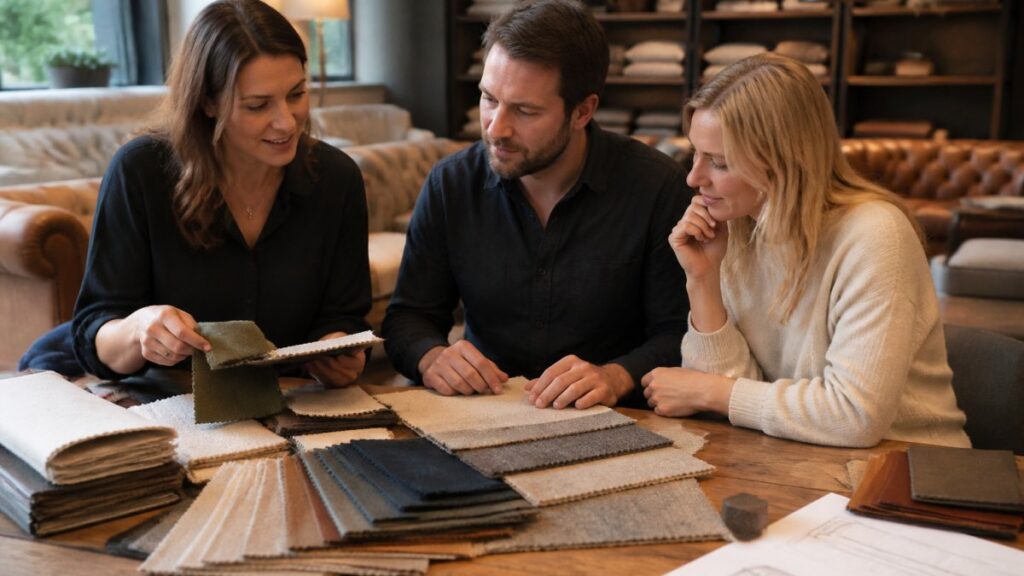
Makers typically offer dozens of fabric and leather options. The choice depends on your lifestyle, aesthetic, budget and how much wear the piece will receive.
Fabric and leather options
Fabric is the most common choice for sofas and chairs: versatile, available in endless colours and patterns, and generally more affordable than leather.
Common fabric types for bespoke furniture:
- Linen: Natural, breathable, soft to the touch. Shows wrinkles and stains more easily. Best for formal living rooms or homes without young children or pets.
- Cotton blends: Durable, washable, comfortable. A practical middle ground between pure linen and synthetic fabrics.
- Wool: Naturally stain-resistant, warm, durable. Excellent for longevity. More expensive than cotton or linen.
Leather offers sophistication and durability, developing character over time. It needs more maintenance than fabric but lasts decades if cared for properly.
Leather grades range from full-grain (most durable, most expensive) to corrected-grain (more affordable, more uniform appearance).
Colour matching and durability
Colour is personal, durability practical. Light colours show stains and wear; dark colours hide marks but feel heavy in small spaces; mid-tones balance both.
If matching existing pieces, bring samples or photographs to your consultation. Home lighting changes how colours appear, so always view fabric samples in your actual living room, not just the showroom.
Durability is measured by a fabric’s rub count, how many times a fabric can be rubbed before it shows wear.
Ask your maker for fabric samples you can take home. Leave them in your living room for a few days to see how they look in different lighting and next to your existing furniture. This simple step prevents colour-matching regrets.
How to Price Bespoke Furniture and Agree Terms
Pricing bespoke furniture isn’t straightforward because every piece is custom. Understanding how makers price their work and what protections you need helps you make confident decisions.
Bespoke furniture pricing typically includes:
- Design consultation and initial sketches
- Fabric or leather cost
- Frame construction and upholstery labour
The total cost depends on the complexity of your design, the quality of materials, the maker’s reputation, and current demand.
Quotation and payment milestones
Once your design is approved, the maker will provide a quotation. This should itemise costs clearly: frame, upholstery, fabric, delivery, installation. A clear quotation prevents surprises later.
Payment for bespoke furniture typically follows a milestone structure:
- Deposit (usually 25-50%): Due when you confirm your order
- Progress payment (usually 25-50%): Due when production begins or at an agreed midpoint
- Final payment (remaining balance): Due before delivery or upon installation
This structure protects both you and the maker. The deposit secures your place in the production queue. Progress payments fund materials and labour. Final payment is due when the work is complete.
Never pay the full amount upfront. A reputable maker will have a staged payment structure. If they demand full payment before starting work, that’s a red flag.
Contracts, revisions, and safeguards
A written contract is essential. It should include:
- A description of the furniture (dimensions, materials, colour, customisation)
- The total price and payment schedule
- Warranty information (frame, upholstery, fabric performance)
The contract protects you if something goes wrong. It’s also a reference document, if you need to contact the maker months later with a question, the contract reminds both of you what was agreed.
Most reputable makers offer a warranty on the frame (typically 10 years) and upholstery work (typically 2-5 years). Fabric warranties vary depending on the fabric type and the maker’s policy.
Navigate Lead Times, Delivery, and Installation
Lead time is the period between placing your order and receiving your furniture. For bespoke pieces, this can range from 8 weeks to 6 months or longer, depending on the maker’s workload and the complexity of your design.
Understanding the timeline helps you plan your living room refresh and manage expectations.
Timeline from enquiry to handover
A typical bespoke furniture timeline looks like this:
| Stage | Duration | What Happens |
|---|---|---|
| Initial consultation | 1-2 weeks | You discuss your brief with the maker |
| Design and approval | 2-4 weeks | Sketches or 3D models are created and refined |
| Material ordering | 1-2 weeks | Fabric and other materials are sourced |
| Production | 4-12 weeks | The frame is built and upholstered |
| Quality check | 1 week | The finished piece is inspected |
| Delivery preparation | 1-2 weeks | The furniture is packaged and scheduled for delivery |
| Delivery and installation | 1 day | Your sofa or chair arrives and is positioned |
The total lead time is typically 10-20 weeks from order to delivery, though this varies. Some makers have shorter queues; others have waiting lists. Ask about current lead times before you commit.
Lead time isn’t wasted time. It’s production time. Your maker is building your furniture to order, not pulling it from stock. This is why bespoke furniture is higher quality, it’s made specifically for you, not mass-produced.
White glove delivery and room access checks
White glove delivery means the maker’s team doesn’t just drop your sofa at the kerb. They bring it into your home, position it where you want it, and remove packaging.
Before delivery day, prepare your home:
- Clear the delivery route of obstacles
- Protect floors and doorframes with cardboard or blankets
- Ensure the delivery team can access your living room
The delivery team will perform a final access check when they arrive. If they discover an unexpected obstacle (a narrow hallway, a tight corner, a low ceiling in a stairwell), they’ll work with you to find a solution.
Common Mistakes to Avoid When Commissioning Bespoke Furniture
Learning from others’ mistakes saves time, money, and frustration.
Underestimating lead times. Bespoke furniture takes time.
Forgetting about maintenance. Bespoke furniture is an investment.
Choosing style over comfort. A sofa that looks beautiful but feels uncomfortable defeats the purpose.
Commissioning bespoke living room furniture is a collaborative process between you and a skilled maker.
At Tetrad sofas and chairs, we’ve spent over 50 years perfecting the craft of bespoke furniture.
Frequently Asked Questions
How do you commission bespoke living room furniture?
Start by defining your brief, including budget, style, and functional needs. Measure your space precisely, doorways, access points, and furniture placement. Gather inspiration images and identify your personal taste in shapes, colours, and materials. Research makers or designers, request a quotation, approve designs and materials, and agree payment milestones. The bespoke furniture design process typically involves initial sketches or 3D models, revisions, and final approval before manufacturing begins. Lead times vary; confirm your timeline upfront and arrange delivery and installation details.
What measurements should you take before commissioning bespoke furniture?
Measure room width, length, and ceiling height. Take doorway and corridor widths to confirm delivery access. Measure window and radiator positions, electrical outlets, and any architectural features. Note the exact placement where furniture will sit, including distance from walls, other pieces, and traffic routes. Measure existing furniture you plan to coordinate with, capturing fabric samples if possible. Record these in millimetres and provide photographs of the space from multiple angles. Accurate living room furniture measurements prevent costly delays and design rework.
How much does bespoke furniture cost and what affects pricing?
Bespoke furniture pricing depends on size, materials, customisation complexity, and craftsmanship. Factors include timber frame choice, upholstery fabric or leather grade, internal suspension type, and any special features like storage or unusual dimensions. Lead time and delivery logistics also influence cost. Rather than estimate, request a quotation from your maker with detailed specifications. Payment is typically staged: a deposit to begin, progress payments at design approval and manufacturing milestones, and final payment before delivery. Always confirm payment terms and what happens if you request revisions during the bespoke furniture design process.
How long does it take to make bespoke furniture?
Lead times for bespoke sofa design and other custom pieces typically range from 8 to 16 weeks, depending on the maker’s workload, material availability, and customisation complexity. Simple designs may be faster; highly detailed or unusual specifications may take longer. Confirm the timeline at quotation stage and ask when manufacturing begins, often after design approval and payment milestones are met. Factor in delivery scheduling, which may add 1-2 weeks. Discuss what happens if delays occur and whether you have recourse if the maker misses their stated lead time.
