
Blog
Linen vs Velvet for Sofas: Which Suits Your Home?
Oct
Table of Contents
- Linen vs Velvet Sofas at a Glance
- Linen Sofa Pros and Cons
- Velvet Sofa Pros and Cons
- How to Clean a Linen Sofa
- How to Clean a Velvet Sofa
- Key Performance Metrics and Fabric Specifications
- Which Fabric Suits Your Household and Room?
- Conclusion
- Frequently Asked Questions
Last Updated: October 12, 2026
Linen vs Velvet Sofas at a Glance
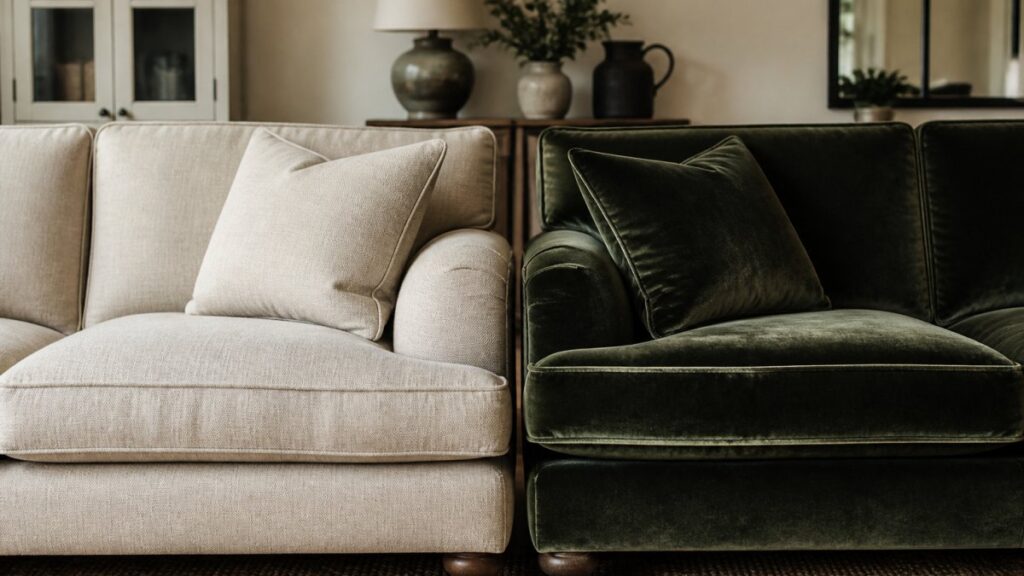
Choosing between linen vs velvet sofas is one of the most consequential decisions you’ll make when furnishing your living space. Linen is breathable, relaxed, and ages beautifully, but wrinkles easily and shows dust. Velvet feels luxurious, resists wrinkles, and adds visual richness, but traps heat and requires careful maintenance. The right choice depends on your household, climate, and how you live.
Here’s a quick comparison to guide your thinking:
| Aspect | Linen | Velvet |
|---|---|---|
| Texture & Feel | Soft, natural, relaxed | Plush, tactile, formal |
| Breathability | Excellent | Poor, traps heat |
| Visible Marks | Shows dust, lint easily | Hides dust but shows footprints |
| Wrinkling | Wrinkles naturally | Resists wrinkles |
| Durability | Strong, improves with age | Durable but needs care |
| Maintenance | Relatively simple | More demanding |
| Best For | Warm climates, casual living | Cooler rooms, formal spaces |
The choice isn’t about which fabric is “better”, it’s about which suits your life.
Linen Sofa Pros and Cons
Linen is a natural fibre woven from flax plants, used in upholstery for centuries. A linen sofa becomes softer and more characterful with age.
Appearance and Texture
Linen has a distinctly relaxed aesthetic. Its natural weave creates visible texture and subtle irregularities that look intentional, not polished, and its understated elegance works in both contemporary and traditional interiors.
However, linen shows everything: dust settles visibly, pet hair clings, and spills leave marks until cleaned. If you prefer a sofa that looks pristine between cleanings, linen will frustrate you.
One advantage: linen’s appearance improves over time. Fibres relax, the fabric softens, and minor wear marks blend into its character. A ten-year-old linen sofa often looks better than it did new.
Breathability and Comfort
This is linen’s strongest suit. Natural linen fibres are hollow, allowing air to flow through the fabric. In a warm climate or a sunlit living room, a linen sofa stays cooler than almost any alternative.
Breathability also means linen resists moisture retention, handling humidity better than velvet or synthetic blends and drying faster after spills, which reduces the risk of mildew or odour.
The trade-off: linen doesn’t provide the same heat retention as velvet. In cooler climates or poorly heated homes, a linen sofa can feel cold to the touch.
Durability and Wear
Linen is genuinely durable. The fibres are stronger than cotton and don’t break down easily under normal use. A quality linen sofa can last with reasonable care, and the fabric often outlasts the frame.
Natural linen blends (linen mixed with cotton or synthetic fibres) are slightly more stain-resistant and wrinkle less than pure linen, but lose some breathability. Pure linen is the most breathable but needs more maintenance.
The weakness: linen pilling and fraying. Heavy abrasion forms small balls of fibre on the surface, which doesn’t affect durability but affects appearance, showing most in high-traffic areas.
Pure linen is stronger than blends, but linen-cotton or linen-synthetic blends offer easier maintenance if you have pets or children. The trade-off is slightly reduced breathability.
Velvet Sofa Pros and Cons
Velvet is a woven fabric with a dense pile, short, upright fibres that create its signature plush surface. It’s traditionally associated with luxury, and there’s a reason: velvet feels genuinely different from other upholstery fabrics.
Luxury Feel and Visual Impact
Velvet’s tactile richness is unmatched. Run your hand across it and you understand why people choose it for formal living rooms and statement pieces. The pile reflects light differently depending on direction, creating subtle colour shifts that add visual depth.
Velvet photographs beautifully. It looks sophisticated in interior design images, which is partly why it’s featured so prominently in high-end furniture catalogues. If you’re furnishing for aesthetics and visual impact, velvet delivers.
The catch: velvet’s formal appearance works best in certain interior styles and can feel out of place in casual, minimalist, or rustic spaces. That luxury feel also comes with luxury-level maintenance expectations.
Heat Retention and Warmth
Velvet’s dense pile traps air, so it retains heat. In cooler climates or winter months, a velvet sofa feels warmer to sit on than linen, a genuine comfort advantage in northern homes or rooms that don’t get much sunlight.
However, this same heat retention becomes a liability in warm climates. Velvet sofas can feel uncomfortably warm in summer, and they don’t breathe the way natural fibres do. If you live somewhere warm year-round, velvet may not be the right choice.
Visible Marks and Maintenance
Here’s the paradox of velvet: it hides dust and lint remarkably well, but shows footprints, body impressions, and directional marks very clearly. Sit on it and you’ll see where your body was; walk across it and your footprints remain visible until the pile recovers.
These marks aren’t permanent damage, just temporary crushing of the pile, but they mean your sofa never looks quite as fresh as when new. For perfectionists, this is maddening; for others, it’s just part of living with velvet.
Velvet also attracts pet hair, though less visibly than linen. The real issue is removing it: velvet requires gentle handling, and vigorous brushing can damage the pile. A soft brush or lint roller works, but needs more care than vacuuming a linen sofa.
Keep velvet away from direct sunlight. Prolonged exposure fades velvet noticeably and can damage the pile. If your sofa will sit near windows, linen is the safer choice.
How to Clean a Linen Sofa
Linen’s relatively forgiving nature makes it easier to maintain than velvet, though it still requires a systematic approach.
For routine cleaning, vacuum weekly with an upholstery attachment to remove dust, pet hair, and surface debris before it settles into the fibres.
For spills, act immediately: blot (don’t rub) with a clean, dry cloth. For water-soluble stains, mix mild detergent with cool water, apply with a cloth, and blot repeatedly until the stain lifts.
For stubborn stains, equal parts white vinegar and water often works on linen. Test on a hidden area first, apply, let sit a few minutes, then blot thoroughly.
Linen can be professionally dry-cleaned, but it’s rarely necessary. Most household stains respond to gentle home cleaning.
Linen responds well to prompt, gentle cleaning. Most stains lift with blotting and mild detergent solution. Professional cleaning is optional unless you’re dealing with set-in stains.
How to Clean a Velvet Sofa
Velvet demands more careful handling. The pile can be damaged by aggressive scrubbing, so restraint is essential.
For spills, blot immediately with a clean cloth. Do not rub.
For dried stains, a soft brush may lift them. If not, use a cloth barely dampened with cool water and blot gently.
Pet hair removal on velvet requires patience. A soft brush, lint roller, or specialised pet hair removal tool works, but avoid vigorous scrubbing.
Never use a standard vacuum on velvet, the suction can distort the pile. If you must vacuum, use the lowest suction setting and an upholstery attachment.
Key Performance Metrics and Fabric Specifications
Understanding how these fabrics perform requires looking beyond feel and aesthetics.
Linen typically has a thread count of 80-150 threads per inch, depending on quality; higher thread count means tighter weave and slightly more stain resistance.
Velvet pile height typically ranges from 6-12mm. Shorter pile (6-8mm) resists crushing better than longer pile (10-12mm), though longer pile feels more luxurious.
Abrasion resistance is measured by the Martindale test, which simulates wear by rubbing fabric against itself (BS EN ISO 12947).
Pilling resistance varies. Linen pills more readily than velvet because individual fibres break and ball up.
For households with pets or children, these metrics matter. Higher abrasion and pilling resistance favour velvet in theory, but its visibility of marks means wear shows up differently.
Which Fabric Suits Your Household and Room?
The best choice depends on how you actually live, not on abstract preferences.
Pets and High-Traffic Living
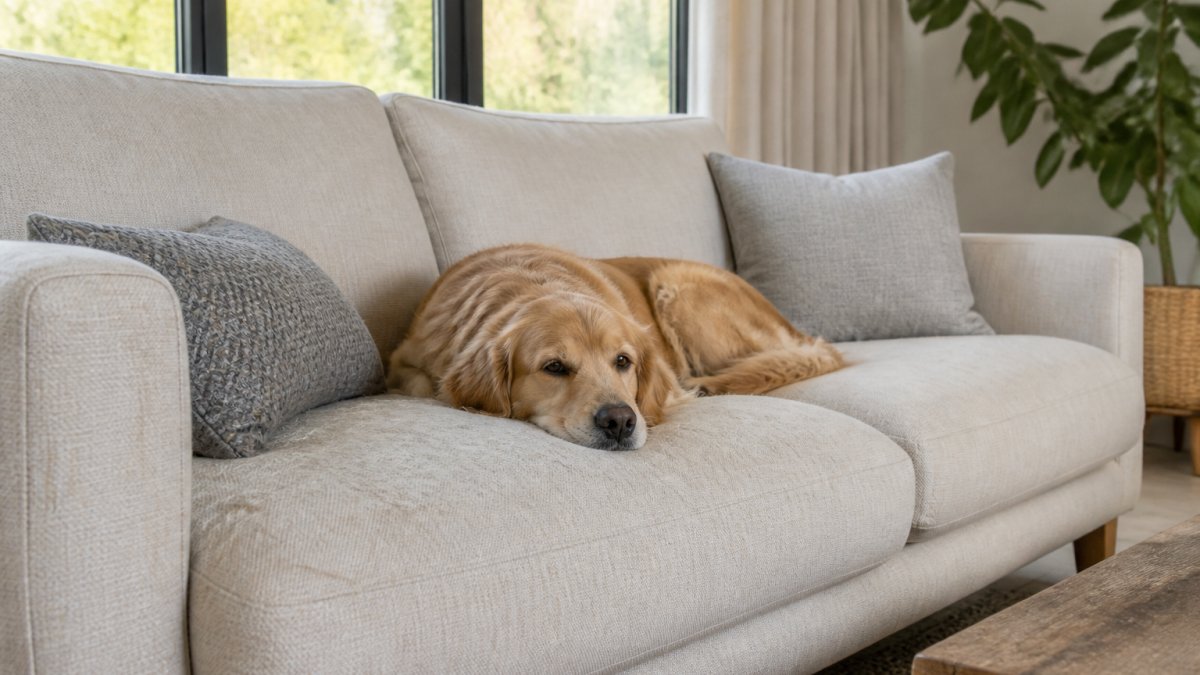
If you have dogs or cats, both fabrics present trade-offs. Linen shows pet hair more obviously because it clings to the surface, but is easier to clean: a simple vacuum or lint roller removes it.
Velvet hides pet hair better initially, but removal requires more care to avoid damaging the pile. Velvet also stains more easily from pet accidents because liquids penetrate the dense pile.
High-traffic areas show wear on both fabrics, but differently. Linen pills and frays; velvet shows footprints and crushing.
Climate and Room Placement
In warm climates or south-facing rooms with strong sunlight, linen is the clear choice. Its breathability keeps the sofa comfortable, and its relaxed aesthetic suits warm-climate interiors. Position it away from direct sunlight if possible, since even linen fades with prolonged UV exposure.
In cooler climates or rooms that don’t get much natural light, velvet’s heat retention becomes an advantage. The sofa feels warmer to sit on, and velvet’s formal appearance suits traditional, cooler-climate interiors. Keep it away from radiators and heating vents, which can dry out the pile.
Room placement also affects maintenance. Near a window, dust settles more readily, favouring velvet’s dust-hiding properties. In a central living space with heavy foot traffic, linen’s easier maintenance becomes more valuable.
Lifecycle Cost and Longevity
Lifecycle cost depends on maintenance and longevity.
A quality linen sofa lasts with basic care. Maintenance is straightforward and inexpensive, regular vacuuming and occasional gentle cleaning. Professional cleaning is rarely needed.
A quality velvet sofa also lasts, but maintenance is more demanding and potentially more expensive. Professional cleaning may be needed for stubborn stains, and velvet’s pile can degrade faster under heavy use, potentially shortening its practical lifespan.
For those prioritising aesthetics and willing to invest in maintenance, velvet’s visual impact justifies the additional cost.
Repairability also matters. Linen can be reupholstered relatively affordably if the frame remains sound. If longevity and repairability are priorities, linen edges ahead.
When you’re investing in a sofa from a maker like Tetrad, which builds frames designed to last decades, the fabric choice becomes even more important.
Linen: Warm climates, casual living, households with pets, budget-conscious buyers prioritising longevity and easy maintenance.
Velvet: Cooler climates, formal living rooms, buyers prioritising visual impact and willing to invest in careful maintenance.
Conclusion
Linen and velvet represent fundamentally different approaches to upholstery. Linen prioritises breathability, practicality, and natural ageing. Velvet prioritises luxury, visual richness, and formal aesthetics. Neither is objectively better, the right choice depends on your climate, household, and how much maintenance you’re willing to invest.
At Tetrad, we craft sofas built to last decades, so choosing the right fabric matters profoundly. Our team can guide you through the trade-offs specific to your room, climate, and lifestyle. EXPLORE COLLECTION to see our current linen and velvet options, or contact us for personalised fabric guidance.
Frequently Asked Questions
What are the main disadvantages of a linen sofa?
Linen sofas wrinkle easily and show creases after sitting, require frequent brushing to manage dust and pet hair, and can fade if exposed to strong sunlight. The fabric also feels less formal than velvet and may pill slightly with wear, particularly on blended linen. However, these characteristics develop character over time rather than representing permanent damage.
Is linen or velvet easier to clean on a sofa?
Linen is generally easier to clean because spills sit on the surface longer, giving you time to blot before they absorb. Velvet requires immediate attention as liquids penetrate the pile quickly, and you must brush with the nap to avoid matting. Linen tolerates vacuuming and dry-brush cleaning well, while velvet needs gentle handling to preserve its pile structure.
Which sofa fabric is more durable, linen or velvet?
Linen can become softer and more relaxed with age but shows wear more visibly. Durability depends on fibre composition: synthetic-blend linen performs better than 100% linen, and densely woven velvet outperforms loosely constructed versions.
Is a linen sofa suitable for homes with pets?
Linen sofas work for pet owners if you’re prepared for regular maintenance. Pet hair clings to the surface and requires frequent vacuuming or lint-rolling, and claws can snag the weave. Velvet actually traps pet hair more, making linen the better choice for visible cleanliness, though neither fabric is ideal for aggressive scratching. Consider performance fabric blends if pets are a major concern.
Does velvet upholstery show marks and wear?
Yes, velvet shows wear patterns where people sit, as the pile flattens and reflects light differently. Dust settles visibly on the surface, and footprints appear after contact. These marks are temporary and reverse with gentle brushing, but they’re more noticeable than on linen. Placing your velvet sofa away from direct sunlight helps prevent fading and reduces the visibility of wear over time.
