
Blog
Are Expensive Sofas Worth It? A 2026 Guide
Sep
Table of Contents
- Are Expensive Sofas Worth It: The Investment Case
- How to Spot a High Quality Sofa: What Separates Premium from Mass-Produced
- Average Lifespan of a Sofa: Cheap vs. Expensive
- Buying High End Furniture Online: What to Expect
- Cost Per Year Analysis: The Real Financial Picture
- The Mid-Range Trap and Why It Costs More
- Maintenance, Repairability, and Resale Value
- Conclusion
- Frequently Asked Questions
Last Updated: September 21, 2026
Are Expensive Sofas Worth It: The Investment Case
The difference between a £1,200 sofa and a £4,000 one isn’t always obvious when you’re sitting on it. Yet that gap often determines whether your furniture lasts five years or twenty. At Tetrad sofas, we’ve spent over 50 years building handcrafted pieces that outlast trends, and we’ve seen firsthand how construction quality separates sofas that depreciate from those that hold their value.
This guide breaks down whether expensive sofas are worth it. The answer isn’t simple: it depends on your priorities, how long you plan to keep the piece, and what “expensive” actually means in terms of craftsmanship versus marketing. Below, we’ll show you exactly how to evaluate a sofa’s true quality, compare the real cost-per-year of cheap versus premium options, and help you avoid the mid-range trap that costs more than it should.
The stakes matter. A sofa is one of the largest pieces in your home. It anchors your living space and absorbs years of daily use. Buying the wrong one means either replacing it sooner than expected or living with discomfort and visible wear.
How to Spot a High Quality Sofa: What Separates Premium from Mass-Produced
Premium sofas share specific construction markers that mass-produced alternatives simply don’t replicate at scale. These details determine longevity, comfort, and whether the piece will look worn or refined after a decade of use.
Frame Construction and Materials
The frame is the skeleton. A weak frame means the entire sofa will eventually sag, twist, or creak, no amount of premium fabric will fix that.
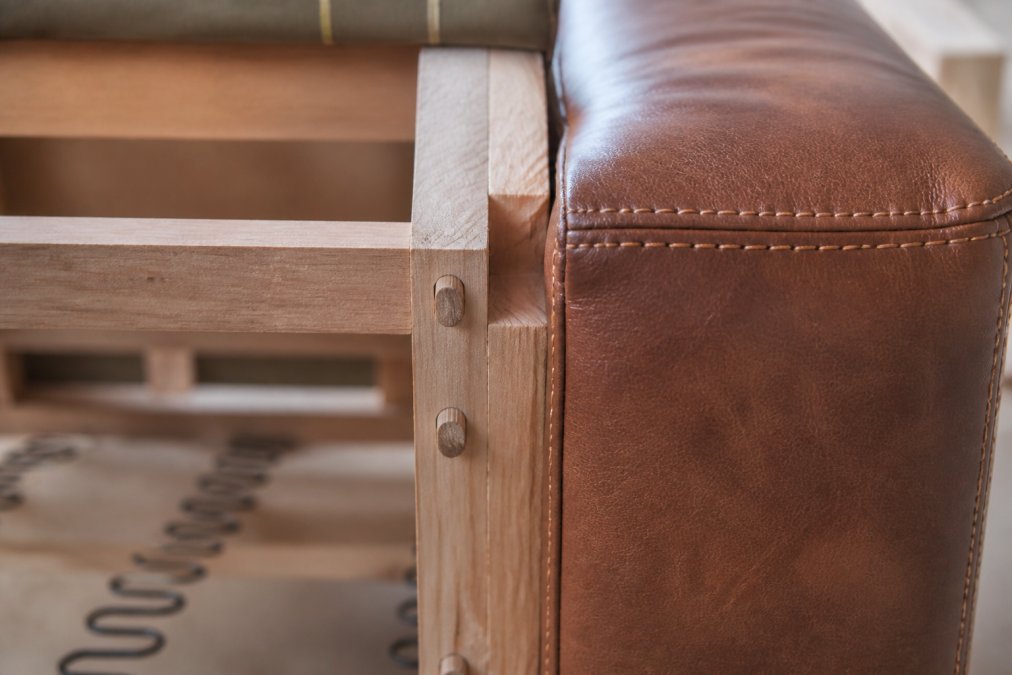
Expensive sofas use kiln-dried hardwood frames, typically beech or ash. This process removes moisture, preventing the wood from warping or splitting over time. Mass-produced alternatives often use plywood or particle board, which flexes, breaks down under weight, and cannot be repaired.
Look for dowel-jointed frames held with corner blocks. This traditional joinery distributes stress evenly across joints rather than relying on staples or glue alone. When you inspect a sofa, run your hand underneath. You should feel solid wood and structural reinforcement, not hollow space or thin plywood.
Tetrad sofas use hand-selected kiln-dried hardwood. This construction method takes more time and costs more upfront, but it’s why Tetrad pieces remain structurally sound for 20+ years.
Cushion Filling and Foam Density
Cushions determine how a sofa feels and how long it retains that feel. High-density foam (typically 1.8 kg/m³ or higher) resists compression and bounces back after years of use. Lower-density foam (1.2 kg/m³ or below) compresses quickly, leaving permanent body impressions within months.
Premium sofas often use high-resiliency foam combined with down-filled cushions for the top layer. This combination offers both support and softness. The down adds luxury feel while the foam underneath prevents the cushion from bottoming out.
Check the rub count on upholstery fabrics, this measures durability. A rub count above 15,000 means the fabric can withstand years of friction without pilling or fading. Budget sofas often fall below 5,000 rubs, visibly degrading within two to three years.
Upholstery Fabric Durability and Seam Quality
The fabric you see is just the outer layer. What matters is what’s underneath and how it’s attached.
Premium upholstery uses natural fibres (wool, linen, cotton) or high-performance synthetics specifically engineered for durability. These fabrics are woven tightly and treated to resist staining without feeling plastic-like. The martindale test, an industry standard for fabric durability, rates how many cycles a fabric can withstand before showing visible wear.
Seam quality separates investment pieces from disposable furniture. Expensive sofas feature tight, even stitching with thread that matches the fabric colour. Seams should be reinforced at stress points (corners, armrests, where cushions meet the frame). If you see loose threads, puckering, or uneven stitching, the piece won’t hold up.
Run your fingers along seams. They should feel smooth and secure. Press the fabric near seams, it shouldn’t shift or separate. This is where cheap manufacturing shows itself immediately.
Suspension Systems and Frame Flex
The suspension system is what sits between the frame and cushions. It absorbs impact and distributes weight.
Eight-way hand-tied springs represent the premium standard. Each spring is individually tied to the frame and to adjacent springs, creating a stable, responsive support system. Sinuous springs (curved steel wires) are cheaper but less durable, they can lose tension and create sagging areas.
Test frame flex by pressing firmly on different areas of the sofa. A quality frame should have minimal flex, it should feel solid and immovable. Excessive flex indicates weak joinery or inadequate bracing underneath. This is a red flag for premature sagging.
When viewing a sofa in person or via video, ask the retailer to show the underside. A legitimate manufacturer has nothing to hide. If they refuse or the underside is covered with cheap fabric, that’s a signal the frame isn’t built to last.
Average Lifespan of a Sofa: Cheap vs. Expensive
A budget sofa (under £1,500) typically lasts three to five years before visible wear becomes uncomfortable. The cushions compress, the frame develops flex or creaks, and the fabric shows pilling or staining that won’t clean out.
A mid-range sofa (£1,500-£3,000) often lasts seven to ten years, depending on use. This is where many buyers think they’re getting value, but often they’re caught in the mid-range trap.
An expensive, well-made sofa can last 15-25 years or longer. Tetrad sofas, with their kiln-dried hardwood frames, regularly outlast 20 years with basic maintenance. Some pieces are still in use after 30 years. Investing in such enduring craftsmanship encourages a broader commitment to quality throughout the home, much like the long-term value found in bespoke storage solutions.
The key difference: premium sofas are designed to be repaired. A worn cushion can be re-stuffed. A torn seam can be re-sewn. A frame can be re-sprung. Budget sofas are designed to be replaced, not restored.
Cost-per-year reveals the true financial picture. A £5,000 sofa lasting 20 years costs £250 per year. A £1,200 sofa lasting four years costs £300 per year, and you’ll need to buy another one.
Buying High End Furniture Online: What to Expect
Ordering an expensive sofa without sitting on it first creates legitimate anxiety. How do you know it will fit your space? Will the colour match your décor? What if it arrives damaged?
Professional retailers like Artisan sofas handle this through detailed consultation.
Avoid buying expensive sofas from general e-commerce platforms without specialist support. If something goes wrong, you’ll have no one to advocate for you. Specialist retailers have relationships with manufacturers and can arrange repairs, replacements, or refunds quickly.
Cost Per Year Analysis: The Real Financial Picture
Here’s where the math shifts perspective. Most people focus on the purchase price and ignore the lifespan.
| Sofa Type | Purchase Price | Expected Lifespan | Cost Per Year | Total Replacement Cost Over 20 Years |
|---|---|---|---|---|
| Budget | £1,200 | 4 years | £300/year | £1,500 (5 replacements) |
| Mid-Range | £2,500 | 8 years | £312/year | £6,250 (2-3 replacements) |
| Premium Handcrafted | £4,500 | 20 years | £225/year | £4,500 (1 piece) |
The Mid-Range Trap and Why It Costs More
The mid-range, roughly £2,000-£3,500, is where most people get stuck. These sofas feel premium enough to justify the expense, but they’re often built with compromises that undermine longevity.
Maintenance, Repairability, and Resale Value
Expensive sofas hold value because they can be maintained and repaired. A worn Tetrad sofa can have its cushions re-stuffed and fabric replaced, all for a fraction of the original cost.
Premium handcrafted sofas make sense if you: plan to keep the piece for 10+ years, value comfort and aesthetics equally, want a piece that improves with age, or view furniture as an investment rather than a consumable.
Conclusion
Are expensive sofas worth it? Yes, but only if you’re buying genuine quality, not just a higher price tag.
Frequently Asked Questions
Do expensive sofas last longer than cheap ones?
Yes, significantly. Expensive sofas built with kiln-dried hardwood frames and high-resiliency foam typically last 15-20 years or more. Budget sofas with plywood frames and low-density foam often fail within 5-7 years. The difference comes down to material quality and construction technique. Premium sofas are designed to be repairable, while cheap furniture is often discarded when seams split or cushions sag.
What materials define a luxury sofa?
Luxury sofas use kiln-dried hardwood or solid wood frames, high-resiliency or memory foam with density above 1.8 kg/m³, and natural fibres like wool, linen, or leather with high rub counts (above 15,000 on the Martindale test). Premium brands employ dowel-jointed frames and invest in seam quality and tailoring. These materials resist sagging, maintain comfort profile over time, and support structural integrity for decades.
How can you tell if a sofa is high quality?
Check the frame by lifting the sofa, solid wood should feel substantial and show no flex. Examine seams for tight, even stitching with no loose threads. Press cushions and feel for consistent density; they should spring back quickly. Ask about the Martindale rub count for fabric durability and inquire whether the frame is kiln-dried hardwood with dowel joints. Request information on suspension type. Warranty length often reflects manufacturer confidence in longevity.
What should I avoid when buying an expensive sofa?
Avoid sofas with plywood or particleboard frames and fabrics with rub counts below 10,000. Don’t assume mid-range pricing guarantees quality, the mid-range trap often delivers poor value with neither the durability of premium pieces nor the affordability of budget options. Skip retailers without clear warranty details or those unwilling to discuss construction methods. Be cautious of fast furniture brands marketing luxury positioning without heritage or proven longevity claims.
Is buying a high-end sofa online safe?
Yes, if you choose a specialist retailer with established credentials and transparent communication. Reputable luxury furniture retailers provide detailed material specifications, high-resolution imagery, fabric samples, and expert consultation before purchase. Professional white-glove delivery services ensure proper handling and positioning. Request references or customer testimonials, confirm warranty coverage in writing, and verify that the retailer stands behind the manufacturer’s guarantees.
