
Blog
How to Choose the Best Sofa for a Small Room
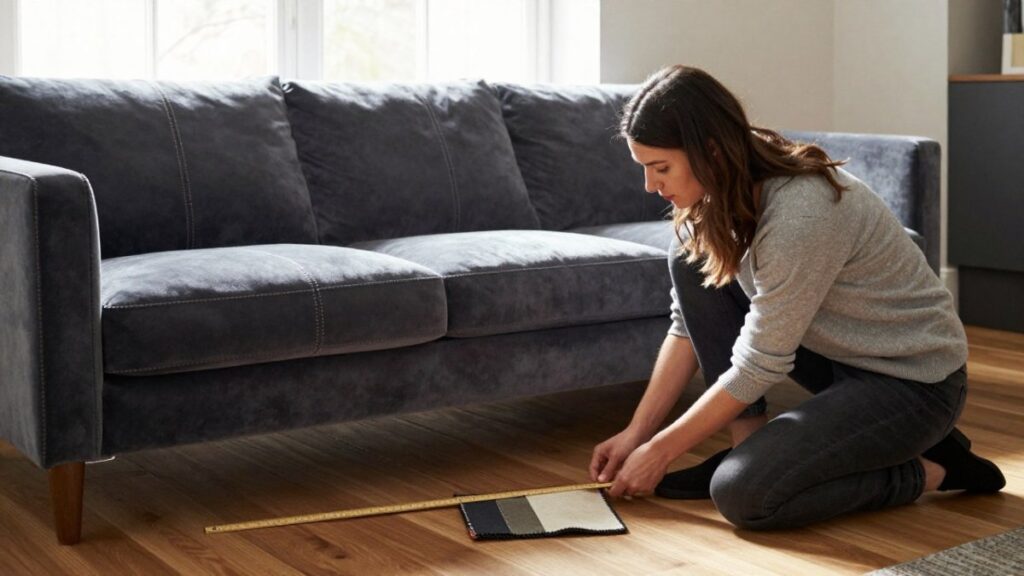
Nov
Quick Summary
To choose a small room sofa, measure the room and the delivery route first, then leave a clear walkway of at least 75 to 90 centimetres around the furniture. Compact two-seaters and three-seaters with a shallow depth usually suit small rooms best, and slim arms and raised legs help the room feel more open.
- Measure the narrowest doorway, hallway and stair turn on the delivery route, not just the room.
- Aim for a clear walkway of at least 75 to 90 centimetres around the sofa.
- A two-seater suits one or two people, while a compact three-seater suits a small family.
- Check the seat depth and height so a compact sofa still gives proper support.
- Choose slim arms, raised legs and light upholstery to show more floor.
Table of Contents
- Measure the Room and the Route In
- Choosing a Sofa Size That Suits the Room
- Small Two-Seater Sofas and Compact Three-Seaters
- Small Corner Sofas and Chaise Configurations
- Arms, Backs and Legs: Visual Proportions That Open a Room
- Comfort, Durability and Fabric or Leather Care
- Booking Your Tetrad Sofa Consultation
- Frequently Asked Questions
Measure the Room and the Route In
Measure the room before you look at a single small room sofa. Note the length and width of the wall where the sofa will sit, the distance to the opposite side, and the floor-to-ceiling height.
Then measure the route the sofa must travel. Delivery usually fails at a doorway, a tight stair turn or a narrow hallway, not in the room itself.
A Measuring Checklist: Doorways, Hallways, Stairs and Delivery Access
Work through this list before you order:
- Room length and width, measured wall to wall
- Clear space left after radiators, doors and windows are allowed for
- Narrowest doorway width on the delivery route
Measure the narrowest point, not the average. Allow a few centimetres of margin on each side, because walls, skirting and door frames take up room you may not count on.
Choosing a Sofa Size That Suits the Room
Aim to leave a clear walkway of at least 75 to 90 centimetres around the furniture. This keeps the room usable and stops it feeling cramped.
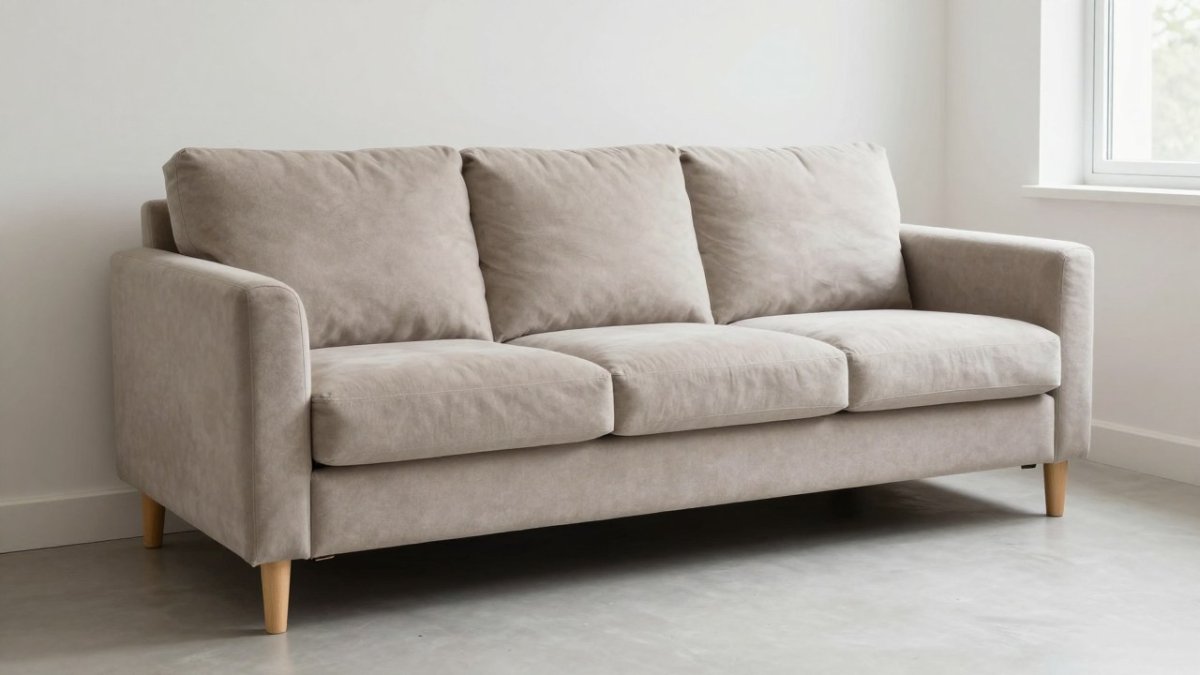
Consider how you use the room. If the sofa is the only seating, a larger piece may be needed; if you also have armchairs, a compact sofa often gives better balance.
Seat depth and overall depth matter as much as width. A deep seat can look generous but eats floor space.
Room-Layout Examples with Dimensions and Circulation Clearances
Here are three common small-room shapes with suggested sofa footprints and clearances. These are illustrative starting points; always measure your own room and route before ordering.
Narrow living room (approx. 3.0 m × 4.0 m)
- Place a compact two-seater (approx. 150-170 cm wide, 85-90 cm deep) along the long wall, leaving at least 75 cm between the sofa front and the opposite wall or furniture.
- Keep a 90 cm clear path from the door to the window so the room does not feel blocked.
- If a television is opposite, check that the viewing distance is comfortable; a sofa depth of 85-90 cm usually leaves enough floor for a slim media unit.
Square room (approx. 3.5 m × 3.5 m)
- A small corner sofa (approx. 200-230 cm on the long side, 150-180 cm on the short side) can free up the centre, but check that the chaise or corner return does not block a doorway or walkway.
- Leave at least 75 cm between the sofa and any armchair, and 90 cm in front of a fireplace or radiator.
- Avoid placing the sofa so that it faces a blank wall; orient it toward a window or focal point to keep the layout purposeful.
Open-plan area with a defined seating zone (approx. 4.0 m × 5.0 m)
- Use a compact three-seater (approx. 180-200 cm wide) as a zone divider, with its back to the dining or circulation area.
- Keep a 90-100 cm walkway behind the sofa if people pass through regularly.
- Allow at least 75 cm between the sofa and a coffee table, and 90 cm between the sofa and any sideboard or shelving.
Circulation clearances to check
- Main walkways: 90-100 cm where possible; 75 cm is a workable minimum in tight rooms.
- Door swing: allow the full door width plus a few centimetres.
- Radiators and fireplaces: keep at least 90 cm clear in front so heat can circulate and the sofa is not damaged.
Watch out: a sofa that fits the wall can still block a door swing or make a walkway too tight; measure the clear space, not just the wall length.
A Decision Framework for Sofa Configurations
Use this comparison to choose a configuration by room shape, household needs and trade-offs. Dimensions are typical ranges, not fixed rules.
| Configuration | Typical footprint (W × D) | Best for | Trade-offs |
|---|---|---|---|
| Loveseat / two-seater | 140-170 cm × 85-90 cm | Small rooms, one or two people, reading corners | Seats fewer people; less room to stretch out |
| Compact three-seater | 180-200 cm × 85-95 cm | Rooms that need three seats without a full-size sofa | Can feel tight in narrow rooms; check arm width |
| Corner sofa | 200-230 cm long side × 150-180 cm short side | Awkward corners, open-plan zoning | Deeper footprint; can block walkways if poorly placed |
| Chaise sofa | 180-220 cm × 90-160 cm (chaise extends depth) | Rooms with space to stretch out; lounging | Chaise eats floor space; check door and turn clearance |
| Modular sofa | Varies by module; often 200-260 cm assembled | Flexible layouts; households that rearrange | More pieces to measure and deliver; joints need checking |
Match the configuration to how you live: a loveseat suits a single occupant or couple in a compact room; a compact three-seater suits a small family; a corner or chaise suits a room with an awkward corner and enough clear floor.
Small Two-Seater Sofas and Compact Three-Seaters
For many small rooms, a two-seater or compact three-seater gives the best fit. These small room sofa models usually have a shallower depth and narrower footprint, leaving more space for movement.
A two-seater works well in a small reading corner or a room used mainly by one or two people. A compact three-seater can seat three where a full-size model would struggle. Ask for exact frame dimensions, not just seat width, because the frame sets the real footprint.
Comparing Two-Seaters and Compact Three-Seaters
Use this comparison to weigh the trade-offs before you choose. Dimensions are typical ranges; always check the specific model.
| Feature | Two-seater (loveseat) | Compact three-seater |
|---|---|---|
| Typical width | 140-170 cm | 180-200 cm |
| Typical depth | 85-90 cm | 85-95 cm |
| Seating capacity | Two adults comfortably | Three adults, or two plus a child |
| Best room shape | Narrow or square rooms; reading nooks | Rectangular rooms with one long wall |
| Floor space saved | More floor visible; easier to walk around | Less floor visible; check walkway clearance |
| Comfort trade-off | Less room to stretch out; may suit shorter sittings | More seating but can feel tight in narrow rooms |
| Delivery | Easier through doorways and stairs | Check the narrowest doorway and stair turn |
A two-seater suits a room where the sofa is secondary to armchairs, or where you want a clear walkway. A compact three-seater suits a small family or a room that needs three seats without a full-size footprint. If you regularly host guests, the three-seater may be the better balance; if the room is primarily for one or two people, a two-seater keeps the space open.
Comfort and Ergonomics Alongside Compact Dimensions
Small-room advice often emphasises appearance and footprint, but comfort matters just as much. Assess these ergonomics before you buy:
- Seat depth: 50-55 cm suits most people; deeper seats (60 cm+) feel more generous but eat floor space and can be uncomfortable for shorter sitters.
- Seat height: 40-45 cm from floor to seat top is a common comfortable range for sitting and standing.
- Back support: a back height of 70-80 cm supports the shoulders; lower backs look lighter but may not suit longer sittings.
Test the sofa where you can, or ask for the seat depth and height measurements. A compact sofa should not sacrifice support; if the seat is too shallow for your height, it will feel uncomfortable for longer periods.
Durability, Maintenance and Upholstery Suitability
A small sofa still needs to last. Check the frame, cushioning and upholstery:
- Frame: hardwood or engineered wood frames with glued and screwed joints are more durable than stapled softwood.
- Cushions: foam or foam-and-fibre wraps hold shape better than fibre-only fills; removable covers make cleaning easier.
- Fabric performance: the Martindale rub test score indicates wear resistance; 20,000-25,000 cycles suits domestic use, while 30,000+ suits heavy use or pets.
- Pets and children: tight weaves and leather are easier to wipe clean; loose weaves and light colours show marks more.
The right size depends on your room. If you are unsure which size suits your space, our team can help you compare options against your measurements, including seat depth, frame dimensions and upholstery suitability. Once the dimensions are settled, YGSHOP can help you think through how the sofa’s placement and surrounding furnishings work together in a small living room.
Small Corner Sofas and Chaise Configurations
Corner sofas and chaise configurations can make good use of awkward spaces, such as a room with a window in one corner or a nook beside a fireplace.
Check the corner footprint carefully. Some corner designs take up more depth than a standard sofa, and a chaise extends the length considerably.
Chaise options suit people who want to stretch out, but only if the room has space for them.
Arms, Backs and Legs: Visual Proportions That Open a Room
Small rooms feel larger when furniture shows more floor. The visual details of a sofa affect this as much as its size.
- Slim arms take up less width and make the seating feel lighter.
- Low backs keep the room open and let light travel across the space.
- Raised legs reveal more floor underneath, which makes the room feel less crowded.
- Simple lines and simplified silhouettes avoid visual clutter.
Mid-century styles often combine slim arms and raised legs, which is why they suit compact living rooms. Look at arm profile and leg height alongside the overall measurements when comparing sofas.
Comfort, Durability and Fabric or Leather Care
A sofa for a small room still has to be comfortable, and a compact design should not sacrifice support.
Durability depends on the frame, cushioning and upholstery.
Leather suits many people who want a long-lasting finish, but it needs regular conditioning and can mark or fade in strong direct sunlight.
Choosing the right fabric or leather is part of buying a sofa well.
Booking Your Tetrad Sofa Consultation
Once you have your measurements and a shortlist, a consultation can help you narrow it down. Bring your room dimensions, delivery route measurements and any colour palette you already work with, so it is easier to judge fabric samples and check how a configuration will sit in your room.
Explore the Tetrad sofa range on our website, or get in touch to talk through the right size and style for your space. Our team can offer personal guidance on fabrics, leathers and collections.
Explore the Tetrad collection and book your consultation today.
Frequently Asked Questions
What type of sofa is best for a small room?
For most small rooms, a sofa with a slim profile, low arms, a lower back and raised legs works best because it keeps visual weight down. A compact three-seater or a two-seater usually suits better than a large sectional. Check the overall width and seat depth against your floor space before ordering. Our team can offer guidance on fabric and leather choices, which can also lighten the look of a room.
How do I measure a room before buying a sofa?
Measure the wall where the sofa will sit, the depth from that wall to the opposite side, and the clear floor space you want to keep for walking. Then measure every doorway, hallway, staircase and turn the sofa must pass through, including the height of landings and the width of the front door. Allow for the thickness of the packaging, not just the finished sofa. Write the figures down so you can compare them with the sofa’s dimensions in the product details.
Are two-seater sofas better for small rooms?
Often, yes. A small two-seater sofa takes up less width and depth, leaves more circulation space and still seats two comfortably. It can be paired with an armchair or a loveseat to add seating without crowding the room. If you regularly need to seat three or more people, a compact three-seater with a slim frame may serve you better than a two-seater plus extra chairs.
How do I look after fabric or leather upholstery?
Vacuum fabric regularly and treat spills promptly, testing any cleaner on a hidden area first. Rotate cushions to even out wear and keep the sofa out of direct sunlight to limit fading. Leather benefits from dusting and occasional conditioning, while fabric sofas need care that suits the specific weave. Ask about the upholstery’s cleaning guidance when you choose a Tetrad piece so the care routine matches the material.

