
Blog
Can You Remove Red Wine From Wool Upholstery?
Nov
Last Updated: November 6, 2026
Quick Summary
To remove red wine stains from wool upholstery, blot up excess liquid immediately with a clean white cloth, then patch test a mild solution of cold water and mild detergent on a hidden area. Dab the stain gently from the outside inwards, never rub, and let the fabric air dry away from heat.
- Blot a fresh spill straight away with a clean white cloth, pressing rather than rubbing.
- Check the care label and patch test on a hidden area before any treatment.
- Use cold water with a mild detergent, dabbing from the outer edge of the stain inwards.
- Avoid bleach, hydrogen peroxide and biological detergents, which can strip colour and roughen wool.
- Dry the fabric naturally with gentle airflow, never with a hairdryer, radiator or direct sunlight.
Table of Contents
- How to Remove Red Wine Stains From Wool Upholstery, Step by Step
- Why Wool Upholstery Needs a Gentler Approach to Stain Removal
- Act Fast: Blotting a Fresh Red Wine Spill Without Rubbing
- How to Clean Wool Upholstery Safely: Patch Testing and Cleaning Solutions
- How to Remove Dried Red Wine Stains From a Sofa
- Upholstery Stain Removal: Comparing Home Remedies by Wool Safety
- Aftercare, Drying and Knowing When to Call a Professional
- Frequently Asked Questions
How to Remove Red Wine Stains From Wool Upholstery, Step by Step
Red wine on a wool sofa is stressful, but it is rarely a disaster if you act quickly and treat the fabric gently. Tetrad pieces are made with care, and wool deserves the same care when something spills. Wool fibres are naturally resilient, yet they react badly to harsh rubbing and strong chemicals. This guide walks you through a cautious, step-by-step method for removing red wine stains from wool upholstery.
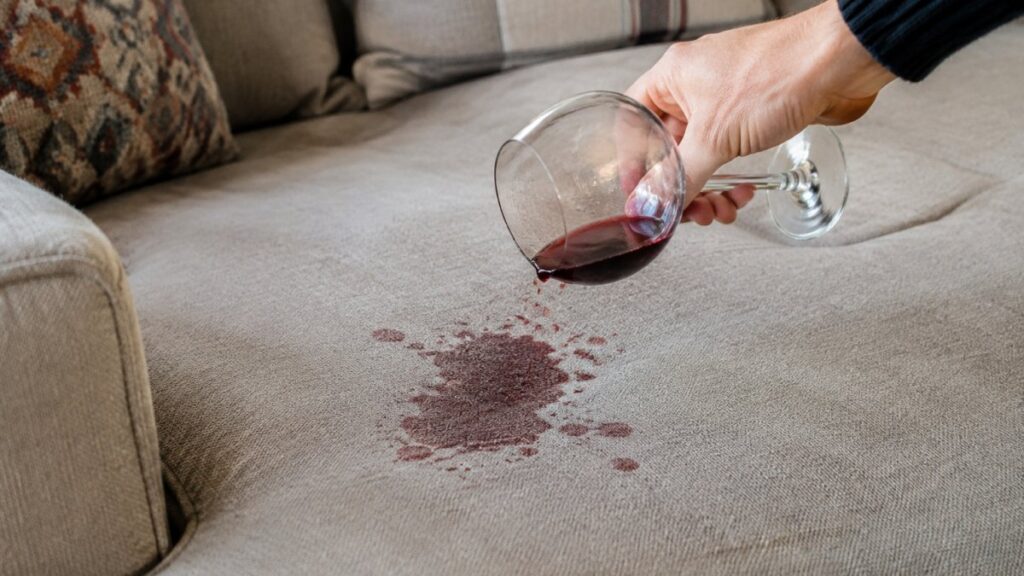
Red wine is a stain with colour pigments and tannins, and those pigments bond to fibres quickly. The sooner you act, the less time they have to settle in.
Here is the short version of the process:
| Step | What to do | When |
|---|---|---|
| 1 | Blot up excess liquid with a clean white cloth | Immediately |
| 2 | Check the care label and patch test | Before any treatment |
| 3 | Dab with cold water and a mild detergent | Within minutes |
| 4 | Rinse lightly and blot dry | After each treatment |
| 5 | Air dry away from heat | Once the stain is gone |
Why Wool Upholstery Needs a Gentler Approach to Stain Removal
Wool behaves differently from synthetic fabrics. Its fibres can shrink, felt together, or lose their texture if you scrub them or use water that is too hot. Some common home remedies are better suited to other fabrics, so they can be harsh on wool.
This is why a cautious method matters. You are trying to lift the stain without changing the feel or shape of the fabric. Gentle, repeated blotting usually does more than one hard scrub.
Act Fast: Blotting a Fresh Red Wine Spill Without Rubbing
The first few minutes make the biggest difference. Your aim is to soak up as much liquid as possible before it spreads into the fibres.
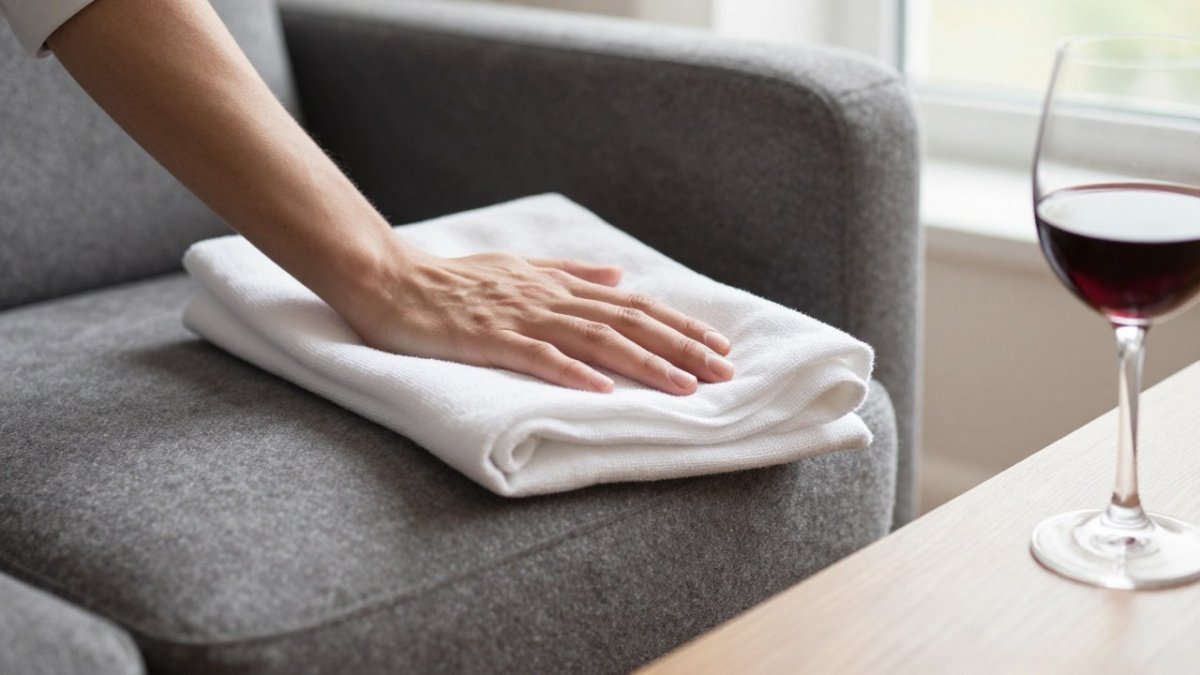
Use a clean, white cloth or plain paper towels. White material avoids transferring dye onto the wool. Press down firmly and lift, rather than rubbing back and forth. Rubbing pushes the wine deeper and can roughen the wool.
- Start at the outer edge of the stain and work inwards
- Use a fresh section of cloth for each press
- Keep blotting until little or no colour comes off onto the cloth
Watch out: rubbing a fresh spill can spread the stain across a wider area and flatten the wool pile, so always dab rather than scrub.
How to Clean Wool Upholstery Safely: Patch Testing and Cleaning Solutions
Before any liquid touches the fabric, check the care label on your Tetrad sofa or armchair. Upholstery care labels use cleaning codes, and the label is the first safety check. If your label advises against liquid cleaners, stop here and seek professional advice rather than testing a water-based method on a visible area. When the care label rules out liquid cleaners, taking a cautious approach can help you clean delicate upholstered furniture without risking damage to the fabric.
Next, patch test on an inconspicuous spot, the underside of a seat cushion, the back of the sofa, or a hidden seam allowance. Apply a small amount of your chosen solution to a white cloth, dab it onto the test area, and leave it for 10 to 15 minutes. Blot with a clean white cloth and let the area dry fully, ideally for a few hours. Check for colour transfer onto the cloth, a change in texture or pile, and any ring mark left as it dries. Only proceed if the test area looks and feels unchanged.
A mild solution is generally a safer starting point than a harsh cleaner. Work in short dabs from the outer edge of the stain inwards, keep the fabric damp rather than wet, then blot with a dry white cloth. Rinse lightly with a cloth wrung out in clean cold water, blot dry again, and repeat in cycles rather than soaking the area once.
Avoid strong bleaches, hydrogen peroxide, undiluted vinegar, and biological laundry detergents on wool, as these can strip colour and roughen the fibre. White vinegar can be used only after a successful patch test and only well diluted, around one part vinegar to four parts cold water, and even then it is best reserved for the final rinse rather than the main treatment.
Watch out: applying solution directly to the fabric, or leaving it to sit for several minutes, can drive moisture into the cushion filling and leave a tide mark that is harder to remove than the wine.
Sofa wool upholstery responds well to restraint. Use less solution than you think you need, work slowly, and keep a dry white cloth on hand for blotting between passes. If you are caring for a Tetrad piece with a fixed cover, keep the treatment local to the stain rather than wetting a wide area, so the pile and colour stay even.
How to Remove Dried Red Wine Stains From a Sofa
A dried stain is harder to shift, but it is not always impossible. Dampen the area lightly with cold water first, so the dried pigment softens. Do not soak the fabric, as too much water can leave a tide mark or cause the wool to distort.
Once the area is slightly damp, dab the mild solution onto the stain with a cloth and blot gently. Repeat in short cycles, rinsing the cloth between each one. Stop as soon as the colour stops transferring. Pushing too hard at this stage can leave a permanent ring.
Many people find that a dried stain fades over several gentle sessions rather than one long session. Patience helps you avoid damage.
Upholstery Stain Removal: Comparing Home Remedies by Wool Safety
Many home remedies appear in online advice. Some are useful on wool, while others are too harsh. This quick comparison shows how common options stack up:
| Remedy | Wool safety | Best use |
|---|---|---|
| Cold water | Very safe | Fresh spills, first rinse |
| Mild dishwashing liquid | Generally safe when diluted | Most stains after patch testing |
| White vinegar (diluted) | Use with care | Only after a patch test |
| Hydrogen peroxide | Risky on wool | Avoid on coloured wool |
| Bleach | Avoid | Never use on wool upholstery |
If your sofa is delicate or you are unsure, cold water and mild soap are the safest starting points. Stronger remedies carry more risk of colour loss or texture change.
Aftercare, Drying and Knowing When to Call a Professional
Removing the wine is only half the job; the drying stage decides whether you are left with a clean patch or a ring, a stiff patch, or a flattened pile. Start by removing residue: dab the treated area with a cloth wrung out in clean cold water, then blot firmly with a dry white towel. Repeat until the cloth picks up no more soapy feel. Any detergent left in the wool attracts dirt and can yellow over time.
Extract moisture without heat. Press a dry white towel onto the area and hold it for 30 seconds, then lift; repeat with a fresh section of towel until it comes away barely damp. Do not rub, and do not use a hot hairdryer, a radiator, or direct sunlight, heat can shrink wool fibres and set a texture change that cannot be reversed. Instead, keep the room ventilated and let the area dry naturally, ideally with a gentle airflow from an open window or a fan set to low, positioned so it moves air across the room rather than blasting the fabric.
Check the drying progress every few hours. Wool can feel dry on the surface while the cushion filling is still damp, so press the area with a dry tissue and look for moisture. If a ring begins to form at the edge of the treated area, dampen the whole ring evenly with clean cold water and blot dry again, feathering the edge inwards is usually more effective than treating the ring alone. Once fully dry, brush the pile gently with a soft clothes brush in the direction of the nap to lift flattened fibres. A Tetrad sofa with a fixed cover benefits from this final brush more than a loose-covered piece, because the pile sits directly over the frame.
Stop DIY treatment and call a professional if the stain is larger than a small spill, has been there for more than a few days, is spreading rather than fading, or the fabric has become stiff, discoloured, or felted. A specialist upholsterer can use methods that are not safe to attempt at home. For wool in particular, felting and shrinkage are permanent, so the moment you see texture change, stop.
If you want to protect your Tetrad sofa from future accidents, keep drinks on coasters, act quickly on any spill, and review our Artisan Sofas guide to choosing and caring for performance fabric for fabric-specific care advice.
Frequently Asked Questions
How do you get red wine out of wool upholstery?
Blot the spill straight away with a clean white cloth or kitchen paper, pressing rather than rubbing so the liquid lifts out of the pile. Then dab the area with cold water to dilute the remaining colour, blotting again each time. Wool is protein-based and can be damaged by hot water and harsh chemicals, so always test any cleaning solution on a hidden area first. If the stain is large or the fabric is delicate, a professional upholstery cleaner is the safer choice. Check your sofa’s care label before you start, as it indicates which cleaning methods the fabric can tolerate.
What should you do immediately after spilling red wine on a wool sofa?
Act within the first few minutes if you can. Lift any excess liquid with a dry white cloth or paper towel, pressing gently from the outside of the stain inwards so it does not spread. Avoid rubbing, which pushes the pigment deeper into the wool fibres and can cause the pile to felt or distort. Do not pour large amounts of water onto the area. Once the surface liquid is removed, you can move on to the gentle treatment steps, and your Tetrad sofa will be far easier to restore while the stain is still fresh.
Can you use bicarbonate of soda on a red wine stain on wool?
Bicarbonate of soda can absorb some residual wine after you have blotted the spill, but it is an abrasive powder and should be used with caution on wool. Sprinkle a small amount onto the damp stain, leave it briefly, then brush it away gently with a soft brush and blot the area. Always patch test first in a hidden spot, and never scrub. If the stain persists or the fibres look rough afterwards, stop and seek professional advice rather than repeating the process.
Should you use cold or warm water on a red wine stain?
Use cold water. Warm or hot water can set tannin-based stains such as red wine and may shrink or felt wool fibres, leaving a permanent change in texture. Apply cold water sparingly, dabbing it on and blotting straight away, and avoid soaking the upholstery. Keeping the moisture low also reduces the risk of water marks or rings forming as the fabric dries. Gentle, cool treatment is the safest approach for a valuable piece such as a Tetrad sofa.

